Mango fruit powder is a natural fruit ingredient made by spray drying, freeze-drying, or hot-air drying and milling. Mango bulk powder is increasingly used in bakery products to provide natural mango flavor, color, and nutrients while supporting consistent formulation. Natural Mango powder for baking can influence dough rheology, moisture balance, and product quality. However, its natural sugars, organic acids, dietary fiber, and high hygroscopicity require careful control of water activity, pH, gluten development, and thermal stability during processing.
Key Advantages of Mango Powder in Baking Formulations
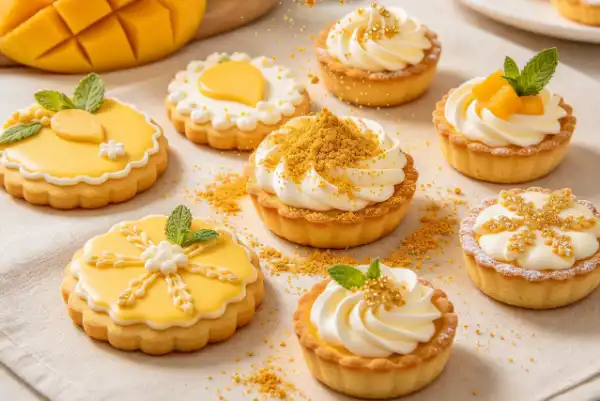
Mango powder is a versatile fruit ingredient that can improve the sensory, functional, and nutritional properties of baked foods. Mango fruit powder, particularly freeze-dried mango powder, provides natural color, aroma, fiber, and fruit solids, making it suitable for cakes, cookies, bread, muffins, biscuits, and other food formulations.
Provides Natural Color and Aroma
Mango powder contains natural carotenoids, including beta-carotene, which can provide baked products with a yellow to orange-yellow appearance. Compared with artificial colorants, mango powder for baking offers a fruit-based coloring option. It also retains characteristic mango flavor compounds, including esters and terpenes, helping provide a natural tropical fruit aroma and flavor.
Supports Moisture Retention
Mango fruit powder contains dietary fiber and pectin, which can interact with water in food formulations. In products such as cakes, muffins, and bread, these components may help manage moisture distribution and improve texture during storage. This makes mango powder for food formulations a useful ingredient when developing fruit-based bakery products with a softer texture.
Influences Dough and Baking Performance
Mango powder naturally contains organic acids that can contribute to the acidity of a formulation. When combined with alkaline leavening agents such as sodium bicarbonate, this acidity can support carbon dioxide generation during baking. The effect depends on the mango powder's acidity, dosage, moisture content, and the overall formulation. Therefore, mango powder for baking should be tested at different inclusion levels to optimize dough handling and product structure.
Adds Nutritional Value
Compared with refined flour, mango powder can contribute dietary fiber, carotenoids, and naturally occurring vitamin C, although nutrient levels vary according to mango variety and processing method. Freeze-dried mango powder can provide concentrated mango solids while adding fruit flavor to reduced-sugar and fruit-based bakery formulations.
Processing Challenges of Mango Powder in Baking Applications
Mango powder is widely used in bakery formulations to provide natural mango flavor, fruit solids, color, and acidity. Mango powder for baking, including freeze-dried mango powder and other mango fruit powders, can be incorporated into cakes, cookies, bread, muffins, and other bakery products. However, adding mango powder to an existing formulation may require adjustments to ingredients, processing conditions, and storage methods. The main processing challenges include moisture absorption, gluten interaction, heat sensitivity, and acidity.
Moisture Absorption and Caking
Mango powder contains natural sugars, organic acids, and other soluble solids that can readily absorb moisture from the environment. Under high-humidity or high-temperature conditions, mango powder may become damp and sticky, resulting in caking and reduced flowability. This can affect pneumatic conveying, automated weighing, and dry blending. Poor dispersion may also cause uneven color, flavor, or fruit solids distribution in finished bakery products.
For bulk mango powder, appropriate moisture-barrier packaging and controlled storage conditions are important. Manufacturers should minimize exposure to humidity and keep the powder in a cool, dry environment.
Interaction with the Gluten Network
When mango powder for bakery products partially replaces wheat flour, it changes the balance of gluten-forming proteins, including glutenin and gliadin. Mango powder also contains dietary fiber and pectin, which can compete with gluten proteins for available water during dough development. Excessive inclusion may therefore reduce gluten hydration and affect dough elasticity and gas retention.
In bread and fermented dough, high levels of mango powder may contribute to reduced loaf volume or a denser crumb structure. Formulators should evaluate the powder inclusion rate, water level, mixing time, and flour composition to maintain suitable dough performance.
Heat Sensitivity, Browning, and Flavor Loss
Baking temperatures commonly range from approximately 150°C to 220°C. The natural reducing sugars in mango fruit powder can participate in Maillard reactions and caramelization during heating. Excessive temperature or prolonged baking may cause excessive surface browning and alter the characteristic mango flavor.
Heat exposure can also reduce sensitive nutrients, such as vitamin C, and degrade volatile aroma compounds. For mango powder in cakes, cookies, and other baked products, formulators should balance baking temperature and time with the desired color, flavor, and texture.
Acidity and Leavening Performance
Mango powder is naturally acidic, and its pH may influence the overall acidity of a batter or dough. When combined with chemical leavening agents, changes in acid-base balance can affect carbon dioxide release and gas retention. Excessive acidity may also influence starch gelatinization and the final texture of cakes and soft cookies.
Comparison of Mango Powder and Traditional Baking Ingredients
To clearly illustrate the overall performance of mango powder regarding technical feasibility and industrial-scale production, the following table presents a quantitative and qualitative comparison between mango powder and other mango-based alternatives commonly used in baking.
Comparison of the Characteristics of Mango Powder versus Other Mango Sources or Alternative Ingredients in Baking
|
Parameters / Evaluation Dimensions |
Mango Powder |
Fresh Mango Puree |
Synthetic Mango Flavor/Colorant |
|
Moisture content (%) |
3.0%–5.0% |
80.0%–88.0% |
0% (dry powder) or solvent-based moisture content |
|
Water activity (aw) |
0.20–0.35 |
>0.95 |
Not applicable |
|
Formulation compatibility |
High (easy to use in dry premixes; facilitates dosage control) |
Medium (requires significant formula adjustment regarding free water content) |
Very high (minimal dosage; does not affect system mechanics) |
|
Shelf life and storage/transport |
Long (12–24 months when stored in a cool, dry place at room temperature) |
Short (requires freezing/refrigeration; highly perishable after opening) |
Very long (excellent stability at room temperature) |
|
Flavor authenticity |
High (retains natural fruity aroma and sweet-and-sour flavor) |
Extremely high (authentic flavor) |
Low to medium (flavor lacks depth; perceived as chemically synthetic) |
|
Thermal stability |
Moderate (susceptible to the Maillard reaction; baking temperature requires control) |
Low (evaporation of water causes some loss of volatile aromatics) |
Very high (synthetic aroma withstands high temperatures) |
|
Functional contribution |
Enhances water retention, improves texture, provides dietary fiber |
Provides moisture; increases moistness |
None (provides sensory characteristics only) |
|
Clean label |
Fully compliant (100% natural fruit source) |
Fully compliant (natural fruit) |
Does not comply (contains E-numbers/chemical additives) |
Application of Mango Powder in Baked Goods: Formulation Advantages and Challenges
Mango powder for baking can be incorporated into cookies, cakes, muffins, yeasted breads, fillings, and fruit inclusions. Depending on the product type and manufacturing process, the recommended usage level generally ranges from 2% to 15%.
Cookies and Shortbread
Mango powder for cookies can provide a natural yellow color, fruity flavor, and additional fruit solids. A typical inclusion level is 3%–8% of the total wheat flour weight.
Because mango powder can influence browning and dough acidity, formulation adjustments may be necessary. Its fruit sugars may promote surface browning during baking, so manufacturers should optimize baking temperature and time according to the specific mango powder and recipe. In addition, the natural acidity of mango powder can affect dough pH and spread. The levels of acidic leavening agents and sodium bicarbonate should therefore be balanced through formulation trials rather than adjusted by a fixed ratio.
Cakes and Muffins
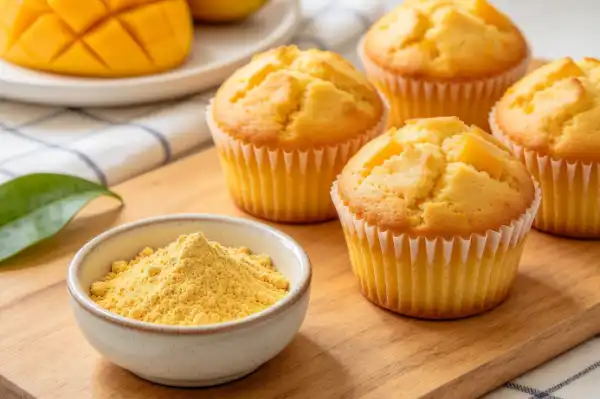
Mango powder for cakes and muffins is mainly used to enhance fruity aroma and flavor while contributing fruit solids and moisture-binding capacity. A common inclusion level is 5%–10% of the flour weight.
Mango powder contains dietary fiber that can absorb water, so additional liquid may be required to maintain the desired batter consistency. As a starting point, formulators can evaluate approximately 1–1.2 parts of additional liquid per part of mango powder, then optimize according to the powder's fiber content and processing conditions. Mango powder should also be thoroughly sifted with other dry ingredients to promote uniform dispersion and avoid localized effects on egg foam.
Yeasted Breads
Mango powder for bread can provide a distinctive fruity flavor and yellowish crumb color. The recommended usage level is generally 2%–5% of the flour weight. Higher levels may affect dough handling and gluten development.
For formulations containing higher levels of mango fruit powder, strong bread flour or additional vital wheat gluten may help maintain dough structure. A controlled addition sequence can also improve processing consistency. Mango powder is often blended with the dry ingredients or incorporated after initial dough development, depending on the formulation and mixing equipment.
Bakery Fillings and Inclusions
Mango powder for bakery fillings can serve as a concentrated mango flavor and fruit ingredient in fruit fillings, custards, coulis, creams, and bake-stable inclusions. A typical usage level is 8%–15% of the total filling weight.
Its fruit solids and naturally occurring pectin may contribute to water binding and texture. However, mango powder varies in pectin and fiber content, so the amount of modified starch, gelatin, or other hydrocolloids should be optimized through application testing.
Table of Key Process Control Parameters
To enable factory R&D personnel and bakers to accurately grasp the key control points for mango powder in industrial production, the key control parameters have been compiled in the table below.
Guide to Process Control Parameters and Solutions for Baking Applications Using Mango Powder
|
Key Control Parameters |
Recommended parameter range |
Impact of process deviations: |
Solutions / Formula Adjustments |
|
Batter/Dough pH Value |
5.5–6.5 |
If the pH is below 5.0, starch gelatinization is incomplete, resulting in poor setting and a failure to expand properly. |
Increase the dosage of sodium bicarbonate (baking soda) to neutralize the organic acids in the mango powder using the alkaline salt. |
|
Baking Temperature |
5°C–12°C lower than the standard formula |
Excessive temperatures cause the surface to scorch prematurely and produce a bitter taste due to the Maillard reaction. |
Employ a "low-temperature, long-duration" baking process; alternatively, activate the top fan or turn off the top heating element during the latter stage of baking. |
|
Moisture Addition Factor |
Add 0.8 g–1.2 g of water for every 1 g of mango powder added |
Failure to add sufficient water results in overly dry dough, a coarse texture in the finished product, and a tendency to collapse. |
Adjust the proportions of water, milk, or egg liquid in the formula to match the water absorption capacity of the mango powder. |
|
Workshop Ambient Humidity |
Relative humidity (RH) < 45% |
High ambient humidity causes mango powder to clump and absorb moisture, potentially clogging the intake pump. |
Equip the production area with dehumidification equipment; reseal the mango powder immediately after opening or use anti-caking packaging. |
|
Dry Powder Premixing Sequence |
Must be premixed and sifted with wheat flour/starch |
Direct addition of the wet phase leads to uneven dispersion, resulting in concentrated acidic spots and discoloration. |
The mango powder must first be thoroughly pre-mixed with the other dry ingredients (such as flour and powdered sugar) at a 1:5 ratio. |
FAQs:
Q1: What Is Mango Powder Used For In Instant Beverage Manufacturing?
Mango powder is used as a convenient mango flavor and fruit ingredient in instant drink mixes, powdered beverages, smoothies, nutritional drinks, and functional food products. It provides mango taste, aroma, and color while offering easy storage, handling, and formulation.
Q2: What Are The Advantages Of Using Mango Powder In Instant Beverages?
Mango powder offers several advantages, including convenient handling, consistent dosage, long shelf stability when properly packaged, and easy blending with other powdered ingredients. It can help manufacturers develop mango-flavored instant beverages without processing fresh mangoes for every production batch.
Q3: Is Mango Powder Suitable For Instant Drink Mixes?
Yes. Mango powder can be formulated into instant drink mixes when its particle size, moisture content, solubility, dispersibility, and flowability are suitable for the application. Manufacturers should select a powder specification according to the beverage formula and processing method.
Q4: What Type Of Mango Powder Is Best For Instant Beverage Manufacturing?
The suitable mango powder depends on the beverage formulation and processing requirements. Freeze-dried mango powder is often selected when manufacturers prioritize fruit characteristics, while spray-dried or other processed mango powders may be considered when instant solubility, flowability, and cost efficiency are important.
Q5: Does Mango Powder Dissolve Easily In Water?
The dispersibility and solubility of mango powder depend on the production process, particle size, moisture content, and formulation. For instant beverages, manufacturers should evaluate water dispersibility, sedimentation, and reconstitution performance before selecting a commercial mango powder.
Q6: Can Mango Powder Be Used In Powdered Juice Products?
Yes. Mango powder can be used in powdered juice drinks and instant fruit beverage formulations. It may be blended with sweeteners, acidulants, fruit powders, flavors, vitamins, minerals, or other functional ingredients to create customized mango beverage products.
Q7: What Should Manufacturers Consider When Buying Bulk Mango Powder?
Key considerations include mango source, processing method, fruit content, moisture, particle size, color, flavor profile, microbiological specifications, heavy metals, pesticide residues, packaging, shelf life, and required certifications. A detailed COA and representative sample should be evaluated before bulk purchasing.
Q8: How Should Mango Powder Be Stored For Instant Beverage Manufacturing?
Mango powder should generally be stored in a cool, dry environment away from direct sunlight, moisture, heat, and strong odors. Moisture-barrier packaging is important because fruit powders can be hygroscopic and may form lumps when exposed to humid conditions.
Q9: Can Mango Powder Be Customized For Instant Beverage Formulations?
Yes. Depending on the supplier's capabilities, manufacturers may request customized particle sizes, processing methods, packaging formats, or formulation specifications. OEM and ODM services can also support customized instant mango beverage products and private-label manufacturing.
Summary
Mango powder is a natural baking ingredient for clean-label, fruit-flavored, and high-fiber baked foods. As a freeze-dried mango powder or mango fruit powder, it provides natural flavor, color, and nutritional value. Its hygroscopicity, acidity, and sugar content require controlled formulation. Adjusting water, leavening agents, gluten, and baking temperature can improve dough structure, texture, and color.
Guanjie Biotech is a professional mango powder supplier and manufacturer, providing high-quality mango fruit powder for global food businesses. Its products are suitable for bakery, beverage, and health food applications. The company also offers OEM and ODM services, supporting customized freeze-dried mango powder, solubility, flowability, anti-caking properties, flavor profiles, packaging, and bulk mango powder solutions based on customer requirements. Welcome to enquire with us at info@gybiotech.com.
References:
[1] Zotarelli, M. F., Durigon, A., da Silva, V. M., Hubinger, M. D., & Laurindo, J. B. (2022). Rehydration of mango powders produced by cast-tape drying, freeze drying, and spray drying. Drying Technology, 40(1), 175-187.
[2] Salehi, F., & Aghajanzadeh, S. (2019). Effect of dried fruits and vegetables powder on cakes quality: A review. Trends in Food Science & Technology, 93, 45-55.
[3] Salehi, F. (2020). Recent applications of powdered fruits and vegetables as novel ingredients in biscuits: a review. Nutrire, 45, 1-12.
[4] ȘTEFAN, E.-M., ISTRATE, A.-I., CISMARU, E.-M., et al. (2025). Effect of fruit powder addition on dough rheology and bakery product safety - Review. INMATEH - Agricultural Engineering, 77(3), 1034-1048.
[5] Baldelli, A., Pico, J., Woo, M. W., et al. (2024). Spray dried powder of common fruit juices: Enhancement of main properties. Powder Technology, 438, 119636.
[6] Binsaleh, A. Y., et al. (2025). Utilization of aloe vera gel and mango powder in the preparation of instant beverage mix: Physicochemical, phytochemical, and antioxidant analyses. Italian Journal of Food Science.