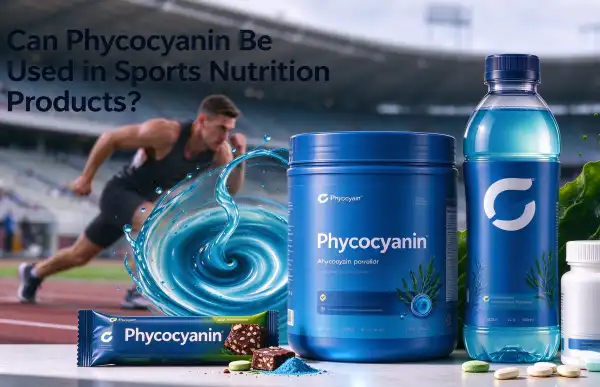
Phycocyanin powder is widely used in sports nutrition products due to its antioxidant properties and potential support for muscle recovery. Research suggests that phycocyanin extract may help regulate oxidative stress by activating antioxidant pathways, including the Nrf2 signaling pathway. As a natural blue spirulina extract, it is suitable for endurance and recovery-focused formulations, including sports supplements, capsules, protein powders, and ready-to-drink beverages. Bulk phycocyanin powder provides a clean-label functional ingredient option for manufacturers.
Why Can Phycocyanin Be Used in Sports Nutrition Products?
The development of sports nutrition products increasingly focuses on three major areas: energy metabolism support, athletic performance enhancement, and post-exercise recovery. Among these areas, recovery has become a critical direction for innovation, especially regarding oxidative stress management, inflammation regulation, and muscle repair.
During high-intensity or prolonged exercise, excessive production of reactive oxygen species (ROS) and reactive nitrogen species (RNS) may exceed the body's natural antioxidant capacity. This imbalance can contribute to oxidative damage, including lipid peroxidation, protein oxidation, and muscle micro-injury. Therefore, athletes and active individuals often incorporate antioxidant ingredients into sports nutrition formulations.
As a natural water-soluble protein pigment, Blue Spirulina Phycocyanin Powder provides antioxidant and anti-inflammatory properties that support modern sports nutrition applications. Derived mainly from spirulina extract, phycocyanin is recognized as a clean-label functional ingredient that aligns with the demand for natural recovery-focused supplements. Its antioxidant potential makes natural phycocyanin extract an attractive choice for sports nutrition product development.
Physiological Mechanisms of Phycocyanin in Sports Nutrition
Activation of the Nrf2 Pathway and Antioxidant Defense
Phycocyanin, a natural blue pigment extracted from Spirulina, has attracted attention as a functional ingredient in sports nutrition due to its antioxidant activity. One important mechanism involves the activation of the nuclear factor erythroid 2-related factor 2 (Nrf2) pathway, which regulates the expression of endogenous antioxidant enzymes, including superoxide dismutase (SOD) and catalase (CAT).
Studies using endurance exercise models have shown that Spirulina extract containing phycocyanin may help reduce oxidative stress markers. In trained animals, phycocyanin supplementation was associated with lower levels of malondialdehyde (MDA), a biomarker of lipid peroxidation, while increasing the expression of genes related to Nrf2 signaling and mitochondrial biogenesis. Additional research on exhaustive exercise models suggests that phycocyanin can reduce free radical accumulation in brain tissues and enhance SOD and CAT activities. However, its effects on glutathione peroxidase (GPx) appear to be limited, indicating a selective antioxidant regulation mechanism.
Effects on Exercise Performance and Metabolism
Phycocyanin powder may also support endurance performance by influencing energy metabolism. In animal studies involving treadmill training, Spirulina extract supplementation improved aerobic capacity and positively affected lipid metabolism indicators, including triglyceride and cholesterol levels. Changes in genes related to glycogen storage and β-oxidation suggest that phycocyanin may contribute to exercise-induced metabolic adaptation.
Effects on Muscle Damage and Recovery
For sports nutrition applications, phycocyanin blue powder may provide support through oxidative stress management rather than direct muscle repair. Human studies have shown limited effects on exercise-induced muscle damage markers, including creatine kinase (CK) and delayed onset muscle soreness (DOMS). Therefore, phycocyanin supplements may be better positioned as antioxidant support ingredients for endurance athletes and active individuals.
Functional Comparison of Phycocyanin and Traditional Sports Nutrition Ingredients
To clearly demonstrate the unique characteristics of phycocyanin in the field of sports nutrition, the following section presents a multi-dimensional comparison with common sports nutrition ingredients.
Comparison of Characteristics: Phycocyanin vs. Traditional Sports Nutrition Ingredients
|
Evaluation Criteria |
Phycocyanin |
BCAA/EAA |
Antioxidants (Vitamins C/E) |
Plant polyphenols (resveratrol/anthocyanins) |
|
Primary Mechanism of Action |
Dual-pathway regulation via Nrf2/COX-2; scavenges ROS |
Directly provides substrates for protein synthesis (mTOR) |
Directly reduces radicals; easily converts to a pro-oxidant state |
Polyphenolic hydroxyl groups donate hydrogen and modulate signaling pathways |
|
Anti-inflammatory |
Highly targeted (specific inhibition of COX-2) |
No direct anti-inflammatory effect |
Low |
Moderate to high |
|
Endogenous enzyme activation |
Significantly upregulates SOD and GSH-Px expression |
None |
None (functions only as an exogenous consumable) |
Moderate |
|
Natural visual color |
Vibrant gem-blue color (natural pigment) |
Colorless or white powder |
Colorless or pale yellow |
Deep purple, red, or brown |
|
Thermal stability/processability |
Heat-sensitive (requires cold dissolution or gentle processing) |
High stability |
Prone to photo-oxidation |
Sensitive to pH changes |
|
Gastrointestinal comfort |
Excellent (no acidic irritation) |
High concentrations may cause intestinal discomfort due to osmotic pressure |
High doses can easily trigger excess gastric acid secretion |
Some polyphenols exhibit astringency and cause gastrointestinal irritation |
Phycocyanin Formulation Design and Synergistic Effects
Phycocyanin formulation design focuses not only on using a single active ingredient but also on combining natural phycocyanin with complementary sports nutrition ingredients to create multifunctional products. By integrating spirulina phycocyanin powder with proteins, amino acids, electrolytes, and recovery nutrients, manufacturers can develop advanced formulations targeting muscle recovery, endurance support, hydration, and antioxidant protection.
Phycocyanin + Whey Protein or Plant Protein (Muscle Recovery Complex)
Protein Phycocyanin bulk powders provide essential amino acids required for muscle protein synthesis, while phycocyanin extract offers antioxidant and anti-inflammatory support during recovery. Phycocyanin may help regulate oxidative stress pathways and support muscle function after intense exercise. This combination is suitable for sports nutrition products, including protein powders, meal replacement powders, and ready-to-drink (RTD) protein beverages.
Phycocyanin + BCAA or Leucine (Endurance and Anti-Fatigue Complex)
Branched-chain amino acids (BCAAs), especially leucine, play an important role in stimulating muscle protein synthesis and supporting endurance performance. Meanwhile, phycocyanin antioxidant properties help protect cells from excessive reactive oxygen species (ROS) generated during exercise. The combination of BCAA and food-grade phycocyanin provides a comprehensive approach for reducing exercise-related oxidative stress and supporting physical performance.
Phycocyanin + Curcumin or Collagen Peptides (Joint and Tissue Support Complex)
Curcumin and natural phycocyanin are both recognized for their potential antioxidant and inflammation-regulating activities. Combining these ingredients allows sports supplement manufacturers to design targeted recovery formulas with multiple functional benefits. When paired with Type II collagen peptides, this formulation can support connective tissue, cartilage, and joint health applications.
Phycocyanin + Electrolytes + Carbohydrates (Hydration and Recovery Complex)
Electrolytes such as sodium, potassium, and magnesium are essential for maintaining hydration balance during exercise. Adding maltodextrin helps replenish glycogen stores, while phycocyanin powder provides additional antioxidant support. This combination is suitable for sports drinks, hydration powders, and recovery beverages.
In product development, different delivery formats can be selected according to application requirements. Powders are commonly used in protein blends, sports nutrition powders, and daily antioxidant supplements. Capsules and tablets provide accurate dosage control for convenient supplementation. RTD beverages offer rapid consumption but require careful formulation because phycocyanin stability is affected by light, temperature, and pH. Generally, phycocyanin shows better stability in mildly acidic systems (pH 5–6), and light-resistant packaging is recommended to maintain its natural blue color.
Formulation Development and Key Process Technology Considerations for Sports Nutrition Products
When applying phycocyanin powder to sports nutrition products, it is necessary to address stability issues during processing and storage based on its physicochemical properties.
Solutions for the Development of Phycocyanin-Based Sports Nutrition Products
|
Development Phase |
Common Technical Limitations |
Industrial Solutions |
|
Thermal Stability |
Prone to protein denaturation and fading at temperatures above 60°C |
Utilize a formulation designed for reconstitution in cold liquids; employ microencapsulation technology or incorporate anti-denaturation stabilizers such as ascorbic acid or trehalose. |
|
pH Stability |
Susceptible to precipitation in acidic systems with pH < 4.0 |
Optimize the product pH range to 5.0–7.5; for acidic beverages, employ modified phycocyanin or polysaccharide-based protective complexing technologies. |
|
Photostability |
Highly prone to fading upon exposure to UV light or intense visible light |
Use light-shielding composite aluminum foil packaging or dark-colored PET/HDPE bottles; incorporate natural photoprotective agents. |
|
Solubility and Hygroscopicity |
Industrial powders tend to clump or dissolve slowly |
Employ fluidized bed granulation to enhance powder flowability and cold-water solubility. |
Regulatory Compliance and Safety of Phycocyanin
Before using phycocyanin powder in sports nutrition products, manufacturers must comply with the regulatory requirements of target markets.
• In China
Spirulina protein containing phycocyanin has been approved for food applications, and spirulina phycocyanin extract is commonly used as a natural food colorant and functional ingredient.
• In the United States
The FDA recognizes spirulina extract as a safe ingredient with GRAS status for use in foods and dietary supplements, including applications requiring a natural blue colorant phycocyanin.
• In Europe
Phycocyanin-rich spirulina extract is classified as a coloring food, which means it provides coloring properties derived from natural sources rather than being a synthetic additive.
Safety evaluations, including acute toxicity, sub-chronic toxicity, and genotoxicity studies, indicate that food grade phycocyanin has a favorable safety profile. These characteristics make bulk phycocyanin powder suitable for sports nutrition, supplements, and functional food formulations.
FAQs:
Q1: Can phycocyanin be used in sports nutrition products?
Yes. Phycocyanin can be used as a natural ingredient in sports nutrition products, including protein powders, energy drinks, electrolyte beverages, and recovery supplements. Its natural blue color, plant-based origin, and nutritional properties make it suitable for clean-label sports formulations.
Q2: Why is phycocyanin popular in sports nutrition formulations?
Phycocyanin is popular in sports nutrition because it is a natural blue pigment derived from spirulina. It provides antioxidant properties and can be incorporated into functional beverages, pre-workout formulas, and post-workout recovery products that target health-conscious consumers.
Q3: What types of sports nutrition products can contain phycocyanin powder?
Blue Phycocyanin powder can be added to sports nutrition products such as sports drinks, protein shakes, meal replacement powders, hydration supplements, energy gels, and functional nutrition beverages. Manufacturers can customize dosage and formulation based on product requirements.
Q4: Is phycocyanin suitable for plant-based sports nutrition products?
Yes. Phycocyanin is a plant-derived ingredient extracted from spirulina, making it suitable for many plant-based and vegan sports nutrition products. It can support clean-label product development without synthetic colorants.
Q5: How does phycocyanin improve the appearance of sports nutrition products?
Phycocyanin provides a natural blue color that can enhance the visual appeal of sports drinks, powders, and supplements. It is commonly used as a natural blue food colorant to replace artificial dyes in clean-label sports nutrition products.
Q6: What factors affect the stability of phycocyanin in sports nutrition products?
Phycocyanin stability is affected by temperature, light exposure, pH, oxygen, and processing conditions. Sports nutrition manufacturers should optimize formulation parameters, packaging, and storage conditions to maintain color and ingredient quality.
Q7: Can phycocyanin be combined with other sports nutrition ingredients?
Yes. Phycocyanin can be combined with ingredients such as plant proteins, amino acids, vitamins, minerals, electrolytes, and fruit powders. Compatibility testing is recommended to ensure product stability and maintain desired sensory characteristics.
Q8: What quality standards should manufacturers consider when purchasing bulk phycocyanin powder?
Sports nutrition manufacturers should evaluate phycocyanin purity, protein content, color value, microbiological safety, heavy metal limits, extraction methods, and certifications such as ISO, HACCP, Halal, and Non-GMO when sourcing bulk phycocyanin powder.
Q9: Where can companies buy high-quality phycocyanin powder for sports nutrition applications?
Companies can source high-quality bulk phycocyanin powder from experienced suppliers that provide consistent specifications, COA, testing reports, and customized solutions for sports drinks, dietary supplements, and functional nutrition products. Guanjie Biotech is a phycocyanin powder supplier; we can provide you with this.
Summary
In summary, phycocyanin has exceptional antioxidant, anti-inflammatory, mitochondrial-protective, and lactate-metabolism-regulating properties; phycocyanin perfectly aligns with core sports nutrition demands: enhancing endurance, delaying fatigue, accelerating muscle recovery, and protecting joints. As a premium spirulina extract, pure phycocyanin powder shows great promise for integration into key product categories such as pre-workout formulas, post-workout recovery protein powders, and ready-to-drink (RTD) functional beverages.
Guanjie Biotech is a trusted bulk phycocyanin powder manufacturer and supplier, offering high-quality OEM and ODM formulation services for global health supplement brands. Contact us today for reliable B2B ingredient sourcing and custom manufacturing solutions.
References:
[1] Vignaud, J., Loiseau, C., Côme, M., Martin, I., Rasoanarivo, R., Hérault, J., Mayer, C., Lépine, O., & Ulmann, L. (2025). Spirulina liquid extract supplementation improves oxidant status and performance in endurance-trained rats. Nutrients, *17*(2), 283.
[2] Wei, Y., Liu, S., You, T., Liu, X.-Y., Zhong, W., Wu, Y., Azhati, S., Han, Q., Jiang, W., & Liu, C. (2026). The Effects of Seaweed and Microalgae Supplementation on Exercise Performance and Recovery: A Systematic Review and Meta-Analysis. Nutrients, *18*(8), 1289.
[3] Phycocyanin attenuates skeletal muscle damage and fatigue via modulation of Nrf2 and IRS-1/AKT/mTOR pathway in exercise-induced oxidative stress in rats. (2024). PLOS ONE.
[4] Calella, P., Cerullo, G., Di Dio, M., Liguori, F., Di Onofrio, V., Gallè, F., & Liguori, G. (2022). Antioxidant, anti-inflammatory and immunomodulatory effects of spirulina in exercise and sport: A systematic review. Frontiers in Nutrition, *9*, 1048258.
[5] Chaouachi, M., Gautier, S., Carnot, Y., Guillemot, P., Pincemail, J., Moison, Y., Collin, T., Groussard, C., & Vincent, S. (2022). Spirulina supplementation prevents exercise-induced lipid peroxidation, inflammation and skeletal muscle damage in elite rugby players. Journal of Human Nutrition and Dietetics, *35*(6), 1151–1163.
[6] Chaouachi, M., Vincent, S., & Groussard, C. (2024). A Review of the Health-Promoting Properties of Spirulina with a Focus on athletes' Performance and Recovery. Journal of Dietary Supplements, *21*(2), 210–241.
[7] Dagnino-Leone, J., Figueroa, C. P., Castañeda, M. L., Youlton, A. D., Vallejos-Almirall, A., Agurto-Muñoz, A., Pavón Pérez, J., & Agurto-Muñoz, C. (2022). Phycobiliproteins: Structural aspects, functional characteristics, and biotechnological perspectives. Computational and Structural Biotechnology Journal, *20*, 1506–1527.