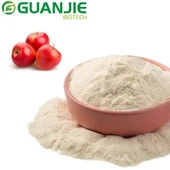
From a technical standpoint, natural fig powder is suitable for clean-label food formulations; however, its applicability depends heavily on the product category, the targeted quality tier, and the specific processing methods and regulatory compliance profile of the fig powder itself. As a dried-powder ingredient derived from whole fruit, fig powder offers a natural advantage in how it appears on an ingredient list; nevertheless, its high sugar content and distinct sensory characteristics impose specific constraints on formulation design.
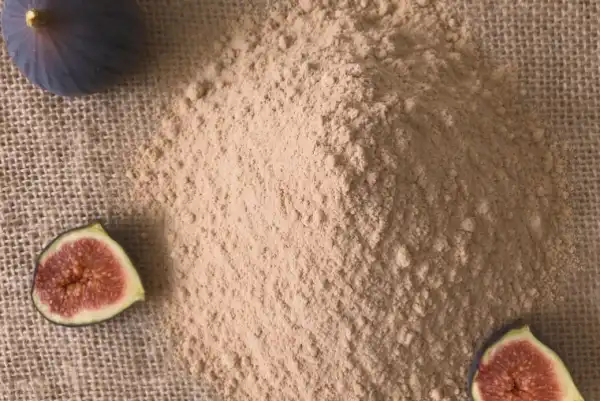
Why Is Natural Fig Powder Suitable for Clean-Label Food Formulations?
Physical Processing and Clean-Label Attributes
Natural fig powder is typically produced through freeze-drying or hot-air drying, followed by milling. Freeze-dried fig powder is processed under low-temperature and vacuum conditions, which can help preserve its natural color, flavor, and heat-sensitive compounds. When produced without carriers, preservatives, or other additives, it can serve as a single-ingredient option for clean-label food formulations.
Depending on the drying method and manufacturing process, fig powder may achieve a low moisture content that supports shelf stability. However, manufacturers should verify moisture content, water activity, and microbiological quality before determining suitable storage conditions.
For food manufacturers, 100% natural fig powder can simplify ingredient declarations when the product contains no additional ingredients. It is suitable for developing clean-label bakery products, snack foods, fruit blends, and other food applications.
Nutritional and Functional Contributions
Natural fig powder contains dietary fiber, natural sugars, and plant-derived polyphenols. Its composition varies according to fig variety, processing method, and raw material quality. Some research reports dietary fiber levels of approximately 17.62%–21.36% in fig powder, although these values should be confirmed for individual batches.
In bakery formulations, adding fig fruit powder may increase dietary fiber and polyphenol content. Its naturally occurring antioxidants can contribute to the overall antioxidant content of a product, but they should not automatically be considered a complete replacement for approved antioxidant additives.
Fig powder also provides natural sweetness from sugars such as glucose and fructose. Food manufacturers can use dried fig powder as a natural sweetening ingredient to partially replace refined sugar, depending on the target sweetness, texture, and formulation requirements.
How Is Fig Powder Suitable for Clean-Label Food Formulations?
Texture and Sensory Characteristics of Natural Fig Powder in Baked Goods
Natural fig powder is a versatile ingredient for clean-label baked goods, including biscuits and cookies. A 2025 study evaluated biscuits made by replacing wheat flour with dried fig powder at 0%, 50%, and 100%. The 50% replacement group achieved the highest sensory ratings for color, crispness, and flavor. Another study found that adding 7.5 g, 15 g, or 22.5 g of fig powder per 150 g of multigrain flour maintained good sensory quality, with natural sweetness complementing the grain flavors.
For food manufacturers, fig powder for baking offers three potential formulation benefits: natural color enhancement, partial sugar replacement, and texture modification. Its naturally occurring sugars contribute sweetness, while pectin and dietary fiber may support moisture retention and texture. These properties make bulk fig powder a useful option for developing clean-label cookies, biscuits, and other baked products.
Dispersibility of Natural Fig Powder in Beverages
Natural fig powder can also be incorporated into instant beverages, fruit blends, and functional drink formulations. Its pectin and fiber content may offer formulation benefits, although its suitability as a probiotic encapsulation carrier requires application-specific validation.
The dispersibility of fig powder depends on particle size, moisture content, and drying method. Freeze-dried fig powder may offer favorable rehydration characteristics, whereas hot-air-dried powder may clump due to its sugar content. However, performance varies with processing conditions and powder specifications.
For beverage manufacturers, selecting the right fig powder for beverages is essential when developing formulations without anti-caking agents. Evaluating particle size, flowability, moisture content, and rehydration performance can help optimize processing efficiency and product consistency. A qualified natural fruit powder supplier should provide technical specifications and samples for formulation trials before commercial production.
|
Product Categories |
Main functional contributions |
Key Considerations for Clean-Label Applications |
Potential Limitations |
|
Biscuits/Cookies |
Natural sweetness, coloring, fiber reinforcement, antioxidant |
Serves as a replacement for sucrose and synthetic colorants; can be used at inclusion levels of 30%–50% relative to flour weight. |
High inclusion levels may increase dough stickiness, requiring adjustments to moisture content. |
|
Solid Beverages/Instant Drink Mixes |
Flavor carrier, probiotic embedding matrix, natural sweetness |
Functions as a multi-purpose single ingredient, eliminating the need for synthetic encapsulating agents or carriers. |
Products with low water activity must be selected to prevent clumping. |
|
Cereal Bars/Energy Bars |
Bonding aid (pectin), sweetness, moisturizing |
Leverages the inherent adhesiveness of pectin to partially replace syrups or synthetic binders. |
The resulting texture may be relatively soft, necessitating the use of drying processes to control moisture levels. |
|
Dairy Products (Flavored Yogurt) |
Flavor addition, natural coloring |
Powdered forms must meet the microbiological standards required for dairy ingredients. |
High sugar content may affect the activity of fermentation cultures, requiring careful timing of the addition. |
How to Incorporate Natural Fig Powder into Food Formulations?
Natural fig powder is a fruit-based ingredient used in bakery products, beverages, dairy products, and nutritional formulations. As a natural sweetener and source of dietary fiber, pure fig powder can help manufacturers develop fruit-flavored products and clean-label formulations. However, food manufacturers should consider sugar content, sensory properties, and supplier documentation when selecting bulk fig powder.

• Balance Sugar Content with Clean-Label Claims
The naturally occurring sugars in fig powder contribute to its sweetness and flavor. Although a high sugar content does not automatically conflict with clean-label positioning, it may affect consumer perceptions of nutritional value. Manufacturers should carefully evaluate labeling requirements before using fig powder in products marketed as "sugar-free" or "no added sugar."
Because fig powder contains naturally occurring sugars, its use may affect whether a product qualifies for specific nutrition claims. Formulators should review the applicable regulations in their target markets and avoid making unsupported sugar-related claims.
• Optimize Fig Powder Inclusion Levels
The appropriate inclusion level of fig powder depends on the product's flavor, color, texture, and nutritional objectives. In bakery applications, higher replacement levels may increase fruit flavor and dietary fiber but can also affect dough handling, texture, and appearance.
For products such as white bread, plain yogurt, and mild-flavored beverages, starting trials at 5%–15% fig powder may help manufacturers evaluate sensory compatibility. These levels are formulation starting points, not universal recommendations. Higher inclusion rates should be tested through pilot production and sensory evaluation.
When developing high-fiber bakery products or fortified foods, manufacturers should balance nutritional targets with consumer acceptance and verify the final product's nutritional composition.
• Verify Supplier Documentation and Ingredient Quality
Reliable natural fig powder suppliers should provide documentation that supports ingredient traceability and quality assurance. Before purchasing bulk fig fruit powder, manufacturers should request an ingredient specification, Certificate of Analysis (COA), processing information, and relevant testing reports.
Depending on the intended application and market, documentation may include pesticide residue and heavy metal testing, allergen information, and confirmation of whether preservatives, anti-caking agents, or colorants are added. Non-GMO statements and processing declarations should also be verified when required.
FAQs:
Q1. Is fig powder suitable for clean-label food formulations?
Yes, fig powder can be suitable for clean-label food formulations when it is produced from figs and meets the manufacturer's ingredient requirements. It can provide fruit-derived flavor, color, and solids in products such as bakery goods, snack bars, beverages, and dessert mixes. For clean-label product development, buyers should verify the ingredient list, processing method, carrier content, and presence of additives or preservatives. The term "clean label" does not have one universal legal definition, so manufacturers should align ingredient selection with their target market and labeling policy.
Q2. What makes natural fig powder a clean-label ingredient?
Natural fig powder may support clean-label product development because it can deliver fruit-derived ingredients in a convenient powdered format. Depending on the manufacturing process, it may help manufacturers simplify ingredient handling and incorporate fig into dry blends. However, not all fig powders have the same composition. Some spray-dried products contain carriers such as maltodextrin or gum arabic. Buyers should review the product specification and ingredient declaration to confirm whether the powder meets their clean-label criteria.
Q3. Does fig powder contain added sugar or preservatives?
The composition of fig powder depends on the raw material and manufacturing process. A powder made solely from figs may contain naturally occurring sugars without added sugar or preservatives. Other commercial products may contain carriers, processing aids, or additional ingredients. Manufacturers should not assume that every product labeled "natural fig powder" is free from additives. Requesting a complete ingredient declaration and current Certificate of Analysis (COA) helps buyers verify the product's suitability for clean-label applications.
Q4. Can fig powder replace refined sugar in food formulations?
Fig powder can partially replace refined sugar in selected food formulations, but it is not a one-to-one substitute. It contributes naturally occurring sugars, fruit solids, flavor, and potentially dietary fiber, depending on its composition and processing method. These components may affect sweetness, moisture retention, texture, color, and processing behavior. Food developers should conduct formulation trials to determine the appropriate inclusion rate and evaluate the finished product's nutritional profile and labeling requirements.
Q5. How does fig powder support clean-label bakery products?
Fig powder can be incorporated into bread, cookies, muffins, cakes, biscuits, and pastry fillings to provide fruit-derived flavor and sweetness. It may help manufacturers develop recipes with fruit ingredients and reduce reliance on certain flavoring ingredients or refined sugar, depending on the formulation. However, fig powder can also influence dough hydration, browning, texture, and shelf life. Pilot testing is recommended to establish the optimal inclusion rate and maintain consistent product quality.
Q6. Is fig powder suitable for clean-label beverages and smoothies?
Yes, fine-mesh fig powder can be evaluated for use in smoothies, instant beverage mixes, fruit drinks, and powdered nutrition products. It contributes fig flavor and fruit solids, while its dispersion and texture depend on the drying method, particle size, and formulation. Manufacturers should assess solubility or dispersibility, sedimentation, sweetness, and mouthfeel in the finished beverage. If the fig powder for a food manufacturing product is marketed as a clean-label beverage, the carrier system and other ingredients should also meet the brand's labeling standards.
Q7.How should fig powder be stored to maintain quality in clean-label products?
Dried fig powder should generally be stored in sealed, moisture-resistant packaging in a cool, dry environment away from direct sunlight and strong odors. Moisture exposure can cause caking, affect flowability, and potentially compromise microbiological quality. Storage requirements and shelf life depend on the powder's moisture content, water activity, packaging, and composition. Manufacturers should follow supplier recommendations and conduct stability testing when commercial fig powder is incorporated into a new food formulation.
Conclusion:
Natural fig powder is a versatile fruit ingredient for clean-label food formulations. As a fruit-based powder, fig powder for clean-label foods can help simplify ingredient lists while providing natural sweetness, color, texture, and fruit flavor. Depending on the processing method and product specifications, natural fig fruit powder may also contain naturally occurring dietary fiber and antioxidant compounds, making it suitable for various food and beverage applications.
For food manufacturers, bulk fig powder can be incorporated into bakery products, powdered beverage mixes, snack formulations, and other fruit-based products. At appropriate inclusion levels, it can contribute to the sensory characteristics of the finished product. However, formulation performance depends on the powder's sugar content, moisture level, particle size, flavor profile, and processing conditions.
When selecting a natural fig fruit powder supplier, buyers should verify that the ingredient meets their clean label requirements. Important considerations include whether the fig powder contains added carriers, preservatives, or other additives, as well as the availability of a Certificate of Analysis (COA), ingredient specifications, and relevant compliance documentation. These details help manufacturers assess ingredient suitability and maintain consistent product quality.
Guanjie Biotech supplies natural fig powder for B2B food ingredient applications. The company also offers flexible OEM (Original Equipment Manufacturing) and ODM (Original Design Manufacturing) services to support customized product development. We can provide private-label fig powder. Whether customers require bulk fig powder for existing formulations, private-label products, or assistance with developing new food and beverage products, Guanjie Biotech provides solutions tailored to their project requirements. Welcome to enquire with us at info@gybiotech.com.
References:
[1] Berrighi, N., et al. (2025). Effects of dried fig flour incorporation as a natural additive on nutritional composition and sensory assessment of biscuit. Czech Journal of Food Sciences, *43*(1), 37-47.
[2] Bölek, S. (2020). Effects of waste fig seed powder on quality as an innovative ingredient in biscuit formulation. Journal of Food Science.
[3] Chae, H. Y., & Hong, J. H. (2016). Quality characteristics of spray-dried powder from unripe fig extract. Korean Journal of Food Preservation, *23*(3), 355-360.
[4] Zulfiqar, S., Butt, M. S., Chatha, A., Hafiz, M. S., & Basu Roy, S. (2026). Phytochemical content and antioxidant activities of Ficus carica extracts. International Journal of Analytical Chemistry, *2026*(1), 3209992.
[5] Zheng Feng, Wang Zhongming, Wang Di, Mou Xiumei, Lai Haizhong. (2019). Quality Evaluation of Polysaccharides from Dried Figs Based on the Coefficient of Variation Weighting Method. *Storage and Process*, *19*(4), 119-124.
[6] Study on the Efficacy of Ultrafine Fig Powder and Fig Dietary Fiber Powder in Alleviating Constipation. (2025). *Journal of Chinese Institute of Food Science and Technology*, *25*(3).