

In the modern food industry, yam is a high-quality raw material that is both food and medicine. Because it is rich in starch, mucopolysaccharides, active polysaccharides, saponins, and various trace elements, it is widely used in nutritional meal replacement powders, functional foods, baked goods, infant complementary foods, and frozen foods. For food manufacturers, the choice of raw material form-fresh yam versus yam powder-directly influences product quality, production process design, capital investment in equipment, storage costs, and overall economic efficiency.
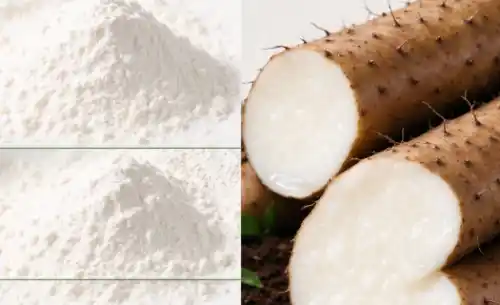
Physicochemical and Processing Characteristics
Physicochemical and Processing Characteristics of Fresh Yam
Fresh yam typically contains 70%–80% moisture, with its dry matter consisting mainly of starch, including amylose and amylopectin, as well as dietary fiber and protein. Although fresh yam is widely used in traditional foods, its high moisture content creates challenges for industrial processing, transportation, and storage.
• Enzymatic Browning and Oxidative Sensitivity
Fresh yam contains polyphenol oxidase (PPO), an enzyme that promotes browning when the tissue is exposed to oxygen during peeling, slicing, or crushing. This reaction can affect the appearance and color consistency of the final product. Food manufacturers may use blanching, acid treatment, or ascorbic acid solutions to reduce enzymatic browning before further processing.
• Mucilaginous Properties and Viscosity
Yam contains mucilage, polysaccharides, and other components that influence its viscosity and water-binding properties. These characteristics can improve texture in traditional food applications but may complicate industrial production. During pumping, homogenization, and heat treatment, fresh yam can cause equipment clogging, uneven mixing, or material separation.
• Microbial Stability and Storage Challenges
Due to its high moisture content and water activity, fresh yam is susceptible to microbial growth. Without appropriate refrigeration or preservation, it can deteriorate quickly. These limitations make fresh yam less convenient for long-distance transportation and large-scale food manufacturing.
Physicochemical and Processing Characteristics of Yam Powder
Yam powder is produced by drying and milling fresh yam using methods such as hot-air drying, drum drying, spray drying, or freeze-drying, depending on the raw material and desired product characteristics. Compared with fresh yam, dried yam powder offers easier handling, more convenient storage, and greater flexibility in industrial formulations.
• Moisture Content and Storage Stability
Commercial yam powder is often manufactured to a target moisture content of approximately 5%–8%, although specifications vary by product and drying method. Its reduced moisture content and water activity help limit microbial growth when the powder is properly packaged and stored in a cool, dry environment.
• Rehydration, Starch Gelatinization, and Particle Size
The functional properties of yam powder depend on the processing method. Drum-dried or pregelatinized yam powder may rehydrate more readily in cold or warm water because its starch has undergone partial or substantial gelatinization. By contrast, conventionally dried yam powder may require heating to achieve the desired texture.
Fine milling can also produce smaller particles, improving powder uniformity and mouthfeel. Particle sizes of 200–500 mesh may be achievable with specialized equipment, depending on the material and processing conditions.
• Standardization and Industrial Applications
Industrial yam powder can be tested and blended to maintain consistent moisture content, starch composition, and particle size. This consistency supports applications in instant foods, bakery products, beverages, noodles, and other processed foods.
Industrial Processing Methods and Production Efficiency
Pre-Processing Costs and Labor Requirements
• Fresh Yam Processing:
Fresh yams require several preparation steps, including cleaning, peeling, trimming, slicing, color stabilization, and blanching. These operations require manual labor or specialized machinery. During peeling, yam sap may cause skin irritation in some workers, making appropriate protective measures and efficient peeling equipment important. In addition, peels and trimmed portions can generate substantial processing waste, potentially increasing raw material costs.
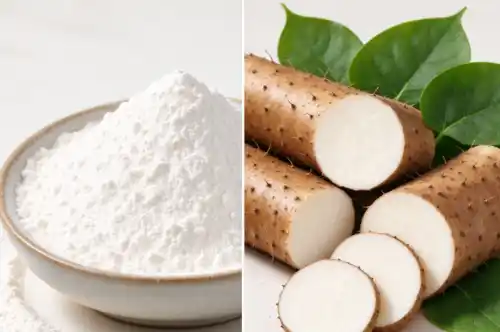
• Yam Powder Processing:
Using standardized yam powder simplifies ingredient preparation by reducing the need for on-site cleaning, peeling, and slicing. Food manufacturers can focus on accurate weighing, dry blending, or controlled dissolution, helping reduce labor requirements, processing time, and wastewater generation. For large-scale production, bulk yam powder can improve ingredient handling and support more efficient manufacturing workflows.
Process Control and Equipment Compatibility
• Fresh Yam:
Fresh yams vary in moisture content, maturity, and natural sugar levels due to seasonal and agricultural conditions. These variations can affect solids content, viscosity, and product texture, requiring frequent adjustments to processing parameters.
• Yam Powder:
As a dried ingredient, industrial yam powder can provide more consistent handling and formulation characteristics when supplied to an agreed specification. It is suitable for applications such as solid beverages, bakery mixes, noodles, and extruded snacks.
Supply Chain Management, Warehousing, and Logistics Costs
Storage Conditions and Cold Chain Requirements
• Fresh Yam:
As a fresh agricultural product, fresh yam has stringent requirements for storage temperature, humidity, and ventilation. Long-term preservation typically necessitates cold storage (at temperatures between 1°C and 4°C); otherwise, the product is prone to heat generation from respiration, dehydration (shriveling), sprouting, or mold growth.
• Yam Powder:
Packaged in multi-layered, moisture-proof materials (such as aluminum foil bags or kraft paper bags with PE liners), yam powder can be stored at ambient temperatures. It does not require costly cold chain logistics, resulting in significant savings on storage space and energy consumption.
Shelf Life and Supply Chain Resilience
• Fresh Yam:
Highly sensitive to seasonal, climatic, geographical, and cultivation-cycle factors, fresh yam is subject to volatile market prices and has a very short shelf life (ranging from a few days to several weeks).
• Yam Powder:
Once dried and hermetically sealed, yam powder typically has a shelf life of 12 to 24 months. This allows enterprises to maintain stable, long-term strategic inventory, effectively mitigating supply chain risks such as seasonal raw material shortages and sharp price spikes.
Comparative Performance Across Different Food Categories
Solid Beverages and Meal-Replacement Powders
For products such as black sesame paste, yam-coix seed-euryale seed powder, and meal-replacement shakes, consumers expect a smooth texture without noticeable sediment or clumping after reconstitution.
• Fresh Yam:
Cannot be directly incorporated into instant solid beverages; attempting to process it into a pulp would result in prohibitively high drying costs and poor solubility.
• Yam Powder:
Offers excellent instant solubility and dispersibility. Particularly when processed via superfine grinding or pre-gelatinization, the powder disperses rapidly and uniformly in water, forming a stable colloidal suspension-making it the standard core ingredient for this product category.
Baked Goods, Pastries, and Pasta
Yam ingredients are incorporated into products such as bread, biscuits, pastries, and noodles to enhance their nutritional value and functional properties.
• Fresh Yam:
Must be processed into a purée before being incorporated into the dough. Because the purée has a very high moisture content (over 70%), it significantly disrupts the gluten network-interfering with the hydration and cross-linking of gluten proteins-which results in dough that is excessively soft and sticky, difficult to shape, requires longer baking times, and is more prone to mold growth.
• Yam Powder:
Used as a substitute for or a fortifying ingredient in wheat flour (typically at an inclusion rate of 5% to 20%). It can be dry-blended directly with wheat flour without compromising the fundamental rheological properties of the dough, while simultaneously enhancing the product's water-holding capacity and delaying starch retrogradation (staling).
Frozen and Convenience Foods
In applications such as fillings for *tangyuan* (glutinous rice balls), meat product stuffings, or frozen steamed buns:
• Fresh Yam: Provides an authentic fibrous texture and a satisfying chew, making it ideal for premium frozen products that aim to replicate the quality of traditional, handmade items.
• Yam Powder:
Helps regulate the viscosity and freeze-thaw stability of fillings, preventing the separation of free water (syneresis) during the freezing process. It also allows for precise dosing and offers greater ease of handling.
Comprehensive Performance Comparison Table
The following table provides a quantitative and systematic comparison of fresh yam and yam powder, evaluating their performance across key dimensions relevant to applications in the food industry:
|
Evaluation Dimensions |
Fresh Yam |
Yam Powder |
|
Water Activity and Stability |
Very high ($a_w > 0.95$); highly susceptible to spoilage and deterioration |
Very low (aw < 0.3); long shelf life at room temperature (1–2 years) |
|
Storage and Logistics Requirements |
Requires cold storage; strict warehousing conditions; high logistics costs |
Store in a cool, dry place at room temperature; low storage and logistics costs |
|
Pre-processing and Processing Load |
Complex (involves peeling, color retention, and blanching; 15%–25% loss rate) |
Minimal; allows for direct measurement and dosing with no waste generation |
|
Process Standardization and Uniformity |
Poor (highly variable due to season, origin, and the maturity level of each batch) |
High (consistent physicochemical properties, facilitating industrial quality control) |
|
Suitability for Application Scenarios |
Traditional dishes, handmade pastries, and specific fresh-food products |
Solid beverages, baked goods, nutritional meal-replacement powders, functional foods |
|
Microbiological Risks |
High (prone to carrying bacteria and mold; requires rigorous sterilization) |
Low (drying process inhibits microbial growth; hygienic standards are easy to maintain) |
Fresh Yam vs. Yam Powder: How To Choose?
When choosing between fresh yam and yam powder, food manufacturers should evaluate product positioning, production capabilities, total cost of ownership (TCO), and supply chain stability. Understanding the differences between yam powder and fresh yam helps manufacturers select the most suitable raw material for their food processing applications.
Product Positioning and Consumer Expectations
Fresh yam is suitable for products that emphasize fresh preparation, traditional recipes, or the texture of freshly cut yam. It may be preferred when the production process relies on the characteristics of fresh raw materials and the target market values freshness.
In contrast, yam powder for food manufacturers is a practical option for standardized, mass-produced products, instant food formulations, nutritional blends, and long-shelf-life packaged foods. Its dry format supports consistent ingredient measurement and convenient storage, making it suitable for various industrial food applications.
Existing Production Line Infrastructure
Before selecting a raw material, manufacturers should assess their existing production equipment. Processing fresh yam may require washing, peeling, cutting, color-control treatments, pulping, and appropriate thermal processing equipment.
If a facility lacks the necessary wet-processing infrastructure, using dried yam powder may reduce equipment investment and simplify raw material handling. Manufacturers should still verify the powder's solubility or dispersibility, particle size, moisture content, and compatibility with their specific production processes.
Total Cost of Ownership (TCO)
Although the purchase price of bulk yam powder may be higher per kilogram than that of fresh yam on a simple weight basis, purchase price alone does not determine the total processing cost.
A comprehensive cost analysis should include peeling and trimming losses, cold storage, transportation, labor, water consumption, processing energy, and spoilage. Yam powder may reduce preparation requirements and material losses, potentially improving cost efficiency in large-scale food production. Actual savings depend on the powder specification, dosage, yield, and manufacturing process.
Supply Chain Stability and Raw Material Consistency
Fresh yam availability and quality may vary with harvest seasons, transportation conditions, and storage requirements. These variations can affect production scheduling and finished-product consistency.
Industrial yam powder offers a convenient alternative for manufacturers seeking standardized ingredient specifications and easier inventory management. Its lower moisture content generally supports more convenient storage and transportation than fresh yam, provided that suitable packaging and storage conditions are maintained.
FAQs:
1. What is the difference between yam powder and fresh yam?
Yam powder is produced by processing yam tubers through methods such as drying and milling, while fresh yam is an unprocessed or minimally processed tuber with a high moisture content. For food manufacturers, yam powder offers easier storage, standardized handling, and convenient incorporation into dry formulations, whereas fresh yam is suitable for products that require the texture and characteristics of freshly prepared yam. The best choice depends on the product's moisture requirements, processing equipment, shelf life, and desired sensory properties.
Q2. Is yam powder better than fresh yam for commercial food production?
Yam powder can be more convenient than fresh yam for large-scale food manufacturing because it is easier to weigh, transport, store, and blend into dry ingredients. It can also help reduce preparation steps, including peeling, cutting, and cooking, depending on the powder's processing method. Fresh yam may be preferable when a recipe requires recognizable yam pieces or a specific fresh-tuber texture. Manufacturers should compare ingredient costs, processing losses, yield, and finished-product quality before choosing.
Q3. Does yam powder have the same nutritional value as fresh yam?
Yam powder and fresh yam can provide similar types of nutrients, including carbohydrates, dietary fiber, and certain minerals. However, their nutritional composition per 100 grams differs substantially because fresh yam contains considerable water, while yam powder is more concentrated. Drying can also affect heat-sensitive nutrients and other quality attributes. Manufacturers should compare products on a dry-weight basis and use analytical data to establish accurate nutritional declarations for finished foods.
Q4. Can yam powder replace fresh yam in food formulations?
Yes, yam powder can replace some or all of the fresh yam in selected formulations, but a direct one-to-one weight substitution is generally inappropriate. Fresh yam contains much more water, so formulators must account for the difference in moisture content and adjust the added liquid accordingly. Hydration behavior, starch characteristics, particle size, and cooking conditions can also influence the final texture. Pilot trials are recommended before scaling up the replacement.
Q5. Is yam powder suitable for bakery products, noodles, and snacks?
Yes. Yam powder can be evaluated as an ingredient in bread, cakes, biscuits, noodles, crackers, and snack products. It may contribute yam flavor, color, starch, and solids, depending on the powder type. However, its effects on dough development, water absorption, viscosity, and product texture depend on the formulation and processing conditions. Food developers should determine an appropriate inclusion rate through application testing rather than assuming that all yam powders perform identically.
Q6. What is the difference between purple yam powder and white yam powder?
Purple yam powder and white yam powder differ primarily in the yam variety used, their natural color, and their potential sensory and compositional characteristics. Purple yam powder may provide a purple color that is useful in visually distinctive food products, while white yam powder may be more suitable for formulations requiring a lighter appearance. Color intensity and retention depend on raw material quality, drying conditions, pH, and processing temperature. Buyers should confirm the botanical identity and color specifications before selecting a grade.
Summary
In summary, fresh yam and yam powder offer different benefits for the food industry. Fresh yam provides an authentic flavor and natural texture but has a short shelf life, higher storage costs, and greater processing losses. In contrast, yam powder offers a longer shelf life, lower storage requirements, and easier quality standardization. As a versatile ingredient, food-grade yam powder supports efficient production of bakery products, beverages, snacks, and instant foods. For large-scale food manufacturers, bulk yam powder can simplify processing, improve batch consistency, and support automated production lines. Choosing a reliable yam powder supplier helps manufacturers meet ingredient quality requirements and achieve more efficient, consistent food production.
Guanjie Biotech is a professional yam powder supplier and manufacturer, providing food-grade yam powder for food production companies. We offer bulk yam powder supply and flexible OEM and ODM services to meet different business needs. Our OEM service supports customized production based on customer specifications, formulas, and packaging requirements. With our ODM service, customers can access established product formulas and processing solutions to simplify product development and launch products under their own brands. Whether you need wholesale yam powder as a standardized raw material or customized yam powder solutions, Guanjie Biotech provides reliable supply and technical support to help streamline development and improve production efficiency. Welcome to enquire with us at info@gybiotech.com.
References:
[1] Jin, J., Xu, X. Q., & Qian, Y. Y. (2010). Study on Processing Method and Quality of Cooked Yam Powder. Food and Fermentation Industries, *36*(12), 124-128. https://doi.org/10.13995/j.cnki.11-1802/ts.2010.12.029
[2] (2026). Vacuum steam pulsed blanching enhances enzyme inactivation and quality attributes of Yam via moderate structural modification. Innovative Food Science and Emerging Technologies, *109*, 104478. https://doi.org/10.1016/j.ifset.2026.104478
[3] (2016). Effects of drying processes on starch-related physicochemical properties, bioactive components and antioxidant properties of yam flours. Food Chemistry. ScienceDirect.
[4] Jin, J., Xu, X. Q., & Qian, Y. Y. (2010). Study on Processing Method and Quality of Cooked Yam Powder. Food and Fermentation Industries, *36*(12), 124-128.
[5] (2017). Research on Drying Technologies for Yam Powder. Agricultural Science-Technology and Information, (23).
[6] (2015). Influence of Drying Methods on the Quality of Whole Yam Powder. Science and Technology of Food Industry. https://doi.org/10.13386/j.issn1002-0306.2015.24.010
[7] Wang, X. M., Yu, Z. L., Hu, X. L., Xu, A. L., Guan, W. H., & Han, L. L. (2022). Study on Preparation Methods and Physicochemical Properties of Yam Powder. The Food Industry, (11), 18-23.
[8] Lin, X. L. Nutritional and Functional Properties of Yam and the Current Status of Its Product Development. Science and Technology of Food Industry. *49*(6), 343.


