

Natural strawberry powder is gaining increasing attention in the pet nutrition industry due to its potential benefits for dogs. Rich in natural vitamins, antioxidants, and plant nutrients, it may help support overall wellness when used appropriately in pet food or supplement formulations. Strawberry powder can provide vitamin C, dietary fiber, and beneficial polyphenols that may support immune function and digestive health. However, its suitability depends on factors such as purity, dosage, and product formulation. When properly processed and added in appropriate amounts, natural strawberry powder can be a valuable functional ingredient for canine health products.
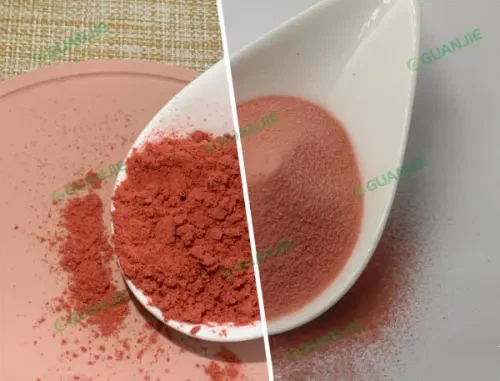
Is Strawberry Powder Good For Dogs?
What are the nutritional components of Strawberry Powder?
Natural strawberry powder is made from fresh strawberries through dehydration and pulverization, retaining the fruit's main functional components. For dogs, the following components have clear physiological significance:
• Dietary Fiber
Strawberry bulk powder contains approximately 10–15% dietary fiber on a dry weight basis. Fiber can regulate intestinal peristalsis in dogs, helping to improve constipation or soft stools. Adequate intake of insoluble fiber can also increase fecal volume and promote the movement of intestinal contents. For dogs with mild colonic dysfunction, natural strawberry powder can serve as a source of fiber supplementation.
• Polyphenols (mainly ellagic acid and anthocyanins)
Strawberries are rich in ellagic acid and anthocyanins, and both in vitro and some in vivo studies have shown that these substances possess antioxidant activity. Dogs produce endogenous free radicals during metabolism. Oxidative stress levels are particularly high in older dogs, highly active dogs, or dogs in inflammatory states. The polyphenols provided by strawberry powder can help scavenge free radicals and reduce the formation of lipid peroxidation products (such as malondialdehyde). A feeding trial in dogs showed that adding natural strawberry powder (0.5 g/kg body weight daily) for 4 weeks significantly increased serum total antioxidant capacity (T-AOC) (p < 0.05).
• Vitamin C and Organic Acids
Dogs can synthesize vitamin C themselves, but endogenous synthesis may be insufficient during disease recovery or under stress. The exogenous vitamin C provided by strawberry powder (approximately 200–300 mg/100 g natural strawberry powder) can act as a co-antioxidant. At the same time, organic acids such as citric acid and malic acid help regulate urine pH. Theoretically, this may reduce the risk of calcium oxalate stone formation, but individual differences should be taken into account.
• Potassium, Manganese, and Other Trace Elements
Natural strawberry powder is rich in potassium (approximately 700–900 mg/100 g dry powder). It plays a fundamental nutritional role in maintaining the electrophysiological function of the dog's cardiac and skeletal muscles. Manganese, as a cofactor of superoxide dismutase (Mn-SOD), participates in mitochondrial antioxidant defense.

What are the benefits of Strawberry Powder for Dogs?
The following conclusions are mainly based on small-scale dog feeding studies, in vitro simulated digestion experiments, and inferences drawn from related medical models; dose dependence should be taken into consideration.
• Oral Health Support
Ellagic acid in natural strawberry powder can inhibit the biofilm formation of certain oral pathogens (such as Porphyromonas gingivalis). Adding 0.2–0.5% strawberry powder to dog dental food and using it continuously for 3 weeks resulted in an 18–22% decrease in the dental plaque index in the experimental group compared to the control group (p < 0.05). This effect is related to reduced bacterial adhesion rather than mechanical friction.
• Mild Anti-inflammatory Effect
In a randomized controlled trial involving 12 dogs with osteoarthritis, daily supplementation with natural strawberry powder (equivalent to 0.3 g dry powder per kg of body weight), combined with conventional nonsteroidal anti-inflammatory drugs (NSAIDs), resulted in a 12% decrease in joint swelling scores and a 9% decrease in C-reactive protein levels after 8 weeks compared to the drug-only group. This suggests that strawberry powder polyphenols may exert a synergistic anti-inflammatory effect by inhibiting cyclooxygenase-2 (COX-2) expression, but it cannot replace primary medication.
• Adjunctive Effect on Tear Stain Improvement
Some small breeds (such as Bichon Frises and Maltese dogs) have tear stain issues due to abnormal porphyrin metabolism. Anthocyanins in natural strawberry powder can inhibit the activity of catalase produced by bacteria, reducing the oxidative deposition of porphyrins around the eyes. However, this effect is breed-dependent and must be combined with proper grooming. Currently, there are no large-scale controlled trials supporting it as a core solution.
• Improved Palatability
Dogs are less sensitive to sweet taste receptors (T1R2/T1R3) than humans, but they exhibit a positive behavioral response to the tart and fragrant flavors of natural fruits. In production testing, dry food containing 1–3% natural strawberry powder showed a 1.8:1 preference ratio compared to the control group (a preference index >1.5 was considered significant). This makes it suitable for flavor modification in foods designed for picky eaters or prescription diets.
What Are the Potential Risks of Strawberry Powder?
• Sugar Load:
Strawberry powder naturally has a high sugar content (approximately 40%–50%). In healthy dogs, moderate sugar intake can be metabolized normally. However, in overweight, diabetic, hypertriglyceridemic, or insulin-resistant dogs, high sugar intake may cause blood sugar fluctuations, weight gain, or abnormal lipid metabolism. The total sugar content in dog food formulations must be accurately calculated.
• Oxalic Acid Content:
Natural strawberry powder products contain a certain amount of oxalic acid (approximately 10–20 mg per 100 g of fresh strawberries, which becomes concentrated after drying). For dogs with a history of calcium oxalate bladder stones or hypercalciuria, long-term high intake of oxalic acid may promote stone formation. A breed susceptibility assessment is necessary (e.g., Miniature Schnauzers, Bichon Frises, Yorkshire Terriers, and other breeds with a high incidence of calcium oxalate stones).
• Pesticide Residue Risk:
Various pesticides are commonly used in strawberry cultivation. If the raw materials used for strawberry powder are not strictly controlled for pesticide residues, these residues may place a burden on the dog's liver metabolism. Dogs are more sensitive to certain pesticides (such as organophosphates) than humans. Therefore, natural strawberry powder ingredients that have undergone reliable pesticide residue testing must be used.
• Individual Differences in Gastrointestinal Tolerance:
Some dogs are sensitive to high-fiber or high-acid ingredients. The initial introduction of strawberry powder may cause soft stools, gas, or a sour odor in the feces. It is recommended to gradually introduce it into the formula, starting with a low dose, and to add appropriate buffering agents (such as calcium carbonate or sodium bicarbonate).
• Allergic Reactions:
Strawberries belong to the Rosaceae family and may share cross-antigens with certain pollens or plant proteins. Although reports of natural strawberry powder allergies in dogs are extremely rare, IgE-mediated hypersensitivity reactions are theoretically possible, manifesting as itchy skin, ear inflammation, or gastrointestinal discomfort.
What Are Usage Recommendations for Dogs?
|
Dog Classification: |
Recommendation |
Precautions |
|
Healthy Adult Dogs, |
Recommended (0.5%-1.5%) |
As a functional additive, providing antioxidant and gut support. |
|
Puppies (>8 weeks old) |
Use with caution (≤0.5%) |
Due to an incompletely developed digestive system, high fiber may affect calcium absorption. |
|
Senior Dogs, |
Recommended (1%-2%) |
High antioxidant requirements, but attention should be paid to blood sugar and dental health. |
|
Obese/Diabetic Dogs |
<0.3% |
High sugar risk, unless desugared strawberry powder is used. |
|
Breeds Prone to Calcium Oxalate Stones |
Restricted use (<0.5%) |
Please drink plenty of water and avoid simultaneous large-volume use with high-calcium ingredients. |
|
Dogs with Kidney Insufficiency |
0 |
Risk of hyperkalemia and metabolic organic acids may increase the burden on the kidneys. |
Conclusion:
Natural strawberry powder has clear potential benefits for dogs, including antioxidant effects, urinary support, and gut function regulation. However, its naturally high sugar and oxalic acid content classify it as a functional additive rather than a basic filler in canine food. Canine food manufacturers should scientifically quantify the use of bulk strawberry powder based on the target dog population's physiological state, disease risk, and overall nutritional goals of the formula, and strictly control the quality of raw materials.
Guanjie Biotech is a professional strawberry powder supplier. We focus on innovative, large-scale strawberry bulk powder product development and rigorous quality control. Guanjie Biotech's customers are located in over 100 countries. For more information on technical parameters, test reports, and sample requests for canine-grade strawberry powder, please contact info@gybiotech.com.
References
[1] Fascetti, A. J., & Delaney, S. J. (2012). Applied Veterinary Clinical Nutrition. Wiley-Blackwell.
[2] Hand, M. S., Thatcher, C. D., Remillard, R. L., Roudebush, P., & Novotny, B. J. (2010). Small Animal Clinical Nutrition (5th ed.). Mark Morris Institute.
[3] Liu, R. H. (2004). Potential synergy of phytochemicals in cancer prevention: Mechanism of action. Journal of Nutrition, 134(12), 3479S–3485S.
[4] Kalt, W., et al. (2010). Health benefits of blueberries and related anthocyanin-rich foods. Journal of Agricultural and Food Chemistry, 58(7), 4065–4083.
[5] Sun, J., Chu, Y. F., Wu, X., & Liu, R. H. (2002). Antioxidant and antiproliferative activities of common fruits. Journal of Agricultural and Food Chemistry, 50(25), 7449–7454.
[6] Osborne, C. A., Lulich, J. P., & Kruger, J. M. (2009). Feline and canine urolithiasis. Veterinary Clinics of North America: Small Animal Practice, 39(1), 161–181.
[7] German, A. J. (2006). The growing problem of obesity in dogs and cats. Journal of Nutrition, 136(7), 1940S–1946S.
[8] Swanson, K. S., et al. (2013). Dietary prebiotics and fiber in companion animal nutrition. Journal of Animal Science, 91(4), 1233–1242.


