

Butterfly pea is available in two primary forms for consumer use: dried whole flowers and blue butterfly pea tea powder. The butterfly pea plant (Clitoria ternatea), known for its stunning deep blue flowers, has long been used in traditional medicine, herbal infusions, and culinary creations across Asia. It has gained global popularity due to its vibrant natural color and promising health benefits, especially its rich antioxidant profile. While both forms originate from the same plant and offer similar bioactive compounds, they serve different purposes and have unique advantages and limitations.

Origin and Processing
Butterfly Pea Flower
Butterfly pea flowers are harvested from the Clitoria ternatea plant, carefully handpicked, and then dried naturally or via controlled dehydration to preserve color and nutrient content. These dried whole flowers retain their full structure, including petals, and are often used in their intact form.
Butterfly Pea Powder
Blue butterfly pea tea powder is made by grinding the dried flowers into a fine or semi-fine powder. In some cases, extraction and spray-drying techniques are used to create concentrated butterfly pea extract powders. The goal is to provide a more convenient, potent, and versatile format for various applications, particularly where uniform texture and solubility are needed.
Nutritional and Bioactive Compounds
Butterfly pea flower and blue butterfly pea tea powder form share a rich profile of beneficial compounds that contribute to their vibrant color and health-promoting properties. One of the most notable groups is anthocyanins, especially ternatins, which are responsible for the intense blue pigment. These compounds act as powerful antioxidants, helping to combat oxidative stress and support overall cellular health.
In addition to anthocyanins, butterfly pea contains various flavonoids, including kaempferol, quercetin, and myricetin. These plant-based antioxidants are known for their anti-inflammatory and immune-supporting effects, and they may play a role in reducing the risk of chronic diseases.
Another key group of compounds found in butterfly pea is phenolic acids, such as caffeic acid and ferulic acid. These acids contribute to the plant's antioxidant capacity and support skin and metabolic health.
Lastly, butterfly pea also contains cyclic peptides, including clitorin, which exhibit antimicrobial and anti-inflammatory properties. These peptides have been studied for their potential in wound healing, immune regulation, and protecting the body from microbial threats.
Comparison:
|
Component |
Butterfly Pea Flower |
Butterfly Pea Powder |
|
Anthocyanins |
Moderate |
High (concentrated) |
|
Flavonoids |
Intact |
More bioavailable |
|
Antioxidants |
Naturally present |
Possibly enriched |
|
Stability |
Better when whole |
May degrade faster if not stored properly |
In terms of potency, butterfly pea powder may offer higher concentrations per gram, especially if it's an extract powder. However, the whole flower form offers a more natural and unprocessed option, retaining all structural and nutritional integrity.
Uses
Butterfly Pea Flower
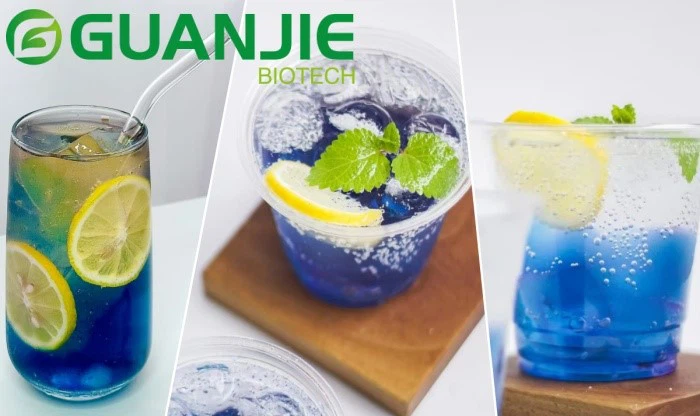
Butterfly pea flower is widely appreciated for its natural beauty and versatility in traditional culinary and beverage applications. Its most common use is in teas and infusions-steeping the dried blue petals in hot water releases a vivid blue color, which transforms to purple or pink when an acid like lemon juice is added, creating a visually stunning drink. In Southeast Asian cuisine, the flower is often used to naturally color sticky rice, giving it a rich blue or violet hue that enhances both appearance and appeal. Additionally, the whole dried flowers make elegant garnishes for dishes, desserts, and beverages, adding both visual charm and a subtle, earthy flavor.
Butterfly Pea Powder
Blue butterfly pea tea powder, made from finely ground dried flowers, offers convenience and concentrated color for modern food and beverage formulations. It blends seamlessly into smoothies and juices, delivering vibrant hues without altering taste or texture. In baking, the powder is ideal for coloring bread, cakes, and pastries, providing a uniform blue tone throughout the product. It also works well in cold dairy applications like ice cream and yogurt, where it disperses evenly and maintains stability. Furthermore, butterfly pea powder functions as a natural food coloring, much like matcha or spirulina, and is perfect for anyone seeking plant-based, chemical-free alternatives for culinary creativity.
Both forms of butterfly pea bring rich color and mild earthy flavor to foods and beverages, but the flower is better suited for traditional and decorative uses, while the powder excels in modern cooking and commercial applications.
Culinary Comparison
|
Aspect |
Butterfly Pea Flower |
Butterfly Pea Powder |
|
Color Extraction |
Slower |
Quick and intense |
|
Texture Impact |
May require straining |
Smooth blending |
|
Application Range |
Mostly hot liquids |
Hot & cold, solids too |
|
Shelf Stability |
More stable |
Susceptible to humidity |
Overall, blue butterfly pea tea powder is more versatile in modern culinary applications due to its convenience and quick dispersion in liquids and solids. However, for traditional teas and dishes, dried flowers offer a more authentic experience.
Shelf Life and Storage
Dried butterfly pea flowers have a relatively long shelf life when stored properly. Kept in a cool, dry place away from direct sunlight, they can retain their color and potency for 12 to 24 months. The dried form is less prone to clumping or degradation, making it ideal for long-term storage.
Blue butterfly pea tea powder, on the other hand, is more sensitive to environmental factors. Its fine texture increases surface area, making it more vulnerable to moisture and air exposure. If not sealed properly, the powder can cake or lose its vibrancy over time. To preserve its quality, it should be stored in an airtight, opaque container, away from heat, light, and humidity.
While both forms offer shelf stability, the dried flowers are generally more durable. The powdered butterfly pea flower, though more convenient for certain applications, requires careful storage to maintain its effectiveness and color intensity.
Suitability by Industry
|
Industry |
Preferred Form |
Reason |
|
Tea and herbal infusions |
Whole Flower |
Traditional, aesthetic |
|
Functional foods |
Powder |
Easy blending |
|
Baked goods & pastries |
Powder |
Uniform coloring |
|
Supplements |
Powder (encapsulated) |
Precision dosing |
|
Cosmetics |
Powder (extract) |
Easy formulation |
|
Natural dye |
Powder |
High color concentration |
Which Is Better: Butterfly Pea Flower or Powder?
Deciding whether butterfly pea flower or blue butterfly pea tea powder is better depends mostly on how you plan to use it. Each form has unique strengths that suit different needs.
Choose Butterfly Pea Flower if you:
Appreciate a traditional or ceremonial tea experience, enjoying the ritual of steeping whole flowers.
Prefer ingredients that are minimally processed and in their natural form.
Want a product with a longer shelf life that maintains its quality over time.
Mainly use it for hot infusions, herbal teas, or as a decorative element in dishes and drinks.

Choose Butterfly Pea Powder if you:
Need a more concentrated form, ideal for supplements or as a natural food coloring agent.
Work in industries like food manufacturing, cosmetics, or functional beverages where consistency and precision are essential.
Require exact dosing and easy mixing for recipes or formulations.
Want to incorporate the ingredient into cold beverages, baked goods, or skincare products, where blue butterfly pea tea powder form blends more smoothly.
In the end, both butterfly pea flower and blue butterfly tea powder have their place and often complement each other. For tea enthusiasts and home cooks, the whole flower is a beautiful, authentic choice. For chefs, formulators, and cosmetic developers, the butterfly pea pollen powder offers convenience, versatility, and reliable performance. Your choice should align with your specific application and preference.
Guanjie Biotech offers high-quality blue butterfly pea powder. Blue butterfly pea tea powder is water-soluble, non-GMO, and produced under stringent quality standards, including Halal, Kosher, ISO9001, and HACCP certification. Ensuring blue butterfly pea flour purity and consistency for various applications. Welcome to enquiry at info@gybiotech.com.


