

What Are The Physicochemical Properties of Dragon Fruit Powder?
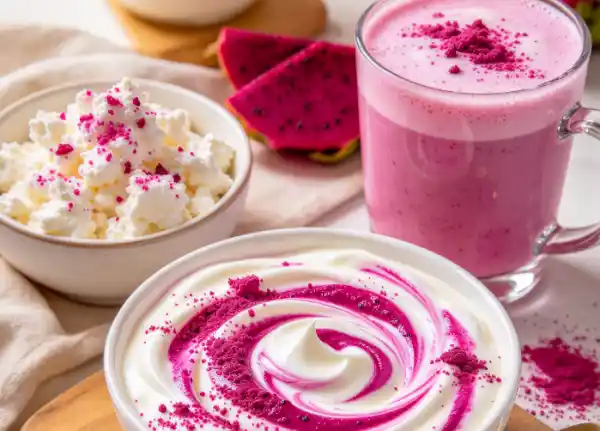
The physicochemical properties of dragon fruit powder depend strongly on the drying and processing method. The two commonly used techniques are spray drying and freeze-drying, which produce different characteristics in terms of betalain retention, flowability, dispersibility, hygroscopicity, and storage stability. These factors are important when selecting red dragon fruit powder for food, beverage, nutraceutical, and functional ingredient applications.
Betalain Retention During Processing
Spray drying can cause partial betalain degradation because of exposure to elevated inlet temperatures. Research indicates that an inlet temperature of approximately 155°C with 20% maltodextrin can provide favorable betalain retention. However, some pigment loss may still occur during thermal processing. In comparison, freeze-dried dragon fruit powder is produced through sublimation under low-temperature and vacuum conditions. This process generally provides better retention of betalains, vitamin C, and volatile flavor compounds. It can also help preserve the natural color of dragon fruit powder without artificial coloring.
Powder Flowability and Dispersibility
Drying methods and carrier materials can significantly affect the flow properties of dragon fruit powder. Research on red-fleshed dragon fruit found that starch-based whole-fruit powder had an angle of repose of 36.6° and a Carr Index of 18.3, indicating relatively good flowability. Dextrin-based instant powder showed a shorter dispersion time of approximately 75 seconds, making it suitable for instant beverages and powdered drink formulations.
Hygroscopicity and Storage Stability
Because dragon fruit powder contains low-molecular-weight sugars such as glucose and fructose, it can be highly hygroscopic. Proper moisture control and moisture-resistant packaging are therefore essential for bulk dragon fruit powder. Industrial packaging should be performed under controlled relative humidity to reduce caking and protect pigment stability during storage.
Key Nutritional Components
The nutritional profile of dragon fruit powder includes betalains, dietary fiber, potassium, magnesium, calcium, and vitamin C. These characteristics support its use in beverages, dairy products, nutritional powders, and functional food formulations.
Why Can Dragon Fruit Powder Be Used in Yogurt?
Yogurt typically has a pH of 4.0–4.6, providing a suitable acidic environment for the application of dragon fruit powder. In particular, red dragon fruit powder contains betalains, dietary fiber, pectin, and other bioactive compounds that can contribute to yogurt color, texture, antioxidant properties, and overall product functionality. Therefore, dragon fruit powder for yogurt is increasingly considered a natural ingredient for functional dairy formulations.
Natural Coloration and Color Stability
The betalains in red-fleshed dragon fruit powder provide an attractive pink to purplish-red color in yogurt. Compared with some anthocyanin-based pigments, betalains can offer favorable color stability across a relatively broad pH range, including the acidic conditions commonly found in yogurt. Yogurt formulated with red dragon fruit ingredients has also demonstrated improved visual appeal and consumer acceptance compared with unfortified controls. For manufacturers seeking a natural dragon fruit color, this ingredient can provide both coloration and nutritional value.
Effects on Yogurt Texture and Rheological Properties
The pectin, polysaccharides, and dietary fiber in red dragon fruit powder can interact with milk proteins, particularly casein, and influence the yogurt gel network. These components can also bind water and potentially reduce whey separation during storage. Studies using dragon fruit peel powder at 2%, 5%, and 7% showed increased crude fiber content, indicating that dragon fruit-derived ingredients can enhance the dietary fiber content and modify yogurt texture. The final effect depends on particle size, processing method, addition level, and yogurt formulation.
Effects on Fermentation and Yogurt Cultures
The soluble fiber and carbohydrate components of dragon fruit powder may provide substrates that influence the activity of yogurt starter cultures, including Lactobacillus bulgaricus and Streptococcus thermophilus. Research has reported increased exopolysaccharide (EPS) production in dragon fruit-fortified yogurt compared with control formulations. Higher EPS production may contribute to improved viscosity, consistency, and mouthfeel. Some studies have also reported α-amylase and α-glucosidase inhibitory activity in dragon fruit yogurt, although these findings should not be interpreted as clinical evidence of blood-glucose regulation.
Optimization of Addition Levels
The appropriate dosage of dragon fruit powder for yogurt depends on the desired color, flavor, texture, nutritional profile, and processing conditions. Research has identified approximately 2%–3% as favorable levels for consumer acceptance in certain formulations, while higher levels such as 5%–7% may provide stronger color and increased fiber content but can also affect taste and mouthfeel.
What Are the Applications of Dragon Fruit Powder in Other Dairy Products?
Ice Cream and Frozen Dairy Products
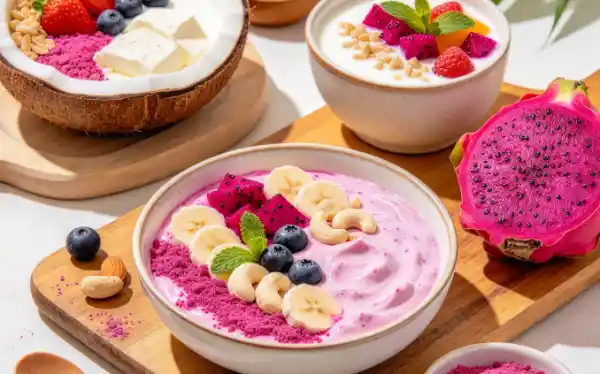
Dragon fruit powder, particularly freeze-dried dragon fruit powder, can be used in ice cream and other frozen dairy products. The low-temperature storage conditions of ice cream, generally below -18°C, can help reduce thermal and light-induced degradation of betalains. This supports the color stability of red dragon fruit powder in frozen formulations. In addition, the solids and dietary fiber in dragon fruit powder may contribute to improved body, texture, and melt resistance. These properties make dragon fruit powder a potential natural ingredient for developing fruit-flavored ice cream and other frozen dairy products.
Formulated Milk and Pasteurized Milk
Adding dragon fruit powder to milk can produce naturally colored, fruit-flavored milk beverages. However, betalain stability during pasteurization or ultra-high-temperature (UHT) processing remains an important formulation challenge. Sugar-based stabilizing components, such as lactose, may improve betalain stability under certain conditions. One study reported that 150 ppm lactose increased the half-life of betalains by 24.24%. For commercial production, manufacturers should optimize the total thermal load and processing conditions. Where appropriate, aseptic or post-processing addition may also help maximize pigment retention.
Processed Cheese and Cheese Spreads
Dragon fruit powder for dairy products can provide processed cheese and cheese spreads with a distinctive pink to purple-red color. Its natural pigments can serve as a potential natural food color, while its polysaccharide and fiber components may interact with emulsifying salts and influence spreadability and emulsion stability. However, research on dragon fruit powder in processed cheese remains relatively limited, creating opportunities for further formulation and processing studies.
Yogurt Melts
Yogurt melts are dairy-based snacks commonly produced through freeze-drying. Dragon fruit powder can provide both natural coloration and ingredient diversification. A patented formulation uses 5–8 parts dragon fruit powder with trehalose and skim milk powder. The betalain-rich powder provides a natural purple-red color, while dietary fiber can contribute to the structural properties of the freeze-dried product. This makes freeze-dried dragon fruit powder suitable for developing melt-in-the-mouth yogurt snacks.
Probiotic Fermented Milk
Dragon fruit processing by-products, including defatted seed meal, have also been investigated for use in probiotic fermented milk. In one study, dragon fruit seed meal was used as a protein source during mixed fermentation with Aspergillus oryzae and Lactiplantibacillus plantarum, producing fermented products containing bioactive compounds such as GABA. This approach demonstrates the potential for comprehensive utilization of dragon fruit resources.
Comparative Study on the Application of Pitaya Powder in Various Dairy Products
|
Dairy Types |
Key Functions |
Reference dosage |
Key Technical Points |
|
Yogurt |
Coloring, antioxidation, texture improvement |
2%–3% |
Can be added either before or after fermentation |
|
Ice cream |
Coloring, improved melt resistance |
To be optimized |
Low-temperature protection of pigments |
|
Formulated milk |
Coloring, flavor enhancement |
To be optimized |
Requires aseptic addition or heat control post-processing |
|
Processed cheese |
Coloring, emulsification aid |
To be optimized |
Compatible with emulsifying salts |
|
Yogurt melts |
Coloring, nutritional fortification |
5–8 parts |
Suitable for freeze-drying processes |
|
Probiotic fermented milk |
Protein source, functional ingredient |
By-product utilization |
Mixed fermentation |
Technical Challenges and Mitigation Strategies in Dragon Fruit Powder Applications
Stability Control of Betalains
Betalains are sensitive to temperature, light, oxygen, and extreme pH conditions. Although their stability is generally better in acidic yogurt than in neutral or alkaline systems, degradation may still occur during storage. Degradation can produce yellow betalamic acid and colorless cyclodopa, resulting in color fading. For dragon fruit powder for yogurt, several strategies can improve pigment stability:
• Raw material selection:
Freeze-dried dragon fruit powder generally retains more betalains than spray-dried products, making it suitable for applications requiring strong natural color and antioxidant properties. Red dragon fruit powder is particularly relevant for betalain-rich formulations.
• Microencapsulation:
Encapsulating dragon fruit pulp powder or dragon fruit extract with wall materials such as gum arabic and maltodextrin can protect betalains against environmental stress. Research has also reported positive consumer acceptance of yogurt containing microencapsulated dragon fruit pulp in terms of appearance, color, flavor, and texture.
• Stabilizer combinations:
Lactose, sucrose, and glucose may improve betalain thermal stability to different degrees. Among these, lactose has demonstrated a relatively strong stabilizing effect.
• Packaging optimization:
Light-resistant, oxygen-barrier packaging can reduce exposure to light and oxygen and help maintain the color and quality of dragon fruit powder during storage.
Dosage and Sensory Balance
For yogurt applications, a 2%–3% dragon fruit powder inclusion level can provide a practical balance between enhanced antioxidant properties, color intensity, flavor, and consumer acceptance. Higher levels, such as 5%–7%, may be considered when stronger functional positioning or color is required, but excessive addition can affect nutritional composition and sensory properties. Studies have reported reductions in protein and fat concentrations when high levels of dragon fruit peel powder are incorporated. For microencapsulated dragon fruit powder, the wall material can help mask undesirable flavors and may allow a moderately higher dosage while maintaining acceptable sensory quality.
Compatibility with Fermentation
Dragon fruit powder can be added before or after yogurt fermentation. Pre-fermentation addition promotes uniform dispersion but may affect starter-culture activity because of the powder's organic acids and other components. Post-fermentation addition reduces potential interference with microbial activity but requires effective mixing. To minimize clumping, manufacturers can first disperse the dragon fruit powder in a small amount of yogurt to form a slurry before adding it to the main batch.
FAQs:
Q1. Can dragon fruit powder be added to yogurt?
Yes. Dragon fruit powder for yogurt can be incorporated into yogurt formulations during mixing. The addition level depends on the desired color, flavor, fruit content, texture, and product specifications.
Q2. Is dragon fruit powder a natural colorant for dairy products?
Yes. Red or pink dragon fruit powder contains betalains, which contribute to its characteristic color. It can be used in yogurt and other dairy applications when manufacturers want a fruit-based coloring ingredient.
Q3. What type of dragon fruit powder is best for yogurt?
Freeze-dried dragon fruit powder is commonly considered for premium yogurt applications because low-temperature drying helps retain fruit characteristics. The appropriate grade depends on particle size, moisture, color, solubility, and the target formulation.
Q4. Does dragon fruit powder dissolve in yogurt?
Dragon fruit powder can disperse in yogurt, but its performance depends on particle size, moisture content, processing conditions, and formulation. Proper mixing can help reduce clumping and improve uniform distribution.
Q5. Does dragon fruit powder affect yogurt texture?
Yes. Because dragon fruit powder contains fruit solids and dietary fiber, it may influence viscosity, water binding, and mouthfeel. Formulators should evaluate particle size and dosage when developing yogurt products.
Q6. Can dragon fruit powder be used in Greek yogurt?
Yes. Dragon fruit powder for Greek yogurt can be used in flavored and fruit-based formulations. Because Greek yogurt has a relatively thick texture, manufacturers should optimize powder dispersion to achieve consistent color and distribution.
Q7. Can dragon fruit powder be used in other dairy products?
Yes. Dragon fruit powder for dairy applications can be evaluated for yogurt drinks, fermented milk, milkshakes, ice cream, dairy desserts, and other fruit-based dairy products, depending on processing conditions and product requirements.
Q8. What should manufacturers consider when buying dragon fruit powder for dairy applications?
Key specifications include betalain content, moisture, particle size, color, solubility, microbiological limits, heavy metals, pesticide residues, and shelf life. A batch-specific COA is also important for quality control and formulation development. Guanjie Biotech can provide you with these documents.
Conclusion
As a natural functional ingredient, dragon fruit powder has significant application potential in yogurt and dairy products. Freeze-dried dragon fruit powder generally provides better betalain retention, total phenolic content, and rehydration properties than spray-dried dragon fruit powder products, making it suitable for premium dairy formulations. In yogurt, a 2%–3% inclusion level can enhance antioxidant activity while maintaining acceptable sensory properties. Higher levels of 5%–7% may increase dietary fiber and vitamin C content, although their effects on protein and fat concentrations should be considered.
In yogurt melts and yogurt-cereal products, natural dragon fruit powder can provide natural color, nutritional fortification, and functional benefits. Future research should investigate its interactions with casein and whey proteins, the storage stability of betalains and polyphenols, and the value-added utilization of dragon fruit peel. These studies can support the sustainable development of dragon fruit powder for dairy products. As a professional dragon fruit powder supplier, Guanjie Biotech provides freeze-dried and spray-dried options, along with OEM and ODM services for customized dairy applications. Welcome to enquire with us at info@gybiotech.com.
References:
[1] Riba N, Singh K, Lal S. Bioactive profiling of valorized yoghurt incorporated with dragon fruit peel powder using LC-MS metabolomics. Food Chemistry Advances, 2025. DOI: 10.1016/j.focha.2025.101156.
[2] Mello F R, Bernardo C, Dias C O, et al. Antioxidant properties, quantification and stability of betalains from pitaya (Hylocereus undatus) peel. Food Science and Technology, 2015.
[3] Martineli M, Rivas J C, Castricini A, et al. Microencapsulation of dragon fruit: Characteristics, addition to yogurts, and sensory evaluation by consumers. Brazilian Journal of Agricultural Sciences, 2025, 20(3): e3928.
[4] Yeasmin N, Sarker B R, Begum A, et al. Fortification of yogurt with red dragon fruit's (Hylocereus polyrhizus) peel powder: Effects on comprehensive quality attributes and sensory properties. Turkish Journal of Agriculture: Food Science and Technology, 2023, 11(12): 2300-2307.
[5] Sawitri M E, Manab A, Andriani R D, et al. The fortification with red dragon fruit (Hylocereus polyrhizus) peel extract evaporated with MAE method towards the physicochemical quality of symbiotic yoghurt. Jurnal Ilmu dan Teknologi Hasil Ternak, 2023, 18(1): 12-21.
[6] Wang Jun, Zheng Yunlong, Zhang Jiaru, et al. Dragon fruit health-promoting yogurt melt and its preparation method. Chinese Patent: CN110859216A, 2020.
[7] Harish T, Narayana C K, Pooja K, et al. Effect of cabinet tray drying method on physicochemical, nutritional and antioxidant status of dragon fruit (Hylocereus polyrhizus) powder. Plant Science Today, 2025, 12(3).
[8] Effect of different processing methods on the physicochemical properties of dragon fruit powder. Chinese Academy of Agricultural Sciences.
[9] Pamungkas M S, Rahayuningsih E, Kusumastuti Y. Effect of glucose, sucrose, and lactose solution on the stability of betacyanin pigment from red dragon fruit (Hylocereus polyrhizus) peels. IOP Conference Series: Earth and Environmental Science, 2020, 572: 012014.
[10] Duong T N D, Tran T N T, Hoang Q B. Impact of maltodextrin and temperature on spray-dried mixed flesh-peel matrix of red dragon fruit (Hylocereus polyrhizus) powder.
[11] Optimized fermentation conditions for dragon fruit yogurt. Food Chemistry Advances, 2023. DOI: 10.1016/j.focha.2023.100046.


