

Natural matcha green tea powder has become one of the most popular natural ingredients in the global beverage, food, and supplement industries due to its bright green color, concentrated antioxidant content, unique flavor, and wide range of health benefits. As consumers continue to pay close attention to sugar intake, one of the most common questions that arises is: Does matcha powder contain sugar?
What Is Matcha Powder?
Matcha is a finely ground green tea powder made from shade-grown Camellia sinensis leaves. About 20–30 days before harvest, tea farmers shade the plants to increase chlorophyll levels, boost L-theanine content, and reduce bitterness. After harvest, the leaves are steamed, dried, and destemmed before being stone-ground into a fine powder.
Unlike regular green tea, where the leaves are steeped and removed, matcha is consumed in its whole-leaf form, meaning all the nutrients-including polyphenols, catechins, amino acids, and natural plant components-are ingested.
Because Natural matcha green tea powder is a tea leaf powder, not an added-sugar ingredient, its natural composition is very different from instant drink mixes or flavored products.

Does Pure Matcha Powder Contain Sugar?
The short and simple answer is no. Pure matcha powder does not contain sugar.
To understand why, it helps to know what matcha really is. Natural matcha green tea powder, whether it's the high-quality ceremonial grade or the robust culinary grade, is made from just one ingredient: green tea leaves. The leaves are stone-ground into a very fine powder. Because it is 100% pure tea leaves, there is no sugar added during this process.
The tea leaf itself is a natural plant, and like all plants, it contains a complex mix of natural compounds. When you drink pure matcha green tea powder, you are consuming the entire leaf, which gives you all its beneficial components. These include:
• Catechins: Powerful antioxidants (like EGCG) that help protect your cells.
• L-Theanine: A unique amino acid that promotes a state of calm alertness.
• Caffeine: For a natural energy boost without the jitters.
• Chlorophyll: The compound that gives natural matcha green tea powder its vibrant green color.
• Dietary Fiber: Aiding in digestion.

Now, because it is a plant, the tea leaf does contain trace, minimal amounts of natural carbohydrates. However, it is crucial to understand that these are not the same as the table sugar (sucrose) or other sweeteners you might add to your coffee. These trace carbohydrates are part of the leaf's natural structure and are present in such small amounts that they have a negligible effect on your blood sugar.
The numbers make this very clear. In a standard nutritional analysis, one gram of pure matcha powder typically contains:
• 0 grams of sugar
• Less than 1 gram of total carbohydrate
• 0 grams of fat and cholesterol
This data confirms that matcha is fundamentally a sugar-free product. The key for consumers is to look for the word "pure" on the label. Some pre-mixed or "sweetened" natural matcha green tea powder products on the market do contain added sugar, but that is an added ingredient, not a feature of matcha itself.
Many people are surprised to learn that pure, high-quality matcha powder contains no added sugar. The confusion is understandable. For a large number of consumers, their first-and sometimes only-experience with matcha is through popular food and drink items that are sweetened.
Why do People Think Matcha Contains Sugar?
Most people are introduced to matcha through products like:
• Sweet Drinks: Natural matcha green tea powder lattes from coffee shops or bottled matcha teas from grocery stores.
• Pre-Mixed Powders: "Instant matcha latte" mixes that are designed for quick preparation.
• Desserts and Snacks: Matcha-flavored ice cream, cookies, cakes, mochi, and chocolate.
These items do contain matcha, but they are not pure matcha. They are processed food products where matcha is just one ingredient among many. To make these products taste appealing to a wide audience, companies add significant amounts of sugar, milk, sweeteners, and syrups.
Let's look at the numbers to understand the scale of the added sugar:
• A typical matcha latte from a café can contain between 20 and 35 grams of sugar. That is similar to the sugar content in a can of soda.
• Ready-to-drink bottled matcha beverages often have 10 to 25 grams of sugar.
• Some "instant matcha latte" powders are comprised of a staggering 70% to 85% sugar. This means you are drinking mostly sweetener with a small amount of natural matcha green tea powder.
This is where the misunderstanding takes root. The sweet, creamy, and pleasant flavor that consumers have come to know as "matcha" is often the taste of added sugar, milk, and other ingredients. The true, natural taste of pure matcha powder is actually vegetal, slightly bitter, and robust. It is an acquired taste for some, much like black coffee or dark chocolate.
For businesses in the health and wellness sector, this presents both a challenge and an opportunity. The challenge is educating customers who have only known the sweetened version. The opportunity lies in clarifying this distinction and highlighting the pure, natural benefits of unsweetened natural matcha green tea powder. By explaining that sugar comes from the other ingredients-not the matcha itself-companies can build trust and guide consumers toward a healthier, more authentic product. This helps customers make more informed choices that align with their wellness goals.
What Are the Differences Between Pure Matcha And Sweet Matcha Powder?
When you are shopping for natural matcha green tea powder, it is crucial to know that not all green powders are the same. The biggest difference comes down to one main ingredient: sugar. Basically, there are two completely different products sold as "matcha powder." Knowing which one you are buying or using will affect the taste, health benefits, and cost.
1. Pure Matcha Powder:
This is matcha in its simplest and most traditional form.
• What's Inside: The only ingredient is 100% stone-ground green tea leaves. Nothing is added.
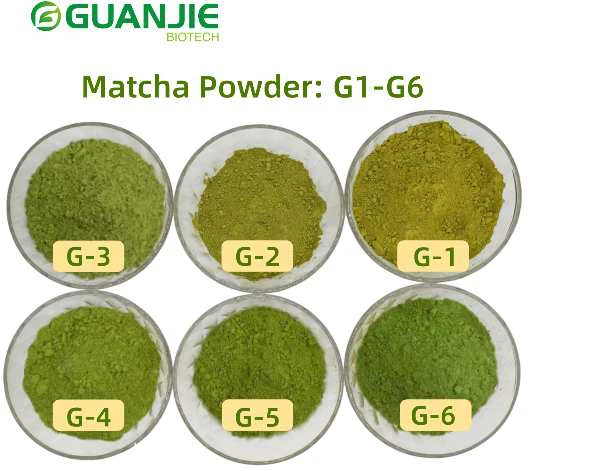
• What It Looks Like: It has a rich, vibrant, and bright green color. This is a sign of high quality.
• What It Tastes Like: The flavor is complex. It is not sweet. You will notice a pleasant, savory taste (called umami), with a slight bitterness and a fresh, grassy note.
• Sugar Content: Pure matcha has zero grams of added sugar.
• How It's Used: Because of its pure quality, it is used for traditional tea ceremonies. It is also perfect for making matcha lattes (where you control the sweetness), adding to smoothies for a health boost, and using in baking or as a dietary supplement.
2.Sweetened Matcha Powder
This product is not pure natural matcha green tea powder. It is a pre-made mix designed for quick and sweet drinks.
• What's Inside: The main ingredients are usually matcha, a large amount of sugar, and a creamer or milk powder. The matcha is just one part of the blend.
• What It Looks Like: The color is often a much lighter, duller, or even yellowish-green because the matcha is diluted with other ingredients.
• What It Tastes Like: It tastes very sweet and creamy, with the true matcha flavor hidden in the background.
• Sugar Content: This is the most important point. These mixes can be made of up to 80% sugar. A single serving can contain as much sugar as a can of soda.
• How It's Used: This type is made for convenience. It is commonly used in bubble tea shops, coffee chains for their sweet matcha lattes, or sold as an "instant" matcha drink in stores.
|
Feature |
Pure Matcha Powder (Unsweetened) |
Sweetened Matcha Powder (Matcha Drink Mix) |
|
Primary Ingredients |
100% finely ground green tea leaves |
Matcha, Sugar, Creamer or Milk Solids |
|
Color |
Bright, vibrant green |
Often lighter, duller, or yellowish-green |
|
Taste Profile |
Umami-rich, slightly bitter, grassy, vegetal |
Very sweet, creamy; matcha flavor can be muted |
|
Sugar Content |
0g Added Sugar |
High; can be up to 80% sugar by weight |
|
Primary Uses |
Ceremonial drinking, traditional lattes, smoothies, baking, cooking, supplements |
Instant drinks, flavored milk teas, bubble tea shops |
|
Target Consumer |
Matcha purists, health-conscious individuals, home chefs |
Consumers seeking a quick, sweet, ready-to-mix beverage |
|
Commonly Sold As |
Ceremonial Grade, Culinary Grade, Pure Matcha |
"Cafe-style matcha," "Matcha Latte Mix," "Sweetened Matcha" |
Conclusion:
Pure matcha powder does NOT contain sugar. Natural matcha green tea powder is simply ground green tea leaves, which naturally have no sugars and only trace carbohydrates. The sweetness associated with matcha-based drinks usually comes from:
• Added sugar
• Milk or cream
• Syrups or sweeteners
• Sweetened latte mixes
If you want sugar-free matcha for health, supplements, or product formulation, choose products labeled 100% matcha with no additional ingredients. Always check the product label to ensure that no sweeteners or fillers have been added. For bulk supply needs, Guanjie Biotech is a bulk matcha powder supplier, offering high-quality, unsweetened matcha suitable for various industrial applications. Please feel free to contact us at info@gybiotech.com.
References:
[1] Weiss, D. J., & Anderton, C. R. (2003). Determination of Catechins in Matcha Green Tea by Micellar Electrokinetic Chromatography. Journal of Chromatography A, 1011(1-2), 173-180.
[2] Unno, K., Furushima, D., Hamamoto, S., et al. (2018). Stress-Reducing Effect of Cookies Containing Matcha Green Tea. Journal of Nutritional Science and Vitaminology, 64(6), 441-448.
[3] Dietz, C., & Dekker, M. (2017). Effect of Green Tea Phytochemicals on Mood and Cognition. Current Pharmaceutical Design, 23(19), 2876-2905.
[4] Horie, H., & Ema, K. (2017). Chemical Components of Matcha and Its Processing. In Chemical Components of Tea (pp. 57-73). Springer, Singapore.
[5] Sano, T., Horie, H., Matsunaga, A., & Hirono, Y. (2018). Effect of Shading Intensity on Morphological and Color Traits and on Chemical Components of New Tea (Camellia sinensis L.) Shoots under Direct Cover Cultivation. Journal of the Science of Food and Agriculture, 98(15), 5666-5676.
[6] Sugiyama, M., & Lin, W. (2021). The Globalization of Matcha: A Study of its Market Expansion and Cultural Adaptation. Journal of Food Products Marketing, 27(4), 195-212.


