

Natural apple powder has been used in apple pie for years. In the industrial baking and commercial food manufacturing sectors, apple pie, as a classic and highly marketable baked product, has quality stability, flavor consistency, and production cost control as core concerns for B2B clients. Traditional apple pie production typically uses fresh apples or canned apple fillings, but both types of raw materials suffer from seasonal fluctuations, difficulty in controlling water activity, high processing losses, and short shelf life.
What Is Apple Powder?

Natural apple powder is a powdered product made from fresh apples through processes such as washing, core removal, crushing, homogenization, drying (mainly spray drying or freeze drying), and sieving. Its moisture content is typically controlled between 3% and 6%, and its water activity is below 0.3, exhibiting long-term storage stability. Depending on the processing method, natural apple powder can be divided into apple puree powder, apple dietary fiber powder, and apple extract powder. In apple pie applications, unextracted pure apple powder (containing natural sugars, organic acids, pectin, and fiber) is mainly used.
What is Apple Powder used for in Apple Pie?
Water Activity Control and Filling Stability
The main technical challenge in apple pie production is controlling the moisture content of the filling. Fresh apples contain about 85% water. During baking, excess moisture release can cause a soggy crust, runny filling, or cracked surface. Using apple powder can reduce the amount of free water in the formula.
Natural apple powder is usually produced through spray drying or freeze-drying. Its particle size typically ranges from 80–200 mesh. It has low water activity (Aw < 0.3). Adding 3%–8% apple powder (based on total apple solids) to the filling helps absorb free water released from diced or sliced apples during heating.
The pectin, cellulose, and sugars in natural apple powder can bind water molecules through hydrogen bonding. This forms a weak gel network and converts free water into bound water. This process provides three key benefits:
• Prevents a soggy crust:
After baking, the filling stays semi-solid or viscous. This reduces juice seepage into the bottom crust and helps maintain crispness.
• Reduces shrinkage and cracking:
Lower moisture migration reduces volume changes in the filling. The interface between the crust and filling stays smoother after baking. This improves product consistency.
• Extends shelf life:
Lower water activity helps inhibit mold and bacterial growth. Apple pies made with natural apple powder have a lower risk of filling leakage and mold growth during refrigerated storage or short-term room temperature storage compared with products made with fresh apples or high-moisture canned fillings.
Natural Apple Flavor Concentration and Enhancement
Another common challenge is weak apple flavor in apple pies. This issue often occurs when using out-of-season apples or mild-flavored varieties. Apple powder is a whole-fruit ingredient. It is produced through peeling, coring, pulping, concentrating, and drying processes. It retains most of the soluble solids, organic acids, sugars, and volatile flavor precursors found in apples.
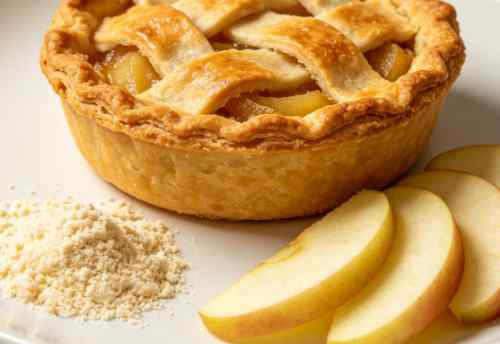
In practical applications, apple powder enhances flavor in several ways:
• Concentration Effect:
Producing 1 kg of natural apple powder requires about 8–10 kg of fresh apples. Adding 1% apple powder to apple pie filling can provide flavor compounds equal to approximately 8–10% more fresh apple solids. These compounds include key aroma components such as isoamyl acetate, hexanal, and ethyl butyrate.
• Acidity Adjustment:
Apple powder contains natural malic acid and citric acid. These acids help balance the sweetness of sucrose or high-fructose corn syrup. This creates a sweet-acid ratio closer to the natural taste of fresh apples.
• Baking Stability:
Most volatile flavor compounds are easily lost during baking at high temperatures, usually 200–220°C for 15–25 minutes. The sugars and amino acids in natural apple powder undergo Maillard and caramelization reactions during heating. These reactions generate aroma compounds such as furanols and maltols. These compounds work together with natural apple esters to create a richer and more heat-stable baked apple flavor.
Compared with artificial flavorings, bulk apple powder provides a more natural and complex flavor profile. It does not require additional carriers or solvents. It also supports clean-label product development.
Texture Improvement and Rheological Property Optimization
The texture of apple pie filling directly affects the consumer's chewing experience. Fresh apples may become too crisp or too soft after baking. They can also show large batch-to-batch variations. Apple powder can work as a texture modifier.
• Thickening Effect:
Natural apple powder is rich in pectin, which makes up about 10%–15% of its dry weight. Under acidic conditions (apple pie filling pH around 3.2–3.8) and heating, pectin forms a gel system with calcium ions or sucrose. Adding apple powder can increase the filling viscosity by 30%–60% (measured with a rheometer at a shear rate of 50 s⁻¹). This creates a smooth and uniform sauce-like or paste-like texture while maintaining the natural texture of apple pieces.
• Improved Coating Properties:
The weak gel structure formed after bulk apple powder hydration helps the sauce stick to fruit particles more effectively. This reduces filling separation, which is the separation of liquid and solids. For automated filling lines, stable rheological properties can reduce nozzle clogging and minimize weight variations.
• Improved Pie Crust Texture:
In some formulations, a small amount of pure apple powder (0.5%–2%) can also be added to pie crust dough. Apple fruit powder absorbs more water than wheat flour. This can reduce excessive gluten hydration during dough formation. As a result, the pie crust becomes more crumbly after baking and is less likely to harden.
High Nutritional Value with No Additives:
Food companies that serve end consumers face increasing pressure to use clean labels and natural ingredients. Apple powder provides a natural ingredient for apple pies. It can be labeled as "apple" or "concentrated apple." This avoids long ingredient lists with modified starches, sodium carboxymethyl cellulose, or artificial flavors.
Specific nutritional benefits include:
• Dietary Fiber:
Pure apple powder contains about 15%–25% total dietary fiber. This includes pectin, cellulose, and hemicellulose. Replacing some starch-based thickeners in apple pie fillings can increase the fiber content shown on the label.
• Polyphenolic Compounds:
Natural apple powder retains about 60%–80% of the polyphenols from fresh apples. These mainly include chlorogenic acid and catechins. They have antioxidant properties. Some polyphenols are lost during baking. However, apple powder fillings still retain more polyphenols than fillings made with peeled canned apples.
• Minerals:
Apple powder bulk retains natural minerals such as potassium and magnesium after concentration and drying. This can help meet requirements for functional claims such as "contains natural minerals."
For low-sugar formulations, the natural sugars in natural apple powder include fructose, glucose, and sucrose. These sugars can replace part of the added sugar. This allows companies to create labels with a more positive image, such as "contains fruit ingredients."
Stable Supply Chain
From an industrial production perspective, natural apple powder solves three major challenges:
• Seasonal fluctuations in raw materials:
The sugar-acid ratio, moisture content, and firmness of fresh apples vary by variety, origin, harvest time, and storage conditions. Apple powder goes through industrial processing, including washing, sorting, pulping, homogenization, concentration, and spray or drum drying. This process converts different batches of apples into powder with stable physicochemical properties. Typical specifications include: moisture ≤5%, total acid (calculated as malic acid) 4%–8%, total sugar 50%–70%, and pectin ≥10%. Companies can calculate ingredient usage directly from the Certificate of Analysis (COA). There is no need to adjust sugar, acid, or thickener levels for each batch.
• Simplified storage and logistics:
Natural apple powder has a shelf life of 12–24 months under sealed conditions at room temperature. It does not require cold-chain storage or transportation. Compared with frozen apple chunks, which need storage at -18°C, or canned fillings that require heavy packaging and rust prevention, apple powder saves storage space. It also lowers logistics costs and reduces the risk of spoilage caused by temperature changes.
• Formula precision and automation compatibility:
Powdered ingredients are easy to handle with automatic systems, such as screw feeders, pneumatic conveyors, and weighing modules. In large-scale production, natural apple powder can be pre-mixed with sugar, modified starch, and spices like cinnamon powder. Water is then added and mixed to create a standardized filling sauce. The process can be fully automated and helps maintain consistent quality across batches.
What Should Be Attended to When Producing Apple Pie?
Apple bulk powder performs well in many applications. However, food manufacturers should consider the following processing limitations.
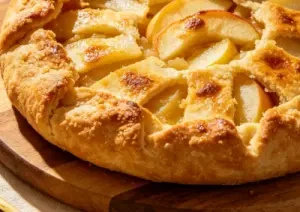
• Hydration Time:
Natural apple powder should be mixed thoroughly with water. First, pre-mix the powder with 3–5 times its volume of room-temperature water (20–25°C). Stir for 2–3 minutes. Let it stand for 10–15 minutes. Then add apple chunks and other ingredients. Adding dry powder directly may cause uneven hydration and hard lumps.

• Baking Temperature Suitability:
The fructose in pure apple powder can speed up caramelization above 190°C. This may cause a darker color or a slightly bitter taste. For thin-crust apple pies baked at high temperatures for a short time (such as 210°C for 12 minutes), keep the bulk apple powder level below 3%. For low-temperature, long-time baking (such as 175°C for 35 minutes), the level can increase to 8%.
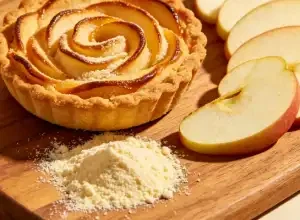
• Compatibility with Other Acidic Ingredients:
The pH of natural apple powder (1:10 aqueous solution) is usually 3.8–4.5. If citric acid, tartaric acid, or concentrated acidic fruit juice is added, adjust the buffering system with sodium bicarbonate. Otherwise, excessive pectin esterification and hydrolysis may occur. This can reduce gel strength.
Conclusion
In conclusion, apple powder plays a role in apple pie not simply as a "flavor substitute" but as a multifunctional ingredient that integrates moisture management, texture improvement, flavor enhancement, nutritional value enhancement, production standardization, and cost optimization. For B2B food manufacturers, selecting natural apple powder with high stability, high purity, and customizable specifications is a rational choice to enhance the competitiveness of their apple pie product lines, respond to the trend of clean label consumption, and achieve economies of scale in production.
Guanjie Biotech is a bulk apple powder supplier, committed to providing food companies in more than 100 countries worldwide with natural apple powder products that meet HACCP, ISO, Halal, and Kosher certifications. We support customized production based on customer requirements for particle size, pectin content, sugar-acid ratio, and microbiological indicators. If you are developing a new generation of apple pie or fruit-containing baking fillings, please contact our technical team for samples and application formula support.
References:
[1] Carson, K. J., Collins, J. L., & Penfield, M. P. (1994). Unrefined, Dried Apple Pomace as a Potential Food Ingredient. Journal of Food Science, 59(6), 1213–1215.
[2] Rupasinghe, H. P. V., Wang, L., Pitts, N. L., & Astatkie, T. (2009). Baking and sensory characteristics of muffins incorporated with apple skin powder. Journal of Food Quality, 32(4).
[3] Ravn-Haren, G., Krath, B. N., Markowski, J., Poulsen, M., Hansen, M., Kołodziejczyk, K., Kosmala, M., & Dragsted, L. O. (2018). Apple pomace improves gut health in Fisher rats independent of seed content. Food & Function, 9(5), 2931–2941.
[4] Dana, H., & Sonia, A. (2024). Physicochemical Properties of Apple Purees and Peel Extract for Potential Use in Pastry Products. Applied Sciences, 14(5).
[5] Carson, K. J., Collins, J. L., & Penfield, M. P. (1994). Study of unrefined dried apple pomace as a potential food ingredient. Journal of Food Science, 59(6), 1213–1215.
[6] Rupasinghe, H. P. V., Wang, L., Pitts, N. L., & Astatkie, T. (2009). Baking and sensory properties of muffins with added apple peel powder. Journal of Food Quality, 32(4).
[7] Dana, H., & Sonia, A. (2024). Physicochemical properties of apple puree and peel extracts in pastry products. Applied Science, 14(5).


