

Natural matcha green tea powder is a fine green tea powder. It is known for its bright green color, pleasant smell, and health benefits. But matcha can go bad easily if it's not stored properly. So, how long does matcha powder last and how stored? To keep its flavor, color, and goodness, you must store it properly. Knowing how to store it will help you keep your matcha fresh and tasty.
How To Store Matcha Powder?
To master the "how" of storage, one must first understand the "why." Matcha's composition is a delicate balance of organic compounds, each susceptible to specific environmental factors.

Light:
Light, particularly ultraviolet (UV) light, is a powerful energy source that initiates photochemical reactions.The vibrant green color of natural matcha green tea powder comes from chlorophyll, the same pigment that allows plants to photosynthesize. When exposed to light, chlorophyll molecules break down, a process known as photodegradation. This directly causes the powder to fade from a brilliant jade green to a dull, yellowish, or brownish hue.
The degradation of chlorophyll is not merely cosmetic. It is often accompanied by the breakdown of other sensitive compounds. The loss of chlorophyll signifies a direct loss of freshness and is a visual indicator that the tea's vital energy is dissipating. The grassy, sweet notes provided by fresh chlorophyll give way to stale, hay-like flavors.
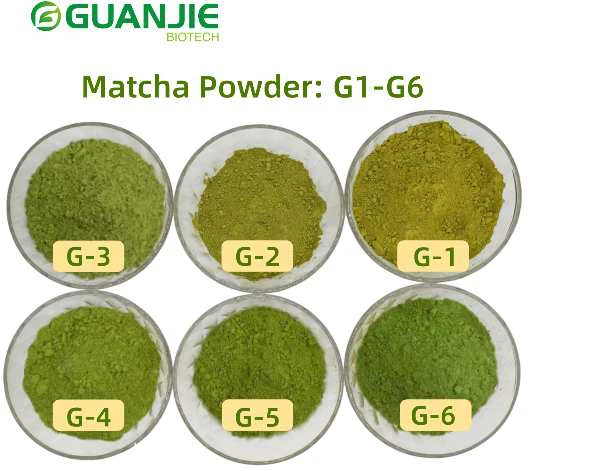
Guanjie Biotech is a matcha powder supplier, we package its six grades of matcha-from the highest-grade ceremonial to the robust culinary blends-they use opaque, light-resistant materials to ensure the product reaches the customer in its pristine state. Your storage methods must continue this protection.

Oxygen
Oxidation is the chemical reaction between a substance and oxygen, and it is the primary cause of aging and spoilage in many foods, from cut apples to fine wine-and especially matcha. Matcha is rich in polyphenols, particularly a class of antioxidants called catechins (with Epigallocatechin Gallate or EGCG being the most famous). These compounds are potent for health but are highly reactive with oxygen. When oxidation occurs, these beneficial catechins dimerize and polymerize, losing their antioxidant potency. Furthermore, the delicate, savory amino acid L-Theanine, responsible for matcha's signature umami and calming effect, also breaks down through oxidative processes.
Oxidized natural matcha green tea powder loses its complex, sweet umami flavor and develops a flat, harsh, and noticeably bitter taste. The health benefits, which are a primary reason for many consumers, are significantly diminished as the antioxidant content plummets.
Premium suppliers mitigate this by flushing tins with nitrogen, an inert gas that displaces oxygen before sealing. Once you break that factory seal, the clock starts ticking, and your storage practices become the primary defense against oxidation.

Heat
Heat provides the kinetic energy that drives chemical reactions forward at a faster rate. The rules of chemistry, encapsulated in the Q10 rule, state that for every 10°C (18°F) increase in temperature, the rate of a chemical reaction approximately doubles. This applies directly to the destructive processes in matcha: oxidation, the breakdown of chlorophyll, and the degradation of flavors and nutrients all accelerate exponentially in warmer environments.
Storing natural matcha green tea powder in a warm cupboard, above the stove, or in direct sunlight is a recipe for rapid quality loss. The tea will become stale and bitter much faster than if kept cool. The nuanced flavor profile, carefully developed and graded by suppliers, will blur and vanish.
Guanjie Biotech's six grades, each with a specific application, rely on their unique chemical profiles. Heat disrespects these distinctions, degrading a premium ceremonial grade meant for quiet contemplation into a powder no better than a low-grade cooking ingredient.

Moisture:
Matcha's powdery, fine consistency is key to its suspension in water and its mouthfeel. Moisture is its physical and biological nemesis. Matcha is hygroscopic, meaning it readily absorbs moisture from the air. When it does, the microscopic particles clump together. This not only makes it difficult to sift and whisk into a smooth froth but also provides the necessary water activity for microbial growth, including mold and bacteria.
Clumpy natural matcha green tea powder will not whisk properly, leading to a gritty, unpleasant texture. More seriously, the introduction of moisture can lead to spoilage and make the tea unsafe for consumption. The flavor becomes musty and compromised.
Proper storage areas are paramount. A refrigerator may seem cold and dark, but it is a high-humidity environment. Removing pure leaf matcha green tea powder from the fridge causes condensation to form on the cold powder inside the container every time it is opened, introducing catastrophic moisture.

Odors:
The large surface area of the fine powder makes matcha act like a sponge for airborne molecules. The complex flavor compounds in matcha are volatile. Unfortunately, so are the odor molecules from strong-smelling foods like spices, coffee, onions, or cleaning products. These external odors can be absorbed by the matcha, altering its delicate aroma and taste profile.
Your matcha may end up tasting vaguely of garlic, curry, or coffee, completely overpowering its intended vegetal, umami, and slightly sweet notes.
Storing natural matcha green tea powder in its original, sealed container is the first defense. Placing that container inside a larger, odor-free secondary container provides an additional barrier, ensuring that the integrity of the grade-be it a delicate Guanjie Biotech ceremonial grade or a versatile premium culinary grade-remains intact.
What is the Best Way to Store Matcha Powder?
Armed with an understanding of the enemies, we can now construct the optimal storage strategy.
Step 1: The Right Container
The first line of defense is an impermeable, airtight container.
• Ideal Choice:
A high-quality, opaque, airtight tin or a dark glass jar with a rubber-gasketed lid (like a Kilner jar). The opacity blocks light, the airtight seal minimizes oxygen exchange, and the material itself should be inert.
• Acceptable Choice:
If the 100 pure matcha green tea powder comes in a high-quality, resealable opaque tin (as one would expect from a professional supplier like Guanjie Biotech), you can keep it in its original packaging, provided the seal is still effective.
• What to Avoid:
Clear glass jars, plastic bags, flimsy tins, or containers that do not seal completely. Never use a transparent container without storing it in a dark cupboard.
• What to Avoid:
Clear glass jars, plastic bags, flimsy tins, or containers that do not seal completely. Never use a transparent container without storing it in a dark cupboard.
Step 2: The Right Environment
Where you place this container is equally important.
• Ideal Location:
A cool, dark, and dry cupboard or pantry, away from any heat sources (oven, stove, top of refrigerator) and away from sinks or windows.
• The Refrigerator & Freezer
If you have a large, unopened quantity that you will not use for several months, the freezer can be an option. The key is to treat it like a freezer burn prevention protocol. Place the original, sealed container inside two sealed freezer bags, squeezing out as much air as possible. When ready to use, move the entire package to the refrigerator for 24 hours to allow it to gradually come to temperature before opening it. This prevents condensation. The refrigerator is generally not recommended for your daily natural matcha green tea powder. The constant temperature fluctuation from taking it in and out, combined with the high humidity inside a fridge, poses a significant risk of moisture contamination.
Step 3: Minimizing Oxygen Exposure
Every time you open the container, you are letting in a fresh burst of oxygen.
• Use It Frequently:
The best way to enjoy matcha is to consume it within a reasonable timeframe. Purchase quantities that you can use within 4-6 weeks of opening for the best sensory experience.
• Press-and-Seal Technique:
After scooping out your portion, gently tap the container to settle the powder and minimize the air gap before sealing it tightly.
• Consider Smaller Containers:
If you have a large bulk package from Guanjie Biotech, consider dividing it into two smaller, airtight containers. You can keep one as your active daily container and leave the other sealed in a cool, dark place, thus halving the exposure for the bulk pure leaf matcha powder of your supply.
Step 4: A Note on Hygiene
This is a simple but critical step. Always use a completely dry spoon to scoop your natural matcha green tea powder. Introducing even a single drop of water can create a damp clump that will spoil and contaminate the entire container. A traditional bamboo chashaku is ideal, but a clean, dry metal or ceramic measuring spoon works perfectly.
Conclusion:
Storing natural matcha green tea powder properly is not merely a technical task, which can preserve matcha powder nutrition facts.It is an act of respect for the artistry of its production, from the tea farmer to the supplier. It is the final responsibility of the consumer to honor that effort. By shielding your matcha from light, oxygen, heat, moisture, and odors in a dedicated, airtight container kept in a cool, dark place, you are not just "keeping it fresh." You are actively preserving the flavor, matcha color, and health-promoting compounds.
Guanjie Biotech is a bulk matcha powder supplier, offering six grades of natural matcha green tea powder tailored for various applications-from ceremonial use to beverages, confectionery, and cosmetics.Our proper storage practices ensure that each grade retains its unique characteristics and performance. We store using strict quality control measures:
High-quality and competitive price. We lcome to enquire with us at info@gybiotech.com.
References:
[1] Kumamoto, T., & Sano, M. (2020). Storage Stability of Green Tea Powder under Different Temperature and Light Conditions. Journal of Food Science, 85(6), 1794–1801.
[2] Chen, H., et al. (2018). Effects of Oxygen and Light on the Quality of Matcha during Storage. Food Chemistry, 258, 321–327.
[3] Zhao, Y., & Xu, J. (2019). Influence of Temperature and Humidity on Chlorophyll Stability in Green Tea Powders. Journal of Agricultural and Food Chemistry, 67(12), 3489–3496.
[4] Yamashita, H., & Tanaka, A. (2021). Preservation of Tea Catechins and L-Theanine by Cold Storage. Food Research International, 140, 110024.
[5] Horner, D. (2019). The Story of Matcha: From Cultivation to Cup. Food Science Press.
[6] Weiss, D. J., & Anderton, C. R. (2003). "Determination of Catechins in Matcha Green Tea by LC-MS." Journal of Chromatography A, 1011(1-2), 173-180.
[7] Kaneko, S., Kumazawa, K., Masuda, H., Henze, A., & Hofmann, T. (2006). "Molecular and Sensory Studies on the Umami Taste of Japanese Green Tea." Journal of Agricultural and Food Chemistry, 54(7), 2688-2694.


