Natural Mango Powder and Mango Flavor Powder are more and more popular in the modern food, beverage, and nutraceutical industries. Mango (Mangifera indica) remains one of the world's most sought-after tropical flavor profiles. However, product developers, R&D formulation scientists, and procurement managers face a critical technical decision when sourcing mango-based ingredients: Natural Mango Powder versus Mango Flavor Powder. While both products deliver the characteristic sweet and tangy notes of tropical mango, they differ fundamentally in their source materials, manufacturing processes, nutritional values, cost structures, and regulatory labeling requirements.
Executive Summary & Quick Takeaways
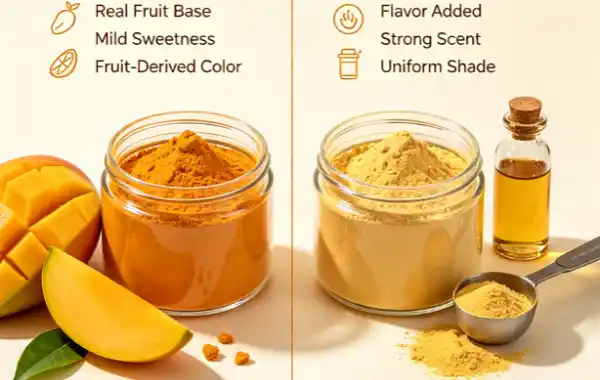
Natural Mango Powder is derived directly from whole mango fruit (pulp or juice) through drying processes such as spray-dried Mango Powder vs freeze-dried Mango Powder. It contains authentic fruit solids, natural fiber, vitamins, organic acids, and natural pigments (carotenoids).
Mango Flavor Powder is an engineered ingredient consisting of concentrated aromatic flavor compounds (either natural or synthetic) loaded onto a dry carrier matrix like maltodextrin, gum arabic, or starches. It is designed solely to deliver intense aroma and taste without contributing fruit solids, fiber, or natural nutrition.
Selection Strategy: Choose Bulk Natural Mango Powder Supplier for clean-label positioning, functional health benefits, authentic mouthfeel, and organic certification. Choose Mango Flavor Powder for maximum heat stability, low dosage requirements, budget constraints, high clarity in liquids, or long shelf life under tough processing conditions.
Technical Definitions & Production Processes
What is Natural Mango Powder?
Natural Mango Powder (often labeled as Mango Fruit Powder, Spray-Dried Mango Powder, or Freeze-Dried Mango Powder) is a whole-food ingredient manufactured by processing real, ripe mangoes.
Fresh Ripe Mangoes ➔ Washing & Peeling ➔ Pulping & Pureeing ➔ (Optional Carrier Addition) ➔ Thermal Dehydration / Lyophilization ➔ Milling ➔ Sifting & Packaging

Primary Processing Methods
Freeze-Drying (Lyophilization):
• Process:
Fresh mango pulp is frozen at sub-zero temperatures and subjected to a deep vacuum, causing the water content to sublimate directly from ice to vapor.
• Result:
Yields a freeze-dried mango fruit powder product that preserves up to 95–98% of the original fruit's heat-sensitive nutrients (such as Vitamin C and beta-carotene), natural colors, and volatile aromatics. It offers a rich, full-bodied fruit texture.
Spray-Drying:
• Process:
Mango puree or clarified juice is homogenized-frequently mixed with a carrier like maltodextrin or tapioca starch to prevent sticking-and atomized into a high-temperature drying chamber.
• Result:
Produces a highly soluble, uniform fine powder suitable for instant drink mixes and large-scale industrial manufacturing.
Drum Drying / Dehydration:
• Process:
Mango puree is applied as a thin film over heated rotating drums and scraped off as dry flakes before fine milling.
• Result:
Delivers a darker yellow/orange powder with a slightly cooked or caramelized flavor note, suitable for bakery fillings and cereal products.
What is Mango Flavor Powder?
Natural Mango Flavor Powder is a compounded flavor system designed to simulate or enhance the sensory profile of mango. It belongs to the category of dry flavor systems created through encapsulation or dry blending.
Aroma Chemicals / Essential Oils ➔ Emulsification into Carrier Solution (Maltodextrin / Gum Arabic) ➔ Spray Encapsulation ➔ Micronized Flavor Powder
Key Components of Flavor Powders
• Active Flavoring Substances:
Natural Mango Flavor: Formulated using natural aromatic compounds extracted from mango or other botanical sources via biotechnology or physical extraction (e.g., esters, lactones, and terpenes like myrcene, ocimene, and ethyl butyrate).
• Artificial / Nature-Identical Mango Flavor:
Synthesized chemical compounds that replicate the exact aroma molecules found in fresh fruit at a fraction of the cost.
• Carrier Matrix (Encapsulating Agents):
Maltodextrin, modified food starch, gum arabic, or cyclodextrins encapsulate volatile flavor oils, protecting them from oxidation and evaporation.
Flow Agents & Stabilizers: Small amounts of silicon dioxide or calcium silicate are frequently added to preserve free-flowing properties and prevent caking.
Direct Comparison: Natural Mango Powder vs. Mango Flavor Powder
The following side-by-side technical matrix highlights the core operational and chemical differences between the two ingredients:
|
Attribute / Parameter |
Natural Mango Powder |
Mango Flavor Powder |
|
Primary Source |
100% Real Mango Fruit Pulp/Juice |
Synthetic or Extracted Volatile Aroma Compounds |
|
Active Composition |
Fruit solids, sugars, pectin, natural acids, fiber |
Flavoring chemicals (1–10%), Carrier matrix (90–99%) |
|
Nutritional Profile |
Contains Vitamin C, Vitamin A (Beta-Carotene), Fiber |
Minimal to zero nutritional value |
|
Typical Dosage Rate |
High (2.0% – 15.0%+ depending on application) |
Low (0.05% – 0.5%) |
|
Flavor Impact |
Complex, rounded, authentic cooked/fresh fruit |
Sharp, high-impact, single-note top aroma |
|
Solubility in Water |
Partially soluble (contains insoluble pulp/fiber) |
Highly to completely water-soluble |
|
Heat & Processing Stability |
Moderate (vulnerable to thermal degradation/browning) |
High (encapsulated flavors resist high temperatures) |
|
Color Contribution |
Natural yellow-orange to deep golden brown |
Usually colorless (unless artificial colors are added) |
|
Cost Per Kilogram |
Moderate to High (fluctuates with crop harvest) |
Low to Moderate (stable synthetic/compounded cost) |
|
Clean Label Compliance |
High ("Mango Fruit Powder", "Organic Mango") |
Low to Moderate ("Natural Flavor" or "Artificial Flavor") |
|
Hygroscopicity |
High (prone to clump due to natural fruit sugars) |
Low to Moderate (controlled by carrier matrices) |
Flavor Profile & Sensory Analysis
Understanding sensory delivery is key when formulating pure Mango Powder for Beverage Formulation, foods, or supplements.
Natural Mango Powder Sensory Characteristics
• Flavor Architecture:
Delivers a broad, multidimensional sensory profile. It includes natural fruit acidity (citric and malic acids), authentic sweetness (fructose and glucose), and subtle background notes of peel and botanical astringency.
• Mouthfeel & Texture:
Provides natural body, viscosity, and mouth-coating pulp feel due to native pectins and insoluble dietary fiber.
• Aroma:
Soft, natural, ambient fruit aroma that blooms when hydrated rather than instantly out of the package.
Mango Flavor Powder Sensory Characteristics
• Flavor Architecture:
Highly focused on "top-note" aroma delivery. Designed to hit the olfactory senses immediately upon consumption. Can be customized to mimic specific mango cultivars (e.g., Alphonso, Tommy Atkins, Ataulfo, or Kesar).
• Mouthfeel & Texture:
Completely neutral. Mango Flavor Powder does not contribute viscosity, pulpiness, or body to liquid formulas.
• Aroma:
Strong, concentrated headspace smell. High volatility ensures immediate flavor release in dry mixes or ready-to-drink beverages.
Physical and Chemical Performance in Formulations
Solubility and Hydration Behaviour
• Natural Mango Powder:
Spray-dried versions dissolve relatively well, but true freeze-dried or drum-dried whole fruit powders contain fine pulp particles that remain insoluble. In beverages, this creates a cloud or sediment over time, requiring suspension agents like xanthan gum or pectin if stability is needed.
• Mango Flavor Powder:
Engineered with refined starch or maltodextrin carriers, flavor powders dissolve rapidly without leaving pulp residues, making them ideal for crystal-clear beverages, hard candies, and transparent jellies.
Heat and Thermal Processing Resistance
• Natural Mango Powder:
High heat treatments (such as UHT pasteurization, baking, or extrusion) can degrade the delicate natural aroma compounds and burn native fruit sugars (Maillard browning). This can lead to a slightly muted or cooked fruit taste.
•Mango Flavor Powder:
Encapsulated flavor powders retain volatile aromatic ester compounds within protective starch shells until dissolved or consumed, resisting heat up to high baking and boiling temperatures.
Hygroscopicity & Shelf Life Stability
•Natural Mango Powder:
High fructose and glucose content make natural mango powders highly hygroscopic. They readily absorb atmospheric moisture, which can cause caking or clumping if exposed to ambient humidity. Strict moisture-barrier packaging (e.g., aluminum foil bags with desiccant) is mandatory.
•Mango Flavor Powder:
Modern carriers and anti-caking additives (like silicon dioxide) reduce moisture sensitivity, giving flavor powders a stable shelf life (typically 24–36 months) with minimal risk of solidifying in storage.
Application Areas across Food & Beverage Sectors
Choosing between natural fruit powder and flavor powder depends heavily on the finished product matrix.
Nutraceuticals & Dietary Supplements
Preferred Choice: Natural Mango Powder (or a dual blend).
Rationale: Health-conscious consumers buying meal replacement shakes, greens powders, or immunity boosters expect real fruit ingredients. Natural mango powder adds authentic color, vitamins, and fruit solids while fulfilling "Made with Real Fruit" claims.
Ready-To-Drink (RTD) Beverages & Instant Powder Mixes
Preferred Choice: Mango Flavor Powder for clarity; Natural Spray-Dried Mango Powder for smoothies/nectars.
Rationale: If the product is a clear functional water or sports drink, flavor powder is essential to prevent cloudiness and settling. For thick smoothies, plant-based protein shakes, or tropical nectars, natural mango powder provides the required mouthfeel and visual opacity.
Bakery, Pastry & Biscuits
Preferred Choice: Mango Flavor Powder or a Hybrid Blend.
Rationale: High oven temperatures destroy subtle top notes in raw fruit powders. Flavor powders survive baking steps to deliver a recognizable mango aroma. However, using natural mango powder in fillings or icings can provide real fruit color and acid profile.
Confectionery & Gummies
Preferred Choice: Hybrid Blend (Natural + Flavor Powder).
Rationale: Pectin or gelatin gummies benefit from natural mango powder for authentic coloring and acidity, supplemented with a small percentage of mango flavor powder to ensure a strong, memorable taste impact per chew.
Economic & Cost-Benefit Analysis
Understanding formulation costs requires looking beyond the raw price per kilogram to examine cost-in-use.

Key Cost Considerations
• Active Usage Rate:
While Natural Mango Powder may cost less per unit mass than concentrated flavor essences (12–25/kg vs. 30–60/kg), its required usage rate in a formulation is significantly higher (typically 2% to 10% compared to 0.05% to 0.5% for flavor powders).
• Supply Chain & Crop Yields:
Natural mango powder prices depend on global mango harvests, weather patterns, and regional supply conditions in major producing zones (such as India, Thailand, China, and South America). Mango flavor powders use synthetic or standardized natural components, providing long-term price stability.
• Freight & Storage Overhead:
Natural fruit powders require larger storage volumes and climate-controlled, low-humidity environments to prevent caking, adding indirect logistics costs over long mango powder production runs.
Regulatory Compliance & Clean Label Considerations
Labeling regulations set by global authorities (such as the US FDA, EFSA, and China's SAMR) require clear declarations for consumer transparency.
Labeling Natural Mango Powder
• Ingredient List Options:
Mango Powder, Mango Puree Powder, Dehydrated Mango.
• Front-of-Pack Claims:
Permits statements like "Made with Real Fruit," "100% Natural," "No Added Sugar" (if unsweetened), and "Non-GMO."
• Regulatory Standard:
Fits strict clean-label standards, Whole Foods compliance lists, and infant food regulations globally.
Labeling Mango Flavor Powder
Ingredient List Options:
If derived from real mango via physical processes: "Natural Mango Flavor" or "Natural Flavor with Other Natural Flavors (WONF)".
If derived from non-mango natural sources: "Natural Flavor".
If synthesized artificially: "Artificial Mango Flavor".
Front-of-Pack Limitations:
Cannot claim "100% Fruit" and must disclose natural or artificial flavoring based on regional food standards.
The Hybrid Approach: Combining Natural and Flavor Powders
Formulators frequently combine both ingredients to achieve optimal balance across key parameters:
By pairing a 2.0% to 5.0% base of Natural Mango Powder with a 0.05% to 0.1% accent of Spray-Dried Mango Flavor Powder, R&D teams achieve:
Authentic color, fruit pulp, natural nutrition, and clean-label credentials from the natural fruit base. Immediate aroma release, long-lasting shelf stability, heat tolerance, and cost control from the concentrated flavor powder.
Natural Mango Powder vs Mango Flavor Powder: Which Should You Select?
Use this decision logic when evaluating ingredients for your next project
Select Natural Mango Powder if:
Your brand identity relies on Clean Label, Organic, or Whole Food positioning.
The product requires natural dietary fiber, Vitamin C, or natural golden color.
You are formulating for Infant Nutrition, Superfood Blends, Premium Fruit Snacks, or Nectars.
Sedimentation and cloudiness are acceptable or desirable in the finished matrix.
Select Mango Flavor Powder if:
You need a cost-efficient formulation with low usage rates per batch.
The manufacturing process involves high-heat processing (extrusion, baking, retort sterilization).
The final product must be completely clear when dissolved in water.
You require a shelf-stable ingredient resistant to humidity and clumping.
Guanjie Biotech is a natural mango powder and mango flavar powder supplier, we can provide high-quality mango powder. Welcome to enquire with us at info@gybiotech.com.
Frequently Asked Questions (FAQ)
1. What is the difference between natural mango powder and mango flavor powder?
Natural mango powder is made from real mango fruit and contains fruit solids, fiber, natural sugars, vitamins, and pigments. Mango flavor powder mainly contains concentrated aroma compounds and carriers, providing strong flavor without significant nutritional value.
2. Which is better for beverage manufacturing: mango powder or mango flavor?
It depends on the beverage type. Natural Mango Powder Solubility is suitable for smoothies, nutrition drinks, and clean-label products. Mango flavor powder is better for clear beverages requiring high solubility, strong aroma, heat stability, and lower formulation costs.
3. Can mango flavor powder replace real mango powder?
No. Mango flavor powder can enhance aroma but cannot fully replace natural mango powder because it lacks fruit solids, natural color, fiber, and nutritional components. Many formulations combine both ingredients to achieve authentic taste and processing stability.
4. Does mango powder contain real fruit?
Yes. Natural mango powder bulk is produced from real mango pulp or juice through drying processes such as spray drying or freeze drying. It contains natural fruit components, including sugars, organic acids, pigments, and some nutrients from mango.
5. Is spray-dried mango powder better than freeze-dried mango powder?
Neither is universally better. spray-dried mango powder offers better solubility, consistency, and cost efficiency for industrial production. freeze-dried mango powder provides better retention of natural flavors, colors, and heat-sensitive nutrients for premium applications.
6. Is Natural Mango Powder completely soluble in water?
No. Natural mango powder contains native pectin, starch, and insoluble dietary fiber from fruit pulp. While spray-dried versions dissolve better than freeze-dried variants, slight cloudiness or fiber micro-particles will naturally remain in liquid solutions.
7.Does Mango Flavor Powder contain real fruit nutrition?
Typically no. Mango flavor powders are engineered using isolated aromatic molecules on starch or maltodextrin carriers. They deliver taste and aroma without providing vitamins, minerals, or fiber.
8.How do I prevent Natural Mango Powder from clumping during storage?
Store natural mango powder in hermetically sealed, light-blocking aluminum foil packaging at temperatures below 20°C (68°F) and relative humidity below 50%. Formulators can also include natural anti-caking agents like organic tapioca starch or silicon dioxide where permitted.
9.Can Mango Flavor Powder replace natural colorings in formulations?
Usually no. Most pure flavor powders are white, off-white, or translucent yellow. If your product requires a vibrant orange-yellow color, you must use Natural Mango Powder or add natural colorants such as beta-carotene, annatto, or turmeric alongside the flavor powder.
References:
[1] Caparino, O. A., Tang, J., Nindo, C. I., Sablani, S. S., Powers, J. R., & Fellman, J. K. (2012). Effect of drying methods on the physical properties and microstructures of mango (Philippine 'Carabao' var.) powder. Journal of Food Engineering, 111(1), 135-148. https://doi.org/10.1016/j.jfoodeng.2012.01.010
[2] Lin, K., Shen, Q., Liu, D., Ma, L., Wang, F., & Xiao, G. (2025). Investigation of microwave, irradiation, low-temperature plasma on flavor changes of mango powder. Food Chemistry: X, 27. https://doi.org/10.1016/j.fochx.2025.102388
[3] Caparino, O. A., Tang, J., Nindo, C. I., Sablani, S. S., Powers, J. R., & Fellman, J. K. (2012). Effect of drying methods on the physical properties and microstructures of mango powder. ScienceDirect.
[4] Xu, J., Wen, J., Ren, G., et al. (2025). Effect of adding superfine mango powder (containing peel) on the physicochemical, functional, and sensory qualities of ice cream. Food and Fermentation Industries, 51(9), 246-255. DOI:10.13995/j.cnki.11-1802/ts.039930
[5] Hu, F., Liu, C., He, L., et al. (2025). Effect of drying methods on the functional components and properties of 'Tainong' mango powder. Food & Machinery, 41(3), 187-196. DOI:10.13652/j.spjx.1003.5788.2024.80621
[6] Wang Xun, Cai Yongjian, Deng Xinlun, & Zhao Qiangzhong. (2025). Effect of soybean fiber on the quality of vacuum freeze-dried mango powder. Science and Technology of Food Industry, 46(13), 117-124. DOI:10.13386/j.issn1002-0306.2024070315