Yes. Purple Ube Powder can be used in various bakery products and beverage formulations as a natural color ingredient and plant-based raw material. Its naturally occurring anthocyanins contribute to its characteristic purple color and antioxidant properties. In bakery applications, purple yam powder for baking can be added to cakes, cookies, bread, pastries, and dessert mixes. For beverages, ube powder for drinks is suitable for smoothies, milk-based drinks, lattes, and instant beverage mixes. When developing food formulations, manufacturers should consider dosage, pH, processing temperature, and ingredient compatibility. Choosing a reliable bulk purple ube powder supplier also helps ensure consistent color and product quality.
Can Purple Ube Powder Be Used in Bakery Formulations?
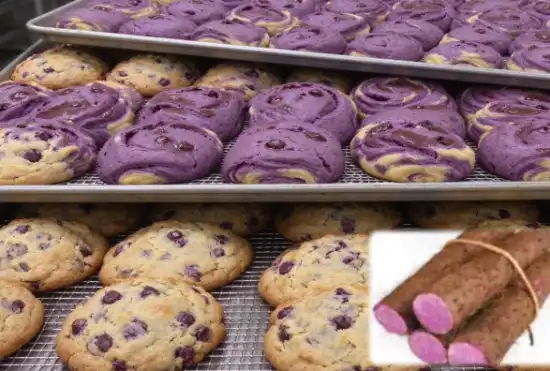
In bakery applications, Purple Ube Powder offers several benefits. It can be used as a natural purple coloring ingredient, a source of anthocyanins and other phenolic compounds, and a partial replacement for conventional wheat flour. Its natural purple color makes it suitable for developing visually distinctive bakery products. Anthocyanins in purple yam also contribute antioxidant activity. Research indicates that purple yam anthocyanins may show better thermal stability than those in purple sweet potatoes and purple potatoes under certain baking conditions, helping maintain color during heat processing.
Purple Ube Powder for Bread and Toast
Natural Purple Ube Powder for bread can be incorporated into standard bread formulations as a partial replacement for wheat flour. Research has shown that replacing up to 30% of wheat flour with purple yam powder can maintain acceptable sensory quality under specific formulation and processing conditions.
At a 30% replacement level and a baking temperature of 180°C, the finished bread contained 54.62 mg/100 g (dry basis) of total anthocyanins and 391.14 mg EAG/100 g (dry basis) of total phenolic compounds. Its DPPH radical-scavenging activity reached 48.53%.
Comparisons between baking temperatures of 170°C and 180°C showed no significant differences in anthocyanin retention in the reported study. This suggests that purple yam pigments can remain relatively stable within this temperature range.
However, increasing the proportion of pure purple yam flour may reduce bread volume because purple yam does not contain gluten-forming proteins and has a relatively high fiber content. For commercial toast production, manufacturers can combine purple yam powder with high-gluten wheat flour and vital wheat gluten to balance purple color, loaf volume, and texture.
Purple Ube Powder for Muffins and Gluten-Free Baking
Purple Ube Powder for gluten-free baking provides a natural color and a plant-based flour alternative. When purple yam flour is used as the primary flour ingredient in gluten-free muffins, additional hydrocolloids may be needed to improve batter structure, moisture retention, and texture.
Research comparing pectin, xanthan gum, and guar gum found that muffins containing pectin achieved the highest moisture content (17.70%) and elasticity (37.13 mm). They also received the highest sensory scores for appearance, color, taste, and overall acceptability.
Muffins prepared with these three hydrocolloids contained approximately 5% protein and 2% ash, with potassium as the predominant mineral. These results indicate that pectin can be a suitable structural ingredient for gluten-free muffin formulations containing purple yam flour.
Purple Ube Powder for Cookies and Biscuits
Purple Yam Powder for cookies can function as both a natural coloring ingredient and a partial flour replacement. It gives cookies a distinctive purple appearance and characteristic yam flavor.
In one sugar-free cookie formulation, 35 g of purple yam flour represented 35% of the total flour blend. The recipe also included 2.0 g of purslane powder, 40 g of xylitol, and 60 g of solid butter. The finished cookies achieved a sensory score of 92.8 and a shear force of 10.95 N.
The starch hydrolysis index (HI90) was 52.52, while the estimated glycemic index (EGI) was 68.60, indicating a medium-glycemic classification under the study's evaluation method.
Typical Inclusion Levels and Functional Performance of Purple Yam Flour in Baked Goods
|
Product Type |
Recommended inclusion rate |
Key Functional Performance |
Processing Considerations |
|
Bread/Toast |
10–30% (as a replacement for flour) |
Anthocyanin content: 54.62 mg/100g; antioxidant activity: 48.53% |
Volume expansion decreases when the concentration exceeds 15%; it is recommended to combine with vital wheat gluten. |
|
Gluten-Free Muffins |
Primary powder component (in combination with pectin) |
Moisture content: 17.70%; elasticity: 37.13 mm; superior sensory evaluation score |
Pectin is the optimal hydrocolloid choice. |
|
Cookies/Biscuits |
35% (based on the total powder blend) |
Sensory evaluation score: 92.8; EGI: 68.60 |
Must be paired with sweeteners such as xylitol to balance the flavor profile. |
Can Purple Ube Powder Be Used in Beverage Formulations?
Yes. Purple ube powder can be used in various beverage formulations, including lattes, smoothies, milk teas, and instant drink mixes. Its powder form offers convenient storage, easy portioning, and a longer shelf life than fresh purple yam. It also provides a natural purple color and a mild, characteristic yam flavor for food and beverage manufacturers.
Ready-to-Drink (RTD) Dairy-Based Beverages and Lattes
Purple ube powder for beverages can be incorporated into dairy milk, oat milk, coconut milk, and other plant-based milk alternatives to make purple yam lattes. It adds color and a mild flavor to hot and cold drinks. For commercial formulations, manufacturers can combine purple yam powder with milk powder, sweeteners, syrups, or cheese foam ingredients to develop purple yam milk tea and ready-to-drink beverages. Proper mixing and dispersion are important for achieving a uniform appearance and reducing sedimentation.
Smoothies and Blended Drinks
Purple yam smoothie powder is suitable for fruit smoothies and blended beverages. It can be combined with banana, mango, coconut milk, and other fruit ingredients to create colorful drinks with a mild yam taste. Since purple yam powder does not necessarily provide sufficient sweetness, manufacturers can adjust the sweetness with sugar, honey, or other sweeteners. It can also be used in mocktails and selected mixed beverages as a plant-based color-contributing ingredient.
Instant and Powdered Beverage Mixes
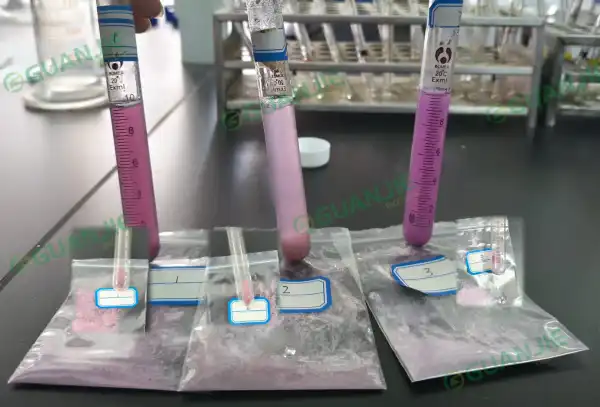
Bulk purple ube powder can be used as an ingredient in instant beverage mixes, latte powders, milk tea powders, and powdered drink formulations. It can be blended with powdered sugar, maltodextrin, milk powder, and other dry ingredients. Its dry form supports convenient transportation, storage, and formulation. For better dispersion, manufacturers can first mix the powder with a small amount of warm water to form a smooth paste before adding the remaining liquid.
When selecting a purple yam powder supplier, beverage manufacturers should evaluate color consistency, moisture content, particle size, dispersibility, and microbiological quality to ensure reliable performance in commercial beverage production.
Application Forms and Formulation Essentials of Purple Yam Powder in Beverage Systems
|
Beverage Categories |
Method of addition |
Functional Positioning |
Key Formulation Points |
|
Milk-based Lattes (Hot/Cold) |
Directly dispersed into an emulsion |
Coloring, flavor foundation |
Pre-disperse in a small amount of warm water before adding to the milk base. |
|
Smoothies/Blended Drinks |
Blended with a fruit or vegetable base |
Natural coloring, antioxidant |
No additional emulsifier required; a near-neutral pH is ideal. |
|
Solid-form Beverages |
Dry blending |
Main ingredient or functional additive |
Pre-disperse before rehydration to prevent clumping. |
Formulation Design and Key Process Parameters of Purple Ube Powder
The performance of purple ube powder (purple yam powder) in food formulations depends on several key processing and formulation parameters, including color stability, texture, and usage levels. Proper control helps manufacturers achieve consistent product quality across different applications.
Color Stability
Purple yam powder contains anthocyanins, which contribute to its characteristic purple color. Acylated anthocyanins generally offer better thermal stability than non-acylated forms. During baking at 170–180°C, color retention depends on heating time, moisture content, pH, and ingredient interactions. Formulators should also consider the effects of metal ions, particularly iron and aluminum, which may affect color stability.
Texture Regulation
Unlike wheat flour, purple yam powder is gluten-free and cannot provide the same dough structure. When replacing a large proportion of wheat flour, manufacturers may add structural proteins, such as vital wheat gluten, or hydrocolloids, such as pectin and xanthan gum. For gluten-free formulations, hydrocolloid selection should be based on the desired elasticity, texture, and sensory properties.
Recommended Usage Levels
For bread, a 30% wheat flour replacement level can serve as a formulation reference, although higher inclusion may affect texture. For cookies, a 35% inclusion level may be explored alongside ingredients such as purslane powder and xylitol. In beverages, purple ube powder is commonly evaluated at 2%–8% (w/v), depending on the desired color, flavor, and consistency.
FAQs:
Q1: Does purple ube powder retain its purple color during baking?
Purple ube powder contains naturally occurring anthocyanins, which contribute to its characteristic purple color. Certain acylated anthocyanins have relatively good thermal stability under specific processing conditions.
Research on purple yam bread has reported anthocyanin retention at baking temperatures of 170–180°C. However, actual color retention depends on heating time, moisture, pH, and ingredient interactions. Food manufacturers should conduct baking trials to determine the optimal processing conditions for consistent product color.
Q2:Can purple ube powder be used in gluten-free baking?
Yes. Purple ube powder can be used as a plant-based ingredient in gluten-free bread, muffins, cookies, and other baked products. However, it cannot provide the gluten network needed for conventional wheat bread structure.
Formulators can consider adding hydrocolloids such as pectin, xanthan gum, or guar gum to improve moisture retention, elasticity, and texture. The appropriate ingredient combination depends on the finished product's structure and sensory requirements.
Q3:What is the recommended dosage of purple ube powder in beverages?
A preliminary inclusion range of 2%–8% (w/v) can be evaluated for beverage formulations. The appropriate concentration depends on the desired color intensity, flavor, viscosity, and total solids content.
For example, a latte may require a different inclusion level from an instant beverage powder or fruit smoothie. Manufacturers should conduct sensory and stability tests to determine the optimal dosage for commercial production.
Q4:What factors affect the color stability of purple ube powder in food formulations?
Several factors can influence the purple color of ube powder in bakery and beverage products:
- pH value: Anthocyanin color can change under different pH conditions.
- Processing temperature: Excessive heat or prolonged heating may reduce pigment stability.
- Metal ions: Iron and aluminum may interact with anthocyanin pigments.
- Storage conditions: Moisture, light, and temperature can affect color retention.
- Ingredient compatibility: Acids, sweeteners, proteins, and other formulation ingredients may influence the final appearance.
For commercial applications, manufacturers should evaluate color stability in the complete formulation rather than testing the powder alone.
Conclusion:
Purple ube powder is used in bakery products, beverages, and other food formulations. Its natural purple color makes it suitable for bread, cookies, cakes, smoothies, lattes, and powdered drink mixes. Purple yam contains acylated anthocyanins, which contribute to its characteristic color. In bakery applications, formulation conditions such as processing temperature, pH, and ingredient interactions can affect color stability and final product quality.
For bread production, purple yam powder can be incorporated into flour blends, with sensory acceptance depending on the replacement level and recipe. In gluten-free baking, pectin and other hydrocolloids can help improve texture. For cookies, the inclusion rate should be adjusted according to the desired color, flavor, and texture. In beverage applications, purple yam powder for beverages can be used in dairy-based lattes, smoothies, and instant drink mixes. Formulators should consider pH and metal ion content when developing products to maintain consistent color and appearance.
Purple Yam Powder Manufacturer with OEM and ODM Services
Guanjie Biotech is a professional purple yam powder supplier offering OEM and ODM services for food manufacturers and ingredient distributors. Under the OEM model, customers provide their formulations and product specifications, while Guanjie Biotech manages production, packaging, and shipment. Under the ODM model, its R&D team assists with formulation development, sample testing, and process optimization to develop customized products for commercial production.
Guanjie Biotech operates production facilities with cGMP-standard workshops and laboratories for product development and quality testing. Its R&D team has experience in plant extract and raw material production technologies, supported by patented technologies. Guanjie Biotech exports products to international markets, including the United States and India.
Bulk Purple Ube Powder and Custom Formulation Solutions
For businesses sourcing bulk purple yam powder or developing new food products, Guanjie Biotech provides product specifications, samples, and customized formulation support. Available services include particle size adjustment, anthocyanin content standardization, and customized premix development. Contact Guanjie Biotech to discuss wholesale supply, OEM and ODM cooperation, and purple ube powder for food manufacturing. Welcome to enquire with us at info@gybiotech.com.
References:
[1]Tamaroh, S., & Sudrajat, A. (2021). Antioxidative Characteristics and Sensory Acceptability of Bread Substituted with Purple Yam (Dioscorea alata L.). International Journal of Food Science, *2021*, 5586316.
[2] Gunasekara, D., Bulathgama, A., & Wickramasinghe, I. (2024). Comparison of Different Hydrocolloids on the Novel Development of Muffins from "Purple Yam" (Dioscorea alata) Flour in Sensory, Textural, and Nutritional Aspects. Wiley (DOAJ).
[3] Stability of Anthocyanin Pigments of Philippine Powdered Purple Yam: Effect of Inorganic Salts, Organic Acids, Sugars, Phenols, L-Ascorbic Acid and Hydrogen Peroxide. (1989). Journal of the Home Economics Society of Japan, *40*(1), 15-22.
[4] Cao Cheng, Shen Mengna, Kou Fubing, Li Yibo, Shi Guifang, & Wang Haiyan. (2019). Research progress on the development of purple ube products. Grain and Feed Industry, (1).
[5] Wang Yanping, Shen Fei, Li Junhua, Qian Zhiwei, Jia Yanli, & Tang Gaoqi. (2022). Process optimization and *in vitro* digestion characteristics of purple ube and quinoa shortbread biscuits.