

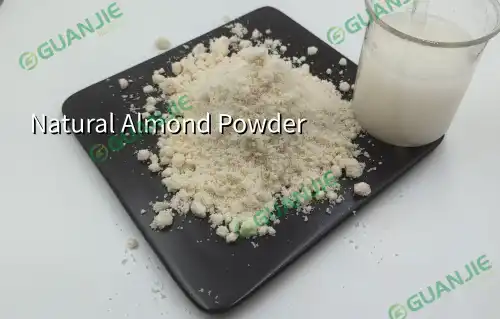
Natural Almond powder beverages are plant-based drinks made from ground Natural Almond powder. They are mixed with water or used in industrial formulas. They are one of the most popular plant-based beverages today. They are widely used for daily nutrition, meal replacement, and beverage products. Compared with dairy milk and soy drinks, pure Almond powder beverages have a unique nutritional profile. They also offer different health benefits. However, their health value depends on the raw materials, processing method, formula, and serving size.

What Is Core Nutritional of Almond powder Drink?
Pure, additive-free Natural Almond powder beverages provide stable nutrition. They contain many essential nutrients that support normal body functions. They are a healthy choice for people looking for a plant-based drink.
• First, Natural Almond powder beverages are rich in antioxidants.
They contain high levels of vitamin E and polyphenols. These nutrients help neutralize free radicals and reduce oxidative stress. They may help slow skin aging and protect skin cells. They also help maintain the skin barrier and support healthy-looking skin.
• Second, these beverages contain healthy fats and important minerals.
They are rich in monounsaturated fatty acids. These healthy fats may help maintain normal blood lipid levels and support heart health. Natural Almond powder beverages also provide minerals such as magnesium and zinc. These nutrients support nerve function, energy metabolism, and normal skin health.
• Natural Almond powder beverages are also suitable for people with special dietary needs.
They are naturally free of lactose and milk protein. This makes them a good choice for people with lactose intolerance or milk protein allergies. The dietary fiber in the beverage can increase fullness and support healthy digestion. It also helps promote normal bowel movement. Drinking it in moderation may help maintain a healthy gut microbiota. It is suitable for people who want a light, healthy diet or weight management. Natural Almond protein powder beverages may also help soothe a dry throat and provide gentle hydration.
What Are Risks of Almond powder Drink?
Even pure Natural Almond powder beverages without additives have some health risks. These risks are related to the raw material, its composition, and the amount consumed. Long-term excessive intake may have negative effects on the body.
• There is a risk of trace toxicity.
Almonds are divided into sweet almonds and bitter almonds. Some low-cost commercial Natural Almond powders may contain a small amount of bitter almond extract. Bitter almonds contain amygdalin. After digestion, amygdalin can release small amounts of hydrocyanic acid. The body can normally process and remove small amounts. However, long-term excessive intake of high-concentration bulkAlmond powder beverages may increase the body's metabolic burden. It may also cause dizziness, fatigue, and stomach discomfort.
• There are nutritional limitations.
Natural Almond powder beverages are low in protein. They usually contain only about 1 gram of protein per 100 ml. This is much lower than milk or soy milk. They are not a good primary source of protein. Relying only on 100 pure Almond powder beverages may lead to inadequate protein intake. This can affect muscle maintenance and normal immune function. In addition, the calcium content and calcium absorption are limited. Natural Almond powder bulk beverages alone cannot meet the body's daily calcium needs.
• There is a risk of excessive calorie intake.
Almonds are naturally high in fat. Grinding them into powder makes the nutrients and oils easier to digest and absorb. Compared with eating whole almonds, drinking Natural Almond powder can make it easier to consume excess calories. Long-term overconsumption without controlling total calorie intake may lead to weight gain. It may also increase the burden on lipid metabolism.
• There is a risk of allergic reactions.
Almonds are a common tree nut allergen. The proteins they contain can trigger allergic reactions in sensitive people. Symptoms may include skin rashes, itching, stomach pain, throat swelling, and digestive discomfort. In severe cases, breathing difficulties may occur. People trying Natural Almond powder for the first time should start with a small amount, especially if they have a history of nut allergies.
Is Natural Almond powder Drink Safe?
Compared with homemade pure Natural Almond powder drinks, many commercial bottled and powdered almond drinks may have more health risks. This is mainly because they contain added ingredients and processing aids. These additives are also one reason why some people feel uncomfortable after drinking them.
• First, too much added sugar is a common problem.
Many commercial almond drinks contain white sugar, high-fructose corn syrup, or other sweeteners. These ingredients improve the taste. However, drinking high-sugar beverages for a long time can lead to excess sugar intake. It may cause blood sugar spikes, insulin resistance, obesity, tooth decay, and metabolic syndrome. It is also not suitable for people with diabetes or those trying to lose weight.
• Second, food additives may increase the body's metabolic burden.
Some low-cost almond drinks contain carrageenan, thickeners, artificial flavors, and preservatives. Carrageenan may irritate sensitive stomachs and intestines. It can cause bloating, diarrhea, and indigestion in some people. Long-term intake of artificial flavors and preservatives may also increase the workload of the liver and kidneys.
• Finally, some products contain diluted or adulterated ingredients.
To reduce production costs, some manufacturers mix starch or grain powders with Natural Almond powder. This lowers the amount of real almonds in the product. They also use flavorings to improve the taste. As a result, these drinks may contain very little nutrition. They are often flavored beverages rather than nutritious almond drinks. Drinking them regularly provides limited nutritional benefits.
How Add Almond powder To Drink?
Natural Almond powder mixes easily with many drinks. You can add it to warm water, milk, yogurt, tea, or fruit and vegetable juice. It is easy to prepare and works well with different recipes. Proper mixing improves the taste and nutrition. It also helps prevent clumping, separation, and bitterness. The most common method is to dissolve the powder with warm water first. This method works well with most beverages.
• First, add 3–5 grams of pure Almond powder to a clean cup. Pour in a small amount of room-temperature water. Use just enough water to wet the powder. Stir well with a spoon until it forms a smooth paste with no lumps. This helps prevent clumping.
• Next, slowly add warm milk, warm water, tea, or another drink while stirring. Continue stirring until the mixture is smooth and fully blended.
For iced drinks, dissolve the Natural Almond powder in warm water first. Then add ice cubes and the cold beverage. This helps prevent the powder from clumping in low temperatures.
Follow these simple tips to improve taste and ensure safe use.
• First, control the water temperature.
Do not use boiling water. High temperatures may reduce some nutrients and make the Natural Almond powder taste more bitter. The best water temperature is 40–60°C.
• Second, control the serving size.
Use no more than 5 grams per serving. Do not consume more than 10 grams per day. This helps avoid excessive intake.
• Third, choose food pairings carefully.
Do not mix Natural Almond powder with strong tea or drinks high in oxalic acid, as they may reduce mineral absorption. If you have a sensitive stomach, avoid drinking it on an empty stomach.
• Fourth, choose high-quality ingredients.
Use pure sweet Natural Almond powder. Avoid products that contain bitter almonds or low-quality fillers.
• Fifth, drink it soon after preparation.
Natural Almond powder drinks may separate if left for too long. This can reduce the taste and increase the risk of bacterial growth. Do not store the drink overnight. If you have a nut allergy, try a small amount first to make sure it is safe for you.
FAQs:
1. Is Natural Almond Powder suitable for beverage manufacturing?
Yes. High-quality Natural Almond Powder is widely used in plant-based beverages, protein drinks, smoothies, meal replacement products, and functional nutrition drinks. It offers a natural almond flavor, smooth texture, and good nutritional value. Food-grade powder with stable quality also provides consistent performance during industrial production.
2. What should buyers consider when purchasing Natural Almond Powder?
Buyers should choose pure sweet almond powder instead of products containing bitter almonds or fillers. Important factors include raw material origin, particle size, microbiological standards, heavy metal testing, moisture content, and batch consistency. A reliable supplier should also provide complete quality certificates and technical support.
3. Can Natural Almond Powder be used in both hot and cold beverages?
Yes. Natural Almond Powder works well in both hot and cold beverage formulations. For the best dispersion, manufacturers usually pre-mix the powder with a small amount of warm water before blending with the final beverage. This helps reduce clumping and improves product stability.
4. Does Natural Almond Powder contain enough protein for high-protein beverages?
Natural Almond Powder contains protein, but its protein level is much lower than soy or whey protein. Manufacturers developing high-protein beverages often combine almond powder with pea protein, rice protein, or other plant proteins to achieve the desired nutritional profile.
5. Is Natural Almond Powder suitable for lactose-free and vegan products?
Yes. Pure Natural Almond Powder is naturally free from lactose and dairy protein, making it suitable for vegan, vegetarian, lactose-free, and dairy-free beverage formulations. It is commonly used in clean-label and plant-based food products.
6. How can manufacturers improve the stability of Almond Powder beverages?
Manufacturers should select finely milled almond powder with good dispersibility. Proper homogenization, optimized mixing procedures, and suitable stabilizer systems can improve suspension, reduce sedimentation, and extend shelf life while maintaining a smooth texture.
7. Are there any safety concerns when using Natural Almond Powder?
Manufacturers should use food-grade sweet almond powder from qualified suppliers. Products should comply with food safety standards and be tested for microbiological contamination, heavy metals, pesticide residues, and allergens. Almond is a tree nut allergen, so proper allergen labeling is essential.
Conclusion
In conclusion, natural, additive-free Natural Almond powder drinks can provide nutrition and health benefits when consumed in moderation. They can enrich the daily diet and are suitable for some people. However, they also have potential risks. These include allergies, metabolic stress, excess calorie intake, and toxin accumulation. Poor-quality products and improper consumption may increase these risks. Do not blindly believe all health claims. At the same time, do not ignore the nutritional value of Natural Almond powder. Choose high-quality products, consider your own health condition, and consume the right amount. This helps ensure safe and healthy consumption. Welcome to enquire with us at info@gybiotech.com.
References:
[1] German Federal Institute for Risk Assessment (BfR). (2024). Mycotoxins in plant-based drinks (soy, almond and oat): the BfR updates its assessment of their health risks based on newly collected data (Opinion No. 037/2024). Bundesinstitut für Risikobewertung.
[2] Maykish, A., Nishisaka, M. M., Talbott, C. K., Reaves, S. K., Kristo, A. S., & Sikalidis, A. K. (2021). Comparison of Whey Versus Almond Protein Powder on Nitrogen Balance in Female College Students; The California Almond Protein Powder Project (CAlmond-P3). International Journal of Environmental Research and Public Health, *18*(22), 11939.
[3] Shen, Y., Meng, J., Li, J., Gao, K., Xu, X., Sui, W., Jin, Y., Zhang, M., & Wu, T. (2025). Investigation into the production process and storage stability of spray-dried whole bitter almond powder. Food Research International, 117450.
[4] Zid, M. B., Rokbeni, N., M'hiri, N., Chouaibi, M., Zghonda, N., & Boudhrioua, N. (2026). Date Fruits and Derivatives for Almond Beverage Fortification: Assessment of Beverages and Generated Residues. Food Technology and Biotechnology, *64*(2), 205-221.
[5] Sethi, S., Tyagi, S. K., & Anurag, R. K. (2016). Plant-based milk alternatives an emerging segment of functional beverages: a review. Journal of Food Science and Technology, *53*(9), 3408–3423.


