

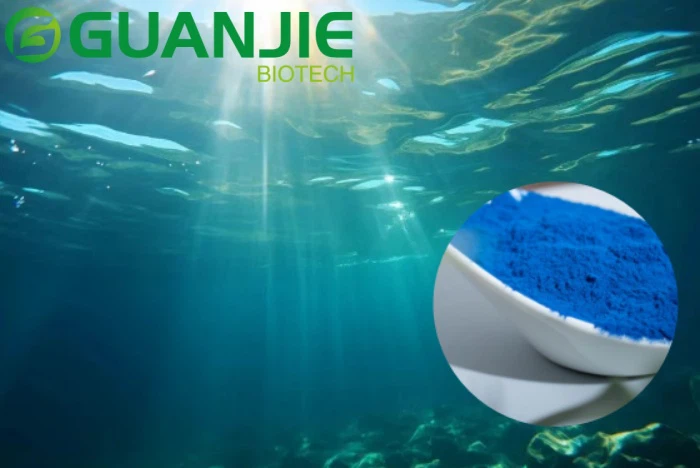
Blue spirulina phycocyanin powder, often simply called "blue spirulina," is a popular natural blue pigment and dietary supplement derived from cyanobacteria, primarily from the species Arthrospira platensis. It has gained widespread attention for its vibrant blue color and impressive nutritional profile. Unlike traditional green spirulina powders that are dark green, blue spirulina is primarily the pigment phycocyanin extracted from spirulina. This gives it a bright blue color that makes it a popular natural colorant in foods, beverages, and cosmetics.
What is Blue Spirulina Powder?
Origin and Source
Spirulina is a type of cyanobacteria (blue-green algae) that naturally grows in both fresh and saltwater environments, particularly in alkaline lakes and ponds. The species Arthrospira platensis and Arthrospira maxima are most commonly used for human consumption.
Blue spirulina phycocyanin powder refers to the isolated phycocyanin pigment extracted from spirulina. Phycocyanin is a water-soluble pigment-protein complex responsible for the blue-green color of spirulina. When isolated and purified, this pigment appears as a vibrant blue powder, free from chlorophyll, which colors traditional spirulina green.

Production Process
To produce blue spirulina powder, spirulina biomass undergoes an extraction process to isolate phycocyanin. The general steps include:
- Harvesting spirulina algae.
- Drying and powdering the algae.
- Using water or buffer solutions to extract phycocyanin.
- Filtering and purifying the phycocyanin to remove other pigments and contaminants.
- Spray-drying or freeze-drying the purified phycocyanin into powder form.
- This powder is then used as a natural blue food colorant or dietary supplement.

Nutritional Profile
Blue spirulina phycocyanin powder is valued mainly for its rich concentration of phycocyanin, which has antioxidant and anti-inflammatory properties. However, unlike whole spirulina powder, blue spirulina does not contain the full spectrum of nutrients found in spirulina algae because the extraction process isolates only the pigment.
Typical components of blue spirulina powder:
- Phycocyanin:
20–25% or higher concentration, depending on purity.
- Proteins:
Minimal residual proteins.
- Carbohydrates:
- Trace amounts.
- Minerals and Vitamins:
Minimal compared to whole spirulina.
In contrast, whole spirulina powder is a powerhouse of nutrients, including:
- Protein (~60-70%)
- Vitamins (B-complex, vitamin K, etc.)
- Minerals (iron, calcium, magnesium, potassium)
- Essential fatty acids (gamma-linolenic acid)
- Chlorophyll and carotenoids
Thus, blue spirulina phycocyanin powder is primarily consumed for its organic phycocyanin powder content rather than as a nutritional supplement for protein or vitamins.
Benefits Of Blue Spirulina Powder
Rich Source of Antioxidants
Phycocyanin is a powerful antioxidant that scavenges free radicals and reduces oxidative stress in the body. Oxidative stress is linked to aging and numerous chronic diseases like heart disease, cancer, and neurodegenerative disorders. Studies show that phycocyanin can inhibit oxidative damage by neutralizing reactive oxygen species (ROS).
Scientific Evidence:
A 2011 study in the Journal of Medicinal Food demonstrated that blue spirulina phycocyanin powder extracted from spirulina protected cells from oxidative stress-induced damage.
Animal studies suggest phycocyanin natural spirulina powder enhances antioxidant enzyme activities such as superoxide dismutase (SOD) and catalase.
Anti-Inflammatory Effects
Chronic inflammation is implicated in conditions such as arthritis, cardiovascular diseases, and metabolic syndrome. Phycocyanin exhibits strong anti-inflammatory properties by inhibiting inflammatory signaling pathways, including cyclooxygenase-2 (COX-2) and nitric oxide production.
Scientific Evidence:
Research published in Biochimica et Biophysica Acta (2006) reported that blue algae spirulina powder phycocyanin suppressed inflammation markers in vitro and in animal models.
Clinical trials have observed reduced markers of inflammation in participants consuming spirulina supplements.

Immune System Support
Blue spirulina phycocyanin powder contains polysaccharides and phycocyanin, which may stimulate immune cell activity. Spirulina has been shown to enhance natural killer (NK) cell function, macrophage activity, and antibody production, boosting the body's defense mechanisms.
Scientific Evidence:
A study in Immunopharmacology and Immunotoxicology (2010) found spirulina supplementation increased NK cell cytotoxicity in healthy adults.
Polysaccharides extracted from spirulina stimulate macrophage phagocytosis and cytokine production.
Potential Anti-Cancer Properties
Some studies indicate that phycocyanin exhibits anti-proliferative effects on cancer cells by inducing apoptosis (programmed cell death) and inhibiting tumor growth.
Scientific Evidence:
Laboratory studies have demonstrated that blue spirulina phycocyanin powder induces apoptosis in leukemia, breast, and colon cancer cells.
Animal studies show tumor growth suppression after phycocyanin administration.
However, human clinical trials are limited and more research is needed to confirm these effects.
Cardiovascular Health
Blue spirulina may benefit cardiovascular health by reducing cholesterol, blood pressure, and platelet aggregation. The antioxidant and anti-inflammatory properties can also protect blood vessels from damage.
Scientific Evidence:
Clinical trials reported decreased LDL cholesterol and triglycerides in subjects taking blue powder spirulina supplements.
Some studies have shown mild reductions in systolic and diastolic blood pressure after spirulina intake.
Blood Sugar Regulation
Spirulina may improve insulin sensitivity and glucose metabolism, potentially benefiting people with diabetes or prediabetes.
Scientific Evidence:
Studies on diabetic animals showed improved blood glucose levels and insulin sensitivity with spirulina supplementation.
Human studies are mixed, but some indicate reduced fasting blood sugar levels and HbA1c after long-term blue spirulina phycocyanin powder supplementation.

Improved Muscle Strength and Endurance
Due to its antioxidant and anti-inflammatory effects, spirulina might reduce exercise-induced muscle fatigue and improve endurance.
Scientific Evidence:
Research published in the European Journal of Applied Physiology showed that spirulina supplementation increased exercise performance and delayed fatigue onset.
Antioxidant properties help reduce muscle damage from oxidative stress during intense exercise.
Brain Health and Neuroprotection
Phycocyanin may protect brain cells from oxidative damage, potentially slowing neurodegeneration and improving cognitive function.
Scientific Evidence:
Animal studies suggest neuroprotective effects of phycocyanin against Parkinson's and Alzheimer's disease models.
Human data is limited, but antioxidant intake is generally associated with better cognitive aging.
Safety and Possible Side Effects
Blue spirulina phycocyanin powder is generally regarded as safe for most people when consumed at typical doses (1-10 grams per day). However, some considerations include:
•Contamination Risk:
Spirulina grown in uncontrolled environments may be contaminated with microcystins (toxins from harmful cyanobacteria), heavy metals, or bacteria. Choosing a reputable brand with third-party testing is essential.
•Allergic Reactions:
Rarely, some individuals may experience allergic reactions or gastrointestinal upset.
•Autoimmune Diseases:
Since spirulina boosts immune function, those with autoimmune diseases should consult a healthcare provider before use.
•Pregnancy and Breastfeeding:
Insufficient evidence on safety; pregnant or nursing women should exercise caution.
How to Use Blue Spirulina Powder?
- Dosage:
Typically, 1-3 grams of blue spirulina phycocyanin powder is used per day in supplements or as a food additive.
- Applications:
Smoothies, juices, energy balls, yogurt, ice cream, salad dressings, and baked goods.
- Storage:
Store in a cool, dry place away from direct sunlight to preserve potency.
- Taste:
Mild, slightly earthy or seaweed-like flavor; easy to mask with fruits.
Spirulina has long been recognized as a powerful superfood. Two of the most well-known types are blue spirulina and green spirulina, both derived from the same species of blue-green algae, Arthrospira platensis. However, they differ significantly in composition, appearance, and usage.
The key difference lies in the extraction process and primary active components. Blue spirulina is a refined extract of phycocyanin, the vibrant blue pigment found in spirulina cells. This extraction process isolates phycocyanin, resulting in a bright blue powder with a mild, neutral flavor. In contrast, green spirulina is the whole algae, dried and powdered, containing not only phycocyanin but also chlorophyll, complete plant proteins, vitamins, and minerals.
In terms of color and taste, blue spirulina phycocyanin powder is bright blue and visually striking, making it ideal for use in smoothie bowls, colorful beverages, and creative food presentations. It has almost no taste, which makes it a favorite for those who find green spirulina's earthy, grassy flavor too strong. On the other hand, green spirulina has a deep green hue and is more commonly used for nutritional supplementation thanks to its wide array of micronutrients.
Nutritionally, blue spirulina emphasizes its antioxidant benefits, particularly through phycocyanin, which supports immune health and helps combat oxidative stress. Green spirulina, being a whole food, provides a broader spectrum of nutrients, including iron, B vitamins, and essential amino acids, offering a more comprehensive nutritional profile.
In terms of digestibility, blue spirulina phycocyanin powder is often easier on the stomach because it lacks the fibrous cell walls of whole algae. Green spirulina may cause digestive discomfort in some individuals, particularly when consumed in larger amounts or by those new to algae supplements.
|
Feature |
Blue Spirulina |
Green Spirulina |
|
Main Compound |
Phycocyanin (blue pigment) |
Whole algae (chlorophyll, phycocyanin, proteins) |
|
Color |
Bright blue |
Deep green |
|
Taste |
Mild, neutral |
Earthy, grassy |
|
Nutrients |
Focused antioxidant |
Broad-spectrum micronutrients |
|
Uses |
Smoothies, coloring, and aesthetic recipes |
Full nutritional supplementation |
|
Digestibility |
Easily digestible |
May cause digestive upset in some |
Based on current evidence, blue spirulina phycocyanin powder appears to be a healthy, nutrient-dense supplement with a range of potential health benefits. Its antioxidant, anti-inflammatory, immune-enhancing, and possible cardiometabolic protective properties make it an appealing addition to a balanced diet.
If you are a supplement manufacturer, please select high-quality, contaminant-free blue spirulina phycocyanin powder products. Welcome to enquire with us at info@gybiotech.com.


