

There are a wide variety of tea powders - natural black tea powder, pure green tea powder, matcha tea powder, and morein the market today. And an important question for consumers and businesses alike: Is black tea powder different from normal tea powder? We will explore the differences and similarities between black tea powder and what is typically referred to as normal tea powder. We will also dive into production processes, chemical compositions, health benefits, uses, quality considerations.

What is Tea Powder?
Tea powder refers to finely ground tea leaves processed into a powder form. This format enhances the surface area of the tea, enabling faster brewing, stronger flavor extraction, and easy incorporation into foods, beverages, and supplements.
Tea powder is distinct from traditional loose-leaf tea in its fineness and often in its processing method. It is typically used in powdered tea drinks, tea capsules, ready-to-mix beverages, baking, and culinary applications.
Common Types of Tea Powder
•Black Tea Powder:
Natural black tea powder is made from fully oxidized tea leaves, ground into a fine powder.
•Green Tea Powder:
Pure Green Tea Powder is produced from non-oxidized, steamed, or pan-fired tea leaves, ground to powder.

•Matcha Tea Powder:
A high-quality Japanese green tea powder made from specially shade-grown leaves and stone-ground to a fine powder.
•Other Tea Powders:
Includes white tea powder, oolong tea powder, and specialty blends.
When people refer to "normal tea powder," they often mean green tea powder or matcha, as these powders have been traditionally popular for centuries, especially in Asian cultures. Natural black tea powder, although less common in powder form, is gaining popularity due to its rich flavor profile and potential health benefits.
Black Tea Powder vs. Normal Tea Powder
Processing and Oxidation
The primary difference between natural black tea powder and green/matcha tea powder lies in the processing and oxidation level of the tea leaves before grinding.
•Black Tea Powder:
Made from fully oxidized tea leaves. After harvesting, the leaves are withered, rolled, and then allowed to oxidize fully, turning the leaves dark brown to black. This oxidation process develops rich, robust flavors, darker colors, and distinct aromatic compounds. The oxidized leaves are then dried and ground into a fine powder.
•Green Tea Powder (including Matcha):
Pure Green Tea Powder is Made from unoxidized or minimally oxidized tea leaves. Green tea leaves are quickly steamed or pan-fired to halt oxidation, preserving their green color and fresh, vegetal flavor. Matcha undergoes an additional shading process that increases chlorophyll and amino acids, and it is stone-ground into a very fine powder.
|
Step |
Black Tea Powder |
Green/Normal Tea Powder |
|
Withering |
Yes |
Yes |
|
Rolling |
Yes |
Yes |
|
Oxidation |
Full oxidation (fermented) |
Minimal to no oxidation |
|
Fixation (Enzyme Inactivation) |
No |
Yes, to prevent oxidation |
|
Drying |
Yes |
Yes |
|
Grinding or Spray Drying |
Yes |
Yes |
The primary difference lies in the oxidation process. Natural black tea powder is fully oxidized, resulting in the formation of theaflavins and thearubigins, compounds that give black tea its unique color and flavor. In contrast, green tea powder undergoes minimal oxidation to retain its natural green color and higher catechin content.
Color and Appearance
Natural black tea powder is typically dark brown to black, a result of the full oxidation process the tea leaves undergo during production. This oxidation causes the natural green pigments to break down and transform into darker compounds such as theaflavins and thearubigins, which contribute to black tea's rich, deep color. When brewed or incorporated into food products, black tea powder imparts a robust, dark reddish-brown hue, making it ideal for applications where a strong, bold color is desired.
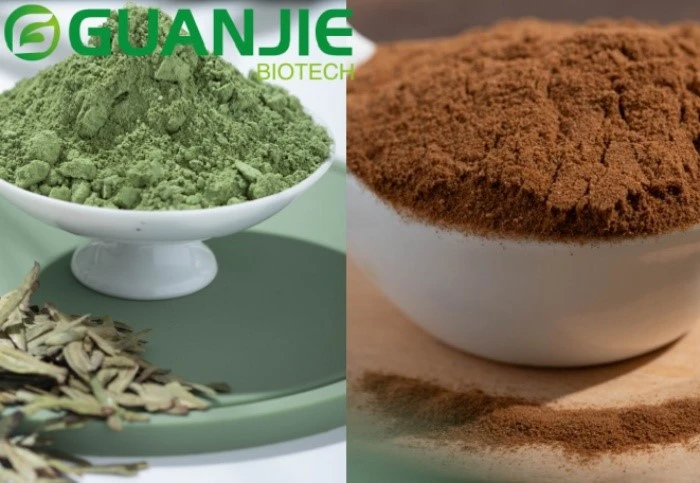
In contrast, Pure Green Tea Powder, including popular forms like matcha, retains its bright to deep green color due to minimal or no oxidation during processing. Matcha tea powder is renowned for its vibrant emerald green appearance, which results from careful shading and rapid steaming of the leaves before grinding. This preservation of chlorophyll and other natural pigments gives green tea powder a fresh, lively color that translates into visually appealing light green to bright green beverages and culinary uses.
Flavor
Natural black tea powder, as a strong, malty, bold, and sometimes slightly astringent flavor. It carries notes of caramel, honey, dried fruit, and spices.
Pure Green Tea Powder offers a fresh, grassy, vegetal, and slightly sweet flavor. Matcha is creamy, umami-rich, and smooth.
|
Attribute |
Black Tea Powder |
Green/Normal Tea Powder |
|
Color |
Brown to reddish-brown |
Bright green to pale green |
|
Aroma |
Malty, woody, floral |
Fresh, grassy, slightly bitter |
|
Flavor |
Strong, bold, astringent |
Mild, vegetal, slightly sweet or bitter |
These flavor distinctions affect how the powders are used in culinary and beverage formulations.
Chemical Composition & Health Benefits
The chemical composition of natural black tea powder and normal tea powder (commonly green tea powder) differs significantly due to the variation in their processing, especially the level of oxidation.
1.black tea powder
Black Tea Powder is made from fully oxidized tea leaves. During oxidation, key chemical transformations occur:
•Theaflavins and Thearubigins:
These are unique polyphenolic compounds formed by the oxidation of catechins. Theaflavins contribute to the bright reddish color and brisk flavor, while thearubigins provide the dark color and full-bodied taste of black tea.
•Caffeine:
Present in moderate amounts, black tea powder generally contains slightly higher caffeine levels than green tea powder.
•Other Components:
Natural black tea powder contains amino acids like theanine (though reduced compared to green tea), sugars, minerals, and volatile oils responsible for aroma.
2.Normal Tea Powder (Green Tea Powder)
Normal Tea Powder (Green Tea Powder) is made from unoxidized leaves, preserving its original chemical profile:
•Catechins:
Pure Green Tea Powder is rich in catechins, especially epigallocatechin gallate (EGCG), which are powerful antioxidants linked to many health benefits.
•Caffeine:
Green tea powder contains moderate caffeine but typically less than black tea.
Amino Acids: Theanine is abundant, contributing to green tea's umami flavor and calming effects.
•Chlorophyll:
Retained due to minimal processing, giving green tea powder its vibrant color.
Vitamins and Minerals: Green tea powder also contains vitamins (like vitamin C) and minerals that support overall health.
Caffeine Content
Natural black tea powder typically contains a moderate to high level of caffeine, though slightly less than green tea powder in some cases. This difference arises because pure black tea powder undergoes full oxidation, a process that can slightly reduce the caffeine content compared to unoxidized green tea. However, the actual caffeine level can vary depending on the leaf variety, harvesting time, and processing method. In contrast, matcha powder generally contains more caffeine than both black and green tea powders because the entire leaf is consumed in powdered form, offering a more concentrated dose of nutrients and stimulants.
Why Choose Guanjie Biotech as Your Tea Powder Supplier?
When sourcing tea powders in bulk, quality and compliance are crucial. Guanjie Biotech stands out due to:
•Diverse Range:
We offer black tea, green tea, and Matcha tea powder in various specifications.
•Quality Assurance:
We maintain strict in-house quality control and also rely on third-party testing for verification.
•Certifications:
All products are ISO9001, HALAL, and KOSHER certified.
•Natural and Safe:
No synthetic additives; our powders retain the natural essence of the tea leaves.
•Competitive Pricing:
We offer excellent value without compromising quality.
•Customization Available:
Particle size, solubility, and packaging can be tailored to your needs.
In summary, natural black tea powder is indeed different from normal tea powder, particularly when the latter refers to green tea or matcha powders. The key differences lie in the oxidation process, flavor profiles, color, chemical composition, and health benefits. Each powder type offers unique qualities suited for various applications in food, beverage, and health industries.
When sourcing tea powders, quality and certifications are crucial. Guanjie Biotech stands out as a reputable supplier of black tea, green tea, and matcha tea powders, offering natural products with comprehensive quality control through in-house testing and third-party verification. Their products comply fully with ISO9001, HALAL, and KOSHER standards and come at competitive prices.
For reliable and premium tea powders, reach out to Guanjie Biotech at info@gybiotech.com.


