No, natural strawberry powder does not have red dye, but some strawberry powder products add red dye. Strawberry powder is widely used as a flavoring and coloring ingredient in beverages, baked goods, snacks, functional foods, and premixed seasonings. For food manufacturers and brand companies, color stability, ingredient compliance, and clean labeling are key factors in raw material sourcing, regulatory approval, and product development. Currently, many procurement and quality control teams have common questions: Does bulk strawberry powder contain artificial red dye? Where does the red color come from in different processing methods? What are the regulatory requirements for added pigments, and how can buyers avoid compliance risks?

Does Strawberry Powder Have Red Dye?
Pure natural strawberry powder contains no artificial red dye. Its red color comes from natural anthocyanins inside fresh strawberries. However, some low-cost commercial strawberry powders will add compliant or illegal artificial red dyes to brighten color, unify batch shade, and cut production costs. Food manufacturers need to check ingredient lists and test reports before bulk purchasing strawberry powder.
Natural Strawberry Powder Has Red Dye
The red color of genuine, additive-free strawberry powder comes entirely from the natural pigments in strawberries. It does not come from artificial red dyes. It is one of the most widely used clean-label ingredients in the market. Strawberries naturally contain two main anthocyanins, cyanidin and pelargonidin. Together with phenolic compounds and carotenoids in the pulp, they create the red color. The more ripe the strawberry is and the more sunlight it receives during growth, the higher the anthocyanin content. This results in a deeper and richer pink color after processing.
Production Methods
Based on production methods, commercially available bulk strawberry powder falls into three main types. They show clear differences in natural color performance.
• The first type is freeze-dried strawberry powder.
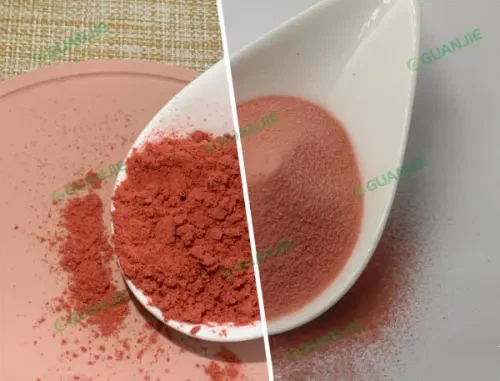
Freeze-dried strawberry powder is processed at -40°C under vacuum conditions. It retains over 92% of anthocyanins from the fresh fruit. The strawberry bulk powder appears deep rose-red with a uniform color. It is often used in premium baking and instant beverage applications.
• The second type is spray-dried, water-soluble strawberry powder.
It is processed at 60–80°C. A small amount of anthocyanins is lost due to heat exposure. The powder appears light pink. Strawberry fruit powder has good water solubility and is commonly used in bottled juices and sauces.
• The third type is hot-air dried strawberry powder.
High-temperature drying causes significant loss of natural anthocyanins. The color becomes lighter, duller, and slightly yellowish. It has the lowest production cost and is usually used as a topping for puffed or snack foods.
All three types are physically processed strawberry powders with no added ingredients. Their color comes only from natural pigments in strawberry pulp. They do not contain synthetic red dyes such as Allura Red, Erythrosine, Carmine, Amaranth, or Red 40. The ingredient list typically contains only "strawberry." They meet clean-label requirements in both domestic and international markets and are suitable for export and mid-to-high-end food applications.
How Many Kinds of Strawberry Powder on the Market?
Strawberry powder on the market can be divided into three main categories: zero-additive compliant products, compliant limited-quantity color-added products, and illegally dyed products. The pigment addition methods are very different. Food companies must distinguish them when purchasing. This helps avoid failed inspections and labeling violations.
• Natural Strawberry Powder Without Red Dye
Bulk strawberry powder from reputable large-scale manufacturers uses only fresh strawberries as the sole ingredient. The process of natural strawberry powder includes impurity removal, sterilization, drying, crushing, and sieving. No artificial pigments, lakes, or color-adjusting agents are added.
This is the preferred raw material for leading food brands and export companies. The color may vary slightly between batches. It still closely matches the natural color of strawberries. These variations are normal and controlled. They comply with pigment control standards in China, the EU, and the US FDA. This type of powder can be used in organic, halal, and vegetarian products.
• Strawberry powder with limited artificial red dyes (compliant use)
To serve the low-cost mass-market food sector, some manufacturers add approved edible red pigments based on customer requirements. This is done strictly according to national regulations, including permitted types and dosage limits.
This type of product helps solve issues such as dull color and large batch variation in lower-grade strawberry powder. It also provides more stable color and lower coloring costs.
The added pigments must be clearly listed on the ingredient label. The amount must not exceed legal limits. This type of natural strawberry powder is only allowed in standard foods such as candies, puffed snacks, and beverages. It is not allowed in infant formula, special dietary foods, or organic products.
• Illegally dyed strawberry powder
Some small, unlicensed workshops use spoiled strawberry pulp as raw material to reduce costs. When natural color is insufficient, they illegally add industrial dyes or excessive food coloring.
These raw materials may exceed limits for heavy metals and dye residues. They often fail third-party food safety testing. This category is not allowed for food production. If food companies purchase or use pure strawberry powder, it can lead to failed product inspections, production shutdowns, and legal penalties.
How To Determine Whether Strawberry Powder Contains Red Dye?
For purchasing and quality control personnel in food factories, three simple verification methods are provided. No laboratory equipment is required. These methods can quickly identify whether artificial red dye has been added to natural strawberry powder during incoming inspection and raw material review, helping avoid the risk of substandard raw materials.

• Check the ingredient list.
According to national labeling standards, strawberry powder without added dyes should list only strawberries in the ingredient list. Compliant strawberry powder with added dyes will clearly list edible colorants such as erythrosine and allura red. If no pigments are declared, but the powder color is unusually bright and consistent across batches, it is likely illegally colored.
• Visually test by dissolving in water.
Natural strawberry powder shows a soft, natural color after dissolving in water. After standing, fruit fiber sediment may appear, and color distribution is uneven. Strawberry powder with artificial dyes dissolves into a bright and uniform solution. It usually shows no pulp sediment and maintains a stable color without fading or separation over time.
• Check the batch test report.
We are a reliable bulk strawberry powder supplier and can provide third-party testing reports for each batch. These reports include screening results for artificial synthetic pigments. If no artificial red dye is detected, the product is considered natural and additive-free strawberry powder, suitable for normal storage and use.
How To Choose High-quality Strawberry Powder?
Strawberry bulk powder is widely used in baking, dairy products, solid beverages, meal replacements, and other applications. The quality of raw materials directly affects the flavor, color, and safety of the final product. Food companies should evaluate products based on five key factors: raw materials, processing methods, physicochemical indicators, compliance, and supplier capability.
• First, check raw material purity and ingredient composition.
Prefer strawberry powder made directly from fresh fruit. Distinguish between whole fruit powder and juice powder. For high-end and clean-label products, choose pure strawberry powder without maltodextrin, flavorings, or color additives. Avoid low-cost adulterated products, as some suppliers may add beet powder or artificial coloring to improve appearance. Stable sourcing and fast processing after harvest help reduce oxidation, preserve natural strawberry aroma, and retain anthocyanins, preventing off-flavors.
• Second, select the appropriate processing method based on product positioning.
Freeze-dried strawberry powder retains most nutrients, natural color, and good rehydration performance. It is suitable for yogurt, premium desserts, and infant nutrition products. Low-temperature spray-dried powder offers good flowability and cost efficiency, making it suitable for instant drinks and compressed candies. High-temperature hot-air drying leads to significant flavor loss and is generally suitable only for low-cost baking fillings. Natural strawberry powder particle size, moisture content, and solubility should match production requirements. Moisture content should be controlled below 5% to reduce clumping and microbial risk.
• Third, strictly control safety and quality indicators.
A COA (Certificate of Analysis) should be provided for each batch. Microbiological results must show no detectable E. coli or Salmonella. Heavy metals and pesticide residues must comply with regulatory standards. Anthocyanin content, acidity, and color stability should also be tested. For long shelf-life products, light and heat stability should be verified to prevent fading and flavor degradation.
• Finally, choose qualified and reliable suppliers.
Key certifications include SC production licenses, ISO22000, and HACCP. Export-oriented products should also comply with FDA and organic certification requirements. Guanjie Biotech is a professional bulk strawberry powder supplier with standardized fresh fruit planting bases and dual production lines for freeze-drying and low-temperature spray drying. It offers multiple specifications of pure freeze-dried strawberry powder and concentrated juice powder, with full traceability. We use an in-house laboratory and provide full batch testing reports. It supports small-scale formulation trials and customization of particle size for applications such as baking, beverages, and meal replacements, ensuring stable delivery of bulk orders. Technical support is also available for formulation optimization, meeting the procurement needs of both domestic and international food manufacturers.
Before purchasing, small strawberry powder samples should be tested to evaluate dispersibility, color performance, and flavor retention. For long-term cooperation, production capacity, delivery stability, and total cost should also be considered to balance quality and budget and to reduce risks associated with raw material variability.
RFQs:
1. Does strawberry powder contain red dye?
Pure strawberry powder bulk does not contain artificial red dye. Its natural red color comes from anthocyanins in strawberries. However, some low-quality or commercial products may add artificial coloring to enhance brightness or color uniformity.
2. Where does the red color in strawberry powder come from?
In natural strawberry powder, the red or pink color comes from natural plant pigments (mainly anthocyanins such as cyanidin and pelargonidin). The final shade depends on the fruit's ripeness and the processing method.
3. Can strawberry powder contain artificial red dyes?
Yes, some manufacturers may add approved food colorants or illegal dyes to improve appearance or reduce costs. These are not present in high-quality strawberry powder and must be clearly declared on the label.
4. What types of strawberry powder are available on the market?
Strawberry powder bulk generally falls into three categories:
• Natural strawberry powder (no additives)
• Compliant colored strawberry powder (with permitted food dyes)
• Illegally adulterated strawberry powder (non-compliant dyes or fillers)
5. How can I tell if strawberry powder contains red dye?
You can identify red dye in natural strawberry powder bulk by checking the ingredient list for "strawberry" only, performing a water dissolution test where natural powder shows slight sediment and uneven color, and reviewing third-party laboratory reports confirming no synthetic pigments or artificial colorants are present.
6. Is freeze-dried strawberry powder more natural in color?
Yes. Freeze-drying preserves up to 90%+ of anthocyanins, resulting in a deeper, more natural red color without the need for artificial dyes.
7. What risks are associated with dyed strawberry powder?
Dyed strawberry fruit powder, especially low-quality or illegal products, may contain unapproved colorants, fail food safety testing, and violate regulatory standards. These issues can result in non-compliance, product recalls, shipment rejection, and serious risks for food manufacturers in domestic and international markets.
Conclusion:
Pure strawberry powder does not naturally contain artificial red dye. Its color comes from natural anthocyanins. However, some low-quality products may contain added pigments, making supplier verification essential. Food manufacturers should evaluate ingredient purity, processing methods, safety reports, and certifications before procurement. Choosing compliant, traceable, and well-tested strawberry powder bulk helps ensure clean-label positioning, regulatory compliance, and stable product quality. With proper quality control, brands can safely use natural strawberry powder to achieve consistent color, flavor, and functional performance in various applications. Welcome to enquire with us at info@gybiotech.com.
References:
[1] Sadowska, A., Świderski, F., & Hallmann, E. (2020). Bioactive, Physicochemical and Sensory Properties as Well as Microstructure of Organic Strawberry Powders Obtained by Various Drying Methods. Applied Sciences, *10*(14), 4706.
[2] Royal Society of Chemistry. (2024). Effects of foaming pre-treatment on color and anthocyanin retention of freeze-dried strawberry powders. Sustainable Food Technology.
[3] Chen Guang, Li Min. Research progress on anthocyanin extraction and stability in strawberries [J]. Food Industry Technology, 2020, 41(15): 320-326.
[4] Wang Xue, Zhao Lei. Freeze-drying technology of fruits and vegetables and its application in powder processing [J]. Food and Machinery, 2019, 35(6): 210-215.
[5] Liu Yang, Zhang Ting. Analysis of factors affecting the quality of spray-dried fruit and vegetable powder [J]. Food Research and Development, 2021, 42(8): 180-186.
[6] Li Qiang. Application and safety evaluation of natural pigments in the food industry [J]. China Food Additives, 2018(10): 45-52.
[7] U.S. Food and Drug Administration (FDA). Food Labeling Guide.
[8] Giusti, M. M., & Wrolstad, R. E. (2003). Acylated anthocyanins from edible sources and their applications in food systems. Biochemical Engineering Journal, 14(3), 217–225.