

Dried dragon fruit powder is often much higher in sugar per 100 g than the fresh fruit, not because the fruit magically becomes sweeter, but because water is removed and because some commercial powders include concentrated juices or drying carriers that change carbohydrate content. Below, I explain exactly why.
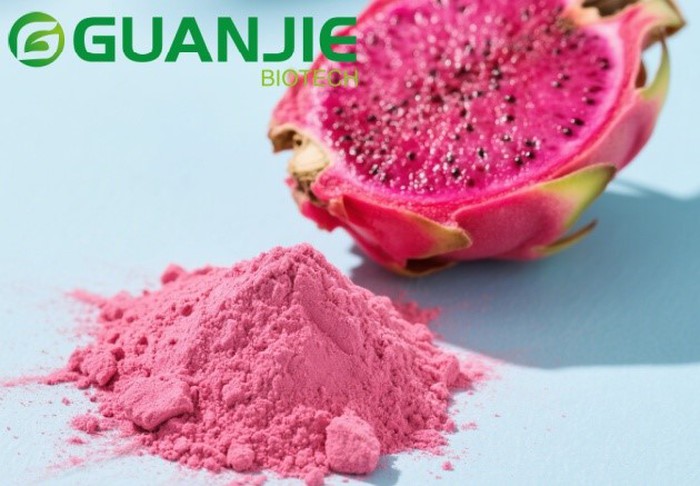
What "high in sugar" means - fresh fruit vs powder?
When people ask whether a food is "high in sugar," they typically mean "how many grams of sugar per 100 g (or per serving)?" Fresh dragon/pitaya fruit contains single-digit to low-teens grams of sugar per 100 g (typical values: ~7–13 g sugar/100 g depending on variety and ripeness). This puts fresh pitaya in the same general ballpark as many other fruits (moderate sugar, with substantial water and fiber).
However, when the same fruit is converted to dried dragon fruit powder (freeze-dried or spray-dried), essentially all the water is removed. Removing water concentrates the fruit's solids - including sugars - so the sugar grams per 100 g of powder are far higher than in the fresh fruit. Commercial freeze-dried dragon fruit powders commonly report sugar values that can be many tens of grams of sugar per 100 g pink pitaya dragon fruit powder (examples: products listing ~40–56 g sugar per 100 g powder). That difference is primarily the "concentration effect" from water removal, not that the fruit somehow creates extra sugar.
• Fresh dragon fruit (per ~100 g):
carbs ~12–16 g, sugars ~7–13 g. (USDA / mainstream nutrition summaries).
• Freeze-dried or spray-dried pitaya powder (per ~100 g):
Total carbs typically 60–75 g and sugars sometimes 40–56 g powdered pitaya, depending on whether the dried dragon fruit powder is pure fruit or contains added carriers/ingredients. Example label: one supplier lists total carbohydrates ~70.5 g with sugars ~56.2 g per 100 g of powder. Another product database entries for freeze-dried pitaya powder show calories and carbs per 100 g pitaya dragon fruit powder consistent with concentrated sugars.
100 g of dried pitaya powder ≠ 100 g of fresh fruit. If you compare on a per-100 g basis, powder will almost always show higher sugar (and calories) because water has been removed.
Why dry concentrated sugar?
Fresh pitaya is ~80–90% water (varies by variety and ripeness). Suppose 100 g of fresh fruit contains 10 g sugar and 90 g water. If you remove most of the water (e.g., by freeze-drying) and end up with 10 g of dry solids, those 10 g include nearly all the original 10 g sugar - so per 100 g of the powder that sugar is now 100 g sugar in the hypothetical scale (obviously impossible physically because other solids remain, but the point is concentration multiplies). In real products the numbers scale so that a small serving of dried dragon fruit powder reflects the sugar content of a much larger weight of fresh fruit.
A tablespoon of dragon fruit juice powder may represent tens or even hundreds of grams of fresh fruit equivalent in sugars and calories.
And there are two common industrial extraction methods to produce pitaya powder.

Freeze-drying (lyophilization)
Fruit is frozen, then water is removed by sublimation. Freeze-drying preserves color and many nutrients and concentrates soluble solids (sugars) into a lightweight powder. Pure freeze-dried fruit powders that contain only fruit will have no added sugars, but their sugar per 100 g is simply the fruit's sugars concentrated by removal of water. Studies and product nutrition panels show freeze dried dragon fruit powder with high sugar per 100 g for that reason.
Spray-drying or drying
Manufacturers often add carriers (commonly maltodextrin) to improve powder flow, reduce stickiness, and aid shelf stability. Carriers themselves are carbohydrates (maltodextrin is a rapidly digestible starch derivative) and add to the total carbohydrate content measured in the final powder. In some processes, fruit juice concentrates (which are high in sugar) may be used as raw material. If so, the resulting bulk dragon fruit powder can effectively be a concentrated sugar product. Research and industry articles describe the routine use of maltodextrin and other carriers in drying fruit extracts and note how carrier percentage affects powder bulk density and composition.
Important distinctions when you read labels:
• "100% pure pitaya powder (freeze-dried)" - no added sugar but concentrated sugars per 100 g by water removal.
• "Dried dragon fruit powder (contains maltodextrin or juice concentrate)" - added carbohydrate from carriers or concentrates. Total sugar and glycemic impact may be higher or different.
• "No added sugar" claim may be technically true even if sugars are high - because the sugars are intrinsic to the concentrated fruit.
Is Pitaya Powder "High In Sugar"?
Compared to the same weight of fresh fruit. Yes, dried dragon fruit powder has higher grams of sugar per 100 g, because water has been removed.
Compared to the typical serving sizes used in recipes. It is often not alarmingly high if you use small portions (a teaspoon or tablespoon), but this depends on product concentration and how often you use it.
If a product contains added carriers or concentrates (maltodextrin, juice concentrates) it may be higher still and have a higher glycemic impact.
Recommendations
Always read the nutrition label: compare "sugars" and "carbs" per serving and per 100 g.
Prefer whole-fruit freeze-dried powders labeled "100% pitaya / 100% dragon fruit" if you want minimal additives. These are still sugar-concentrated but do not contain added carriers. If you manage blood glucose, measure servings and pair powder with fiber/protein to slow absorption. Avoid powders listing maltodextrin or sugar as ingredients. Health
For ingredient sourcing or bulk dragon powder, ask powdered red pitaya suppliers for a Certificate of Analysis (CoA) showing proximate composition (moisture, total carbohydrate, sugars, fiber) so you can compare batches. Guanjie Biotech is a bulk dragon fruit powder supplier, can provide batch composition data on request. If you need bulk dried dragon fruit powder, welcome to enquire with us at info@gybiotech.com.
References
[1] Healthline. "Dragon Fruit: Nutrition, Benefits, and How to Eat It." Healthline. (Nutrition facts for fresh dragon fruit).
[2] Verywell Fit. "Dragon Fruit Nutrition Facts and Health Benefits." (summarizes USDA values; fresh fruit sugars and carbs).
[3] Glimja / RAW Pink Pitaya Powder - product nutrition panel (example showing freeze-dried pitaya powder: total carbs ~70.5 g, sugars ~56.2 g per 100 g).
[4] Li, S., et al. "Comparative Analysis of the Impact of Three Drying Methods on the Nutritional and Bioactive Compounds." Foods / PMC (2023). (discussion of how freeze-drying and spray-drying influence composition and nutrient retention).
[5] Paiva, Y. F., et al. "Maltodextrin as a Drying Adjuvant in the Lyophilization of Fruit Blends." Foods/PMC (2023). (on use of maltodextrin/carriers in lyophilization and how carriers affect powder properties and composition).
[6] EatThisMuch / Nutritionix / other product nutrition pages for freeze-dried pitaya powders (example entries showing high calorie/carbohydrate density for powder forms). Eat This Much+1
[7] Making.com. "Clean up your label, drying fruit extracts without using carriers." (industry article explaining why manufacturers use maltodextrin and the tradeoffs).


