

Yes, natural apple powder can be used as a sweetener, but it depends on the application. In the food and beverage industry, the choice of sweetener directly affects product taste, label compliance, and production cost. Apple powder is a natural fruit-derived ingredient. In recent years, it has been widely used in clean-label product development. At the same time, more formulators are asking an important technical question. Is apple powder a sweetener? This question involves several practical aspects of product formulation. These include ingredient labeling, sweetness calculation, and sugar content control.
Is Apple Powder a Sweetener?
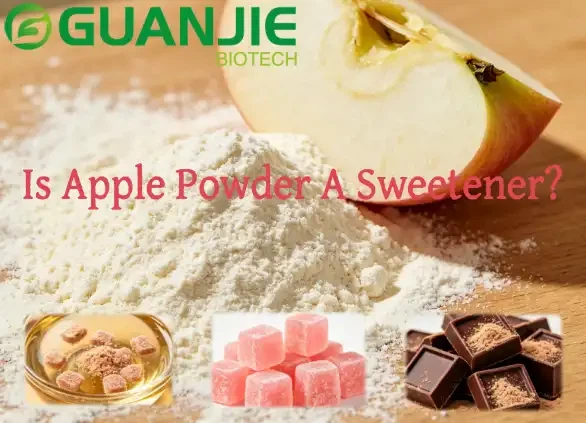
Apple powder does not belong to the typical sweetener categories. Its sweetness comes from the natural sugars naturally present in apples, including fructose, glucose, and sucrose. These sugars are not isolated, chemically modified, or concentrated through extraction processes. Instead, they remain in the spray-dried apple powder together with other apple solids, such as dietary fiber, organic acids, minerals, and polyphenols. Because of this composition, apple powder provides not only sweetness but also natural fruit flavor, color, and texture benefits in food formulations. Compared with traditional sweeteners, its sweetness intensity is relatively mild. Therefore, natural apple powder is more appropriately considered a fruit-based ingredient or natural flavoring component rather than a standalone sweetener.
What Is a Sweetener?
According to the general definition in the food industry, sweeteners are substances that give food a sweet taste. At the regulatory level, sweeteners are usually divided into two main categories:
• Nutritional sweeteners:
These sweeteners provide energy. They include monosaccharides and disaccharides, such as sucrose, glucose, fructose, and maltose. They also include sugar alcohols, such as sorbitol and xylitol.
• Non-nutritional sweeteners:
These sweeteners provide no energy or very little energy. They include artificial sweeteners, such as aspartame, acesulfame potassium, and sucralose. They also include naturally derived high-intensity sweeteners, such as steviol glycosides and mogrosides.
What Are The Components in Apple Powder?
Carbohydrate Composition:
Apples contain three main types of natural sugars.
• Fructose: The most abundant sugar in apples, accounting for 50%–60% of the total sugar content. Fructose is approximately 1.3–1.8 times sweeter than sucrose and exhibits a cold-sweet characteristic, meaning its sweetness is more pronounced at lower temperatures.
• Glucose: Accounts for 20%–30% of the total sugar content of spray-dried apple powder and is 0.7–0.8 times sweeter than sucrose.
• Sucrose: Accounts for 10%–20% of the total sugar content, using sucrose as a baseline (sweetness set at 1).
Total Sugar Content in Apple Powder
The total sugar content (calculated as glucose, on a dried basis) of spray-dried apple powder typically ranges from 30%–50%. This means that approximately 30–50 grams of pure apple powder per 100 grams is composed of natural sugars. The remaining components include dietary fiber, organic acids (primarily malic acid), minerals, and moisture.
Sweetness Comparison with Other Sweeteners
Using sucrose's sweetness of 1.0 as a reference, the relative sweetness of spray-dried apple powder depends on its dosage in the formulation and its dilution ratio. For example, in a 10% concentration solution, the sweetness of an apple powder solution is approximately equivalent to that of a 2%–4% sucrose solution.
The coefficient of sweetness of apple pulp powder itself (on a dry powder basis) is approximately 0.3–0.5 times that of sucrose. This is significantly lower than the sweetness of fructose (1.3–1.8 times) and sucrose (1.0 times).
Technical Evaluation of Apple Powder as a Sweetener
Functional Role of Apple Powder in Formulation
In food formulation design, apple powder usually serves multiple functions, including:
• Natural Flavoring Agent:
Spray-dried apple powder provides a natural fruit aroma and flavor. This is its main function. It is different from artificial apple flavorings or single sweeteners.
• Sugar Contributor:
The natural sugars in apple bulk powder add sweetness to the product. In low-sugar or sugar-free formulations, this sugar content must be included in the total sugar calculation.
• Natural Coloring Agent:
The polyphenols in apple fruit powder give the product a light cream to pale yellow color. This can improve product appearance.
• Texture Modifier:
The pectin and dietary fiber in spray-dried apple powder can influence viscosity, water retention, and overall texture.
The Relationship Between Apple Powder and the "Sugar Reduction" Trend
Under the global trend of sugar reduction, the role of spray-dried apple powder should be carefully evaluated.
On one hand, natural apple powder can partially replace sucrose. The fructose in apple powder is sweeter than sucrose. Therefore, less spray-dried apple powder may be needed to achieve the same sweetness level. For example, a formula that originally used 10% sucrose may only need 6%–8% apple powder to provide similar perceived sweetness.
On the other hand, spray-dried apple powder is not a zero-calorie or low-glycemic ingredient. It contains fructose and glucose. Its caloric value is about 3.5–4.0 kcal/g, which is close to that of sucrose at 4.0 kcal/g. Fructose has a glycemic index (GI) of 19, which is lower than that of sucrose with a GI of 65. Therefore, bulk apple powder may produce a lower glycemic response than pure sucrose. However, it is still not suitable as a primary sweetener for diabetic foods.
Comparison Of Apple Powder With Other Natural Sweeteners
|
Comparison Dimensions |
Apple Powder |
Steviosides |
Mogrosides |
Crystalline fructose |
|
Kind |
Apple Fruit |
Steviol leaf extract |
Monk fruit |
Amylase hydrolysis |
|
Source |
0.3–0.5 kcal |
200–300 kcal |
150–250 kcal |
1.3–1.8 |
|
Sweetness Ratio (vs. sucrose) |
3.5–4.0 kcal/g |
0 kcal/g |
0 kcal/g |
4.0 kcal/g |
|
Calories |
Flavor, Pigment, Fiber |
Sweet only |
Sweet only |
Sweet taste, browning |
|
Additional Features |
"Apple Powder" |
"Steviviosides" |
"Monk fruit extract" |
"Fructose" |
The unique value of Apple Powder lies in its role as a 'natural flavor carrier,' rather than merely enhancing sweetness.
When To Use Apple Powder As a Sweetener?
Apple powder is not suitable for every product. It has some limitations as a sweetener. Manufacturers should consider the product type, target market, and production cost before using it.
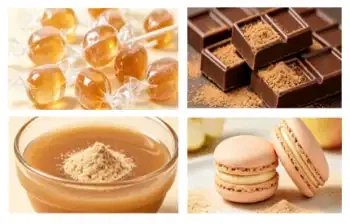
Products with High Sweetness Requirements:
Natural Apple powder provides mild and natural sweetness. However, its sweetness level is lower than that of sucrose and many artificial sweeteners. Therefore, it may not work well in products with high sweetness requirements. Candies, chocolates, syrups, and some desserts usually need stronger sweetness. In these products, additional sweeteners are often necessary.

Zero-Sugar or Low-Calorie Products:
Spray-dried apple powder also contains natural sugars such as fructose and glucose. Because of this, it is not ideal for sugar-free or zero-calorie products. Brands that target diabetic consumers or low-calorie markets may need alternative sweeteners instead.
Cost-Sensitive Products:
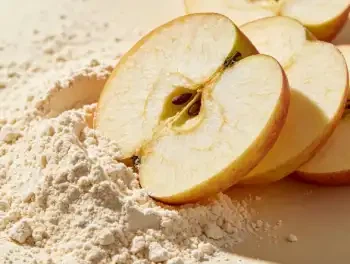
Cost is another important factor. Pure apple powder is generally more expensive than common sweeteners like sucrose. For low-cost products, this may increase production expenses. If sweetness is the main functional purpose, manufacturers may choose more economical ingredients. Spray-dried apple powder is more suitable for premium products that focus on natural ingredients, fruit flavor, and nutritional value.
What Is Apple Powder Used For As a Sweeter?
• Solid Beverages
In solid beverage formulations, spray-dried apple powder can serve as a base flavor carrier. For example, a 10g serving of apple juice powder solid beverage contains approximately 3–5g of natural sugars, providing a sweetness similar to 150ml of apple juice. To further enhance sweetness, formulators can add small amounts of high-intensity sweeteners (such as steviol glycosides or mogrosides) for synergistic effects.
• Health Foods
In protein powders, meal replacement powders, and probiotic powders, the primary function of spray-dried apple powder is to mask the off-flavors of plant proteins or functional ingredients, rather than providing sweetness. In these cases, the amount of apple powder added is typically controlled between 5% and 15%, and its contribution to sweetness is a secondary function.
• Functional Candies
In compressed candies or gummies, apple fruit powder can be used as a natural flavoring agent and texture modifier, and to supplement sweetness. For low-sugar candies, formulators need to use sugar alcohols or high-intensity sweeteners to achieve the target sweetness.
Conclusion:
Apple powder is not a traditional sweetener, but a fruit flavoring ingredient containing natural sugars. Its contribution of sweetness to the product is secondary, not core. In formulation design, spray-dried apple powder should be positioned as a compound ingredient of "natural flavoring agent + natural sweetener carrier," rather than a direct substitute for sucrose or high-intensity sweeteners.
It is recommended that formulators position apple fruit powder as both a natural sweetener source and a fruit flavor carrier when selecting raw materials. It should not be treated as a single-function sweetener. This positioning helps maximize the technical value of apple powder. It also helps reduce regulatory labeling risks.
For more information about the technical specifications, application solutions, or sample support for Guanjie Biotech's spray-dried apple powder products, please contact Guanjie Biotech's technical sales team. With a customer service network covering more than 100 countries and over 20 years of experience in fruit and vegetable powder production, we are committed to providing high-quality, stable, and reliable natural apple powder products to food and beverage manufacturers worldwide.
References:
[1] Wang Lu, Li Xiaoyan. Research progress on nutritional components and functional properties of apples [J]. Food Industry Technology, 2021, 42(12): 381-388.
[2] Zhang Hui, Liu Tingting. Current status of the application of natural sweeteners in the food industry [J]. China Food Additives, 2020(9): 95-101.
[3] Chen Zhiqiang, Yang Fan. Analysis of sugar composition and flavor characteristics in apples [J]. Food Research and Development, 2019, 40(18): 210-215.
[4] Li Na, Zhao Haibo. Processing technology and quality control of spray-dried fruit and vegetable powder [J]. Agricultural Products Processing, 2022(6): 54-58.
[5] National Health Commission. National Food Safety Standard - Standard for the Use of Food Additives GB 2760-2024 [S]. Beijing: China Standards Press, 2024.
[6] Wolfe, K., Wu, X., & Liu, R. H. Polyphenolic content and antioxidant activity of apple products. Journal of Agricultural and Food Chemistry, 2003, 51(3): 609-614.
[7] Food and Agriculture Organization (FAO). Food Energy – Methods of Analysis and Conversion Factors. FAO Food and Nutrition Paper 77, Rome, 2003.
[8] U.S. Food and Drug Administration (FDA). Guidance for Industry: Nutrition and Labeling of Food Products. Silver Spring, MD: FDA, 2022.
[9] Justia Patents. Food and beverage sweetener, dried apple sweetener, and sweetener with apple peel: Patent US10893693B2[P/OL]. (2017-09-28).


