

In the deep processing of food and beverages, health foods, and baked goods, coconut water and natural coconut water powder are two commonly used coconut-based raw materials. Many procurement and production teams often confuse them and assume their raw material properties, nutritional composition, and functional effects are the same. However, from a technical perspective, there are clear and important differences. Their suitable production lines, formulations, and market applications are also different.

What Are The Differences Between Coconut Water Powder And Coconut Water?
There are some natural coconut water powder and coconut water differences about raw material traceability, production process, physicochemical properties, storage and transport characteristics, application scenarios, and industrial adaptability.
Differences in raw materials and production processes:
Both coconut water and natural coconut water powder come from the same source: fresh juice from young coconuts with no synthetic ingredients. However, the downstream processing methods are very different, which determines their final form, stability, and industrial usability. This is the key difference between the two.

• Liquid coconut water
Liquid coconut water is mainly divided into fresh coconut water and industrially processed coconut water. Fresh coconut water is directly extracted from young coconuts. It is only filtered and sterilized, with no further processing. Industrial liquid coconut water is usually pasteurized and aseptically packaged. Some products may be slightly concentrated, but it still remains in liquid form. The process focuses on heat treatment and preservation rather than water removal. Its main advantage is that it keeps the original taste and natural nutrients. However, in liquid form, it has lower stability and is more easily affected by temperature and microbial growth.
• Coconut water powder
Coconut water powder is made from fresh coconut water through multiple processing steps. These include pretreatment, fine filtration, low-temperature concentration, spray drying, aseptic powder collection, and sieving. Low-temperature closed processing is used to reduce nutrient loss from heat. It retains electrolytes, vitamins, amino acids, and trace minerals while removing water to achieve a stable powder form. Compared with liquid coconut water,natural coconut water powder has higher standardization, better stability, and stronger industrial adaptability. It can be accurately measured in formulations and is widely used in large-scale manufacturing.

Differences in Physicochemical Properties and Quality Stability
From a production perspective, physicochemical stability, component uniformity, and raw material tolerance are critical for consistent finished product quality. The two products show clear differences in these areas.
• Liquid coconut water
Liquid coconut water has very high water content and low solid content. It naturally contains active microorganisms. Even after industrial sterilization, it remains sensitive to temperature changes and storage conditions during transport and production. This can lead to flavor loss, higher acidity, and increased microbial levels. In addition, coconut maturity and harvest season vary by batch. This causes large fluctuations in sweetness, flavor, and nutrient composition. Precise standardization is difficult. This limits its use in industrial formulations and restricts it mainly to fresh beverages and short-term processing.
• Coconut water powder
Pure coconut water powder is produced through dehydration and concentration. It has high solid content and very low moisture. This strongly inhibits microbial growth and improves stability. Industrial production allows tight control of sugar, electrolyte, and flavor content. Batch variation is low, and composition is highly uniform.Natural coconut water powder also has good solubility. It dissolves quickly in both cold and warm water. The solution is clear, stable, and free of sediment. It closely replicates the taste of fresh coconut water. It is suitable for complex industrial applications and reduces quality variation caused by raw material inconsistency.
Different Uses
Based on differences in form, stability, storage, and transportation, coconut water and coconut water powder have clearly different industrial applications. Each serves different production needs and product categories.

• Liquid coconut water
Liquid coconut water has limited application scenarios. It is mainly used in ready-to-drink products. These include bottled coconut water, freshly prepared tea drinks, and short-term beverage use. It has a short shelf life and low stability. Therefore, it is not suitable for high-temperature processing, long-term storage, or deep processing. It cannot be widely used in baked goods, instant powders, or functional foods. Its industrial reuse rate is low. It is mainly used by beverage companies with short production cycles and light processing.
• Coconut water powder
Coconut water powder has a much wider range of applications. In the beverage industry,natural coconut water powder is used in instant coconut drinks, electrolyte drinks, sports drinks, milk tea bases, fruit tea bases, and frozen drinks. After reconstitution, it delivers a clean coconut flavor and stable taste. It also allows easy control of sweetness and nutrition.
In baked goods and snack foods, it can be added to bread, cakes, cookies, candies, and jellies. It replaces part of the water. It improves coconut flavor, texture, and moisture retention. It also helps reduce flavor loss during baking.

In functional foods, it is used in meal replacement powders and dietary supplements. It contains natural electrolytes and vitamins. This supports its use in health-oriented products. It is also suitable for sauces, prepared foods, and other processed products. Overall, it is a versatile and cost-effective raw material for large-scale coconut processing.
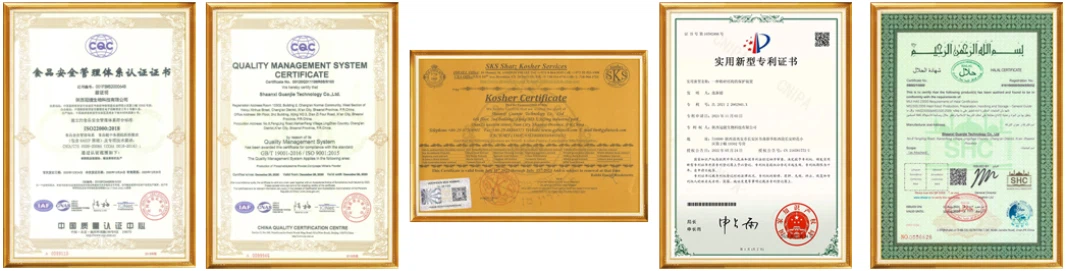
Guanjie Biotech is a global bulk coconut water powder supplier. It focuses on coconut raw material development and production. The company integrates R&D, standardized manufacturing, and strict quality control. With a stable production system, its products are supplied to food, beverage, and functional food industries in over 100 countries.Coconut water bulk powder provides reliable solutions for industrial applications.
FAQs:
1. Is coconut water powder the same as coconut water?
No. They are not the same product. Both come from young coconuts, but their forms are different. Coconut water is a fresh liquid extracted directly from the coconut. Coconut water powder is a dehydrated form made by removing water through controlled processing. It is a concentrated ingredient.
2. How is coconut water powder made?
Coconut water powder is produced through several steps. First, the coconut water is filtered to remove impurities. Then it is concentrated under controlled conditions. Finally,coconut water bulk powder is dried using low-temperature spray drying. This process removes most of the water while helping to preserve electrolytes, natural sugars, amino acids, and flavor compounds.
3. Does coconut water powder have the same nutrients as liquid coconut water?
They are similar, but not exactly the same. Coconut water powder retains most water-soluble nutrients, especially electrolytes like potassium, sodium, and magnesium. However, some slight nutrient loss may occur during processing. Heat-sensitive compounds can be partially reduced, depending on the drying method used.
4. What is the main difference in stability between the two?
Liquid coconut water is highly unstable. It is sensitive to heat, oxygen, and microbial growth. It has a short shelf life and needs refrigeration. Coconut water powder is much more stable. It has low moisture content and is easier to store and transport. It also has a much longer shelf life.
5. Can coconut water powder be used to replace liquid coconut water?
Yes, in many industrial applications.Natural coconut water powder can be reconstituted with water to form a liquid similar to fresh coconut water. It is widely used in beverages, instant drinks, food formulations, and functional nutrition products. It offers easier handling and consistent quality.
6. Does coconut water powder taste like fresh coconut water?
Yes, high-quality coconut water powder can closely match the taste of fresh coconut water. When properly reconstituted with clean water, it delivers a light, naturally sweet, and refreshing flavor. The final taste depends on product quality and processing technology.
Summary
In summary, coconut water and coconut water powder are not equivalent products. They come from the same source but differ in processing and application. Liquid coconut water is best for fresh, small-batch, short-cycle beverage use. Coconut water powder is more stable, cost-efficient, and suitable for large-scale industrial processing and global supply chains.
For large-scale manufacturers, high-quality coconut water powder helps reduce raw material loss, control production costs, ensure consistent product quality, and expand product development options. Guanjie Biotech focuses on standardized production and quality control of coconut water powder. It offers customized solutions tailored to different formulation needs and supports global customers with astable supply and consistent quality. Welcome to enquire with us at info@gybiotech.com.
References
[1]Boomumma, S., Chaisawadi, S., & Suwanyuen, S. (2014). Freeze-Dried Coconut Water Powder Processing for Natural Health Drink. Acta Horticulturae, (1023), 93-98.
[2]Shi, S., Wang, W., Wang, F., Yang, P., Yang, H., He, X., & Liao, X. (2025). Research Progress in Coconut Water: A Review of Nutritional Composition, Biological Activities, and Novel Processing Technologies. Foods, 14(9).
[3]Zulaikhah, S. T., Ratnawati, R., Hussaana, A., & Muhandri, T. (2022). Comparison of Powdered Active Compounds Made from Tender Coconut Water Fortified with Vitamin E, Processed by Spray Drying and Freeze Drying. Pharmacognosy Journal, 14(6), 682-686.
[4](2017). Microencapsulation of Tender Coconut Water by Spray Drying: Effect of Moringa oleifera Gum, Maltodextrin Concentrations, and Inlet Temperature on Powder Qualities. Food and Bioprocess Technology, 10(9), 1668-1684.
[5](2026). Nutritional composition and bioactive properties of tropical coconut palm fruit with functional food applications. Discover Food, 6, Article 21.
[6]Woo, Y. L. (2023). Freeze-Dried Coconut Sport Powder: Development, Characterization and Sensory Evaluation [Bachelor's Final Year Project]. Tunku Abdul Rahman University of Management and Technology.
[7](2014). Optimization of Spray Drying Method to Produce Powdered Coconut Water for Food Application [Bachelor's thesis]. Swiss German University.


