

Apples are a widely used fruit ingredient in infant formula. The use of spray-dried apple powder in infant food is a common technical consultation question from B2B clients during formula development. Processing apples into spray-dried apple powder provides significant advantages in stability, convenience, and formulation compatibility. Is natural apple powder permitted for use in infant food? Under what conditions can it be used?
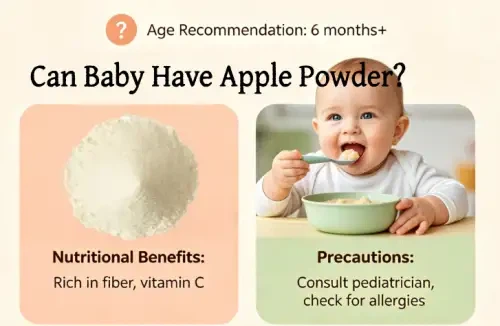
Can Baby Have Apple Powder?
Digestive System Development Stage
An infant's digestive system continues to develop after birth. A full-term newborn's stomach capacity is approximately 20–50 mL, and gastric emptying takes about 2–4 hours. Compared with adults, infants have weaker gastric acid secretion, a higher gastric juice pH (around 4–5), and pepsin activity that is only 10%–30% of adult levels.
The main components of natural apple powder include carbohydrates (fructose, glucose, sucrose, and dietary fiber), organic acids (malic acid and citric acid), minerals, and polyphenols. Soluble sugars are absorbed in the small intestine through specific transporters, creating a relatively low digestive burden. Dietary fiber, mainly pectin, is not digested in the small intestine. Instead, it is fermented by intestinal microbiota in the colon.
Studies have shown that an appropriate intake of soluble dietary fiber, such as pectin, may help regulate the development of infant gut microbiota. Natural apple powder can promote the growth of beneficial bacteria, such as Bifidobacteria. However, excessive dietary fiber intake may increase the intestinal osmotic load. This can cause bloating or abnormal bowel movement frequency in young infants under 4 months of age, whose digestive systems are still immature.
Immune System Maturity and Allergy Risk
Infant immune systems show a Th2-type shift after birth. This means helper T cell type 2 responses are dominant, and immune tolerance to antigens is not yet fully developed. Apples belong to the Rosaceae family and have very low protein allergenicity. Apple allergies reported in the literature are mainly associated with pollen cross-reactivity, also known as oral allergy syndrome. These cases are more common in older children and adults. Primary apple protein allergy in infants is extremely rare.
From an allergy risk assessment perspective, natural apple powder is considered a low-allergenic ingredient. This is one reason it is widely used in infant formula products.
Renal Function Development and Solute Load
The glomerular filtration rate in infants is about 30%–40% of that in adults. The concentration and dilution functions of the renal tubules are also not fully mature. As a result, infants have a limited ability to regulate solute load. Apple powder contains approximately 500–800 mg of potassium per 100 g. In infant formula containing apple powder, total mineral intake should be carefully controlled to avoid exceeding the kidneys' excretion capacity.
Considering these physiological factors, natural apple powder for babies can be acceptable for infants aged 6 months and older when used within an appropriate dosage range. The digestive burden, allergy risk, and mineral load are generally manageable. For infants under 4 months of age, apple powder is not recommended because their digestive systems have not yet reached the physiological maturity required for complementary food introduction.
Is Apple Powder Safe In Infant Food?
Regulatory Status of Apples as Ingredients in Infant Food
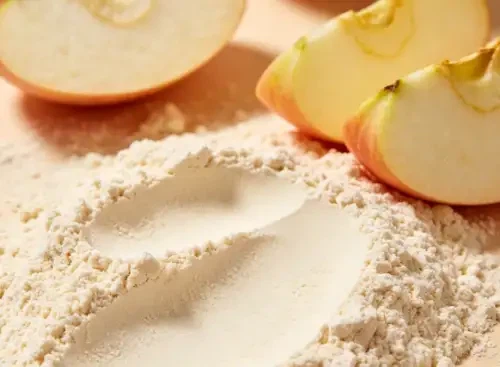
According to China's National Food Safety Standard for Infant and Toddler Canned Complementary Foods (GB 10770-2010), apples are explicitly permitted as fruit ingredients. In Appendix A of this standard, Requirements for Raw Materials of Fruit and Vegetable Products, apples are included in the approved list of fruits and vegetables.
In the regulatory system of the Philippine Food and Drug Administration (FDA), apple puree products for infants aged 6 months to 3 years have also been approved and registered. This shows that natural apple powder is recognized as a suitable ingredient for infant food under the regulatory frameworks of multiple jurisdictions.
Classification of Apple Powder
Two product forms should be clearly distinguished:
• Pure Apple Powder:
This natural apple powder is made from apples only. It is processed through physical drying methods, such as spray drying or freeze drying, without adding food additives. The ingredient list only needs to state "apple powder" or "apple." From a regulatory perspective, it is classified as a food ingredient rather than a food additive.
• Compound Apple Powder:
This product contains additional ingredients, such as anti-caking agents, sweeteners, flavorings, or other additives. These products must be managed as compound ingredients. All added components must comply with additive regulations for the relevant food category.
According to GB 2760-2024, National Food Safety Standard – Standard for the Use of Food Additives, the range of additives allowed in infant complementary foods is very limited. This includes infant cereal-based foods and canned infant complementary foods. Permitted additives mainly include ascorbyl palmitate (≤0.05 g/kg), dicalcium phosphate, sodium dihydrogen phosphate (≤1 g/kg as phosphate), mono- and diglyceride fatty acid esters, phospholipids, citric acid and its potassium or sodium salts, ammonium bicarbonate, and sodium bicarbonate.
It should be noted that canned infant complementary foods cannot contain flavorings, fragrances, colorings, or sweeteners. Infant cereal-based complementary foods may only contain a limited amount of vanillin (7 mg/100 g).
Compliance Requirements for Pure Apple Powder
Pure apple powder is produced from a single raw material and does not fall under the definition of a food additive in GB 2760. Therefore, its use in infant formula is not subject to the additive restrictions listed above.
Its compliance depends on several factors:
• Whether the natural apple powder meets contaminant limits for fruit raw materials, such as those specified in GB 2762, National Food Safety Standard – Limits of Contaminants in Food.
• Whether the manufacturing process follows hygiene standards for infant formula production, including the applicable sections of GB 23790, National Food Safety Standard – Good Manufacturing Practices for Powdered Infant Formula.
• Whether the nutritional composition of the final product complies with relevant infant formula standards.
Key Risk Warning:
If processing aids that are not permitted under GB 2760, such as hydrogen peroxide, are used during natural apple powder production, the final product may be considered non-compliant. Therefore, infant formula manufacturers should select apple powder suppliers that do not use restricted processing aids during production.
FAQ:
Q: Can infants eat apple powder directly?
A: It is not recommended to feed natural apple powder directly to infants. Apple powder should be mixed with water, formula, or infant rice cereal to a suitable concentration of paste or liquid before consumption, according to the product instructions. Directly feeding dry powder carries a risk of aspiration into the respiratory tract.
Q: Will apple powder cause allergies in infants?
A: Apple protein has extremely low allergenicity, and primary apple allergy in infancy is extremely rare. If there is a family history of pollen-food allergy syndrome (such as allergy to Rosaceae fruits or birch pollen), it is recommended to start with a small dose when adding natural apple powder for the first time and observe for adverse reactions such as rashes or diarrhea.
Q: What is the patulin content control standard for apple powder?
A: When we supply natural apple powder suitable for infant food, the internal control standard for patulin content is below the EU limit for infant food (10 μg/kg). A test report is provided for each batch of product, using high-performance liquid chromatography-mass spectrometry (LC-MS/MS), with a detection limit below 1μg/kg.
Q: Will apple powder interact with other ingredients in infant formula?
A: The following two interactions should be noted: First, the organic acids in apple powder may lower the pH of the formula, affecting the emulsification stability of proteins; second, the polyphenols in apple powder may form complexes with minerals such as iron and zinc, reducing the bioavailability of these minerals. Stability testing and in vitro digestion studies are recommended during the formula development stage.
Q: Has Guanjie Biotech's apple powder obtained relevant international certifications?
A: Guanjie Biotech has ISO 9001, ISO 22000, KOSHER, HALAL, and non-GMO certifications. The natural apple powder manufacturing process complies with international food industry standards.
Conclusion
In summary, natural apple powder can be safely used as a food ingredient for infants aged 6 months and older when the following conditions are met:
• Apple powder must comply with infant and toddler food standards in the target market.
• The amount added to the formula should remain within a reasonable range.
• The bulk apple powder supplier should have a complete quality control system and provide test reports for each product batch.
Guanjie Biotech is a leading global natural apple powder supplier. The company has more than 20 years of industry experience and an internationally certified quality system. Its customer network covers more than 100 countries. Guanjie Biotech can provide natural apple powder raw materials that meet strict safety standards for infant food manufacturers. The technical team also offers professional support, including formula development, regulatory consultation, and customized product design services.
References:
[1] Carbonell-Rozas L, Mihalache OA, Dall'Asta C. Multi-class analysis of mycotoxin prevalence and potential health risks in commercial apple puree: Implications for early childhood populations in the Italian market. Food Research International, 2025, 217: 116788.
[2] Friends of the Earth. Toxic Pesticides Contaminate Target's Baby Food. 2024.
National Health Commission of the People's Republic of China. (2010). GB 10770-2010 National Food Safety Standard - Canned Infant Formula. Beijing: China Standards Press.
[3] National Health Commission of the People's Republic of China, State Administration for Market Regulation. (2024). GB 2760-2024 National Food Safety Standard - Standard for the Use of Food Additives. Beijing: China Standards Press.
[4] National Health Commission of the People's Republic of China. (2022). GB 2762-2022 National Food Safety Standard - Limits of Contaminants in Food. Beijing: China Standards Press.
[5] General Administration of Quality Supervision, Inspection and Quarantine of the People's Republic of China, Standardization Administration of China. (2010). GB 23790-2010 National Food Safety Standard - Good Manufacturing Practices for Powdered Infant Formula. Beijing: China Standards Press.
[6] Sanajou, S., Girgin, G., Şahin, G., & Baydar, T. (2025). Verification of HPLC method to detect patulin levels and evaluation of exposure risk of patulin in apple-based products. Figshare.
[7] Yamamoto, M., et al. (2020). The prevalence of oral symptoms caused by Rosaceae fruits and soybean consumption in children; a Japanese population-based survey. PubMed/National Institutes of Health (NIH).


