

Blue spirulina phycocyanin powder has attracted the imagination of consumers, chefs, and product developers quite a bit. This astonishingly bright blue powder has transitioned from a niche health supplement to a mainstream phenomenon, coloring everything from lattes and smoothie bowls to cosmetics and pharmaceuticals. However, with its premium price tag-often significantly higher than its green cousin or other natural colorants-a pressing question arises: why is blue spirulina so expensive?
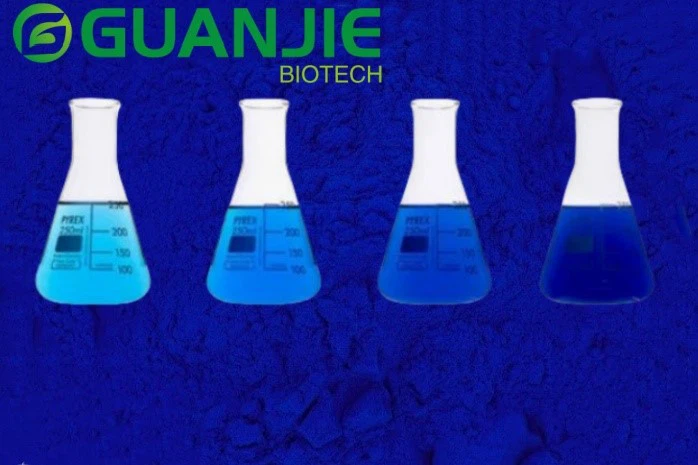
Why Is Blue Spirulina So Expensive?
The journey from a microscopic cyanobacterium to a shelf-stable, brilliantly blue spirulina phycocyanin powder is fraught with challenges, precision, and significant investment. Each stage of production adds a layer of cost, justifying its position as a luxury ingredient within the natural products sector.
What Is Spirulina?
This is the single most significant factor contributing to the high cost. It is crucial to understand that "blue spirulina" is not the whole organism.
Green Spirulina vs. Blue Spirulina:
Traditional spirulina (Arthrospira platensis) is green because it contains a suite of pigments necessary for photosynthesis: chlorophyll (green) and phycocyanin (blue). These pigments coexist within the cell. Blue spirulina phycocyanin powder is primarily Phycocyanin, the blue pigment, isolated and purified from the rest of the cellular material (including the chlorophyll, which has a strong, distinct oceanic taste).
The Extraction Process:
• Cultivation and Harvesting:
The spirulina is first grown in controlled alkaline ponds. After reaching optimal biomass, it is harvested, typically through a micro-filtration process that concentrates it into a slurry.

• Cell Disruption:
The sturdy cell walls of the spirulina must be broken open to release the phycocyanin. This can be done through various methods like freeze-thaw cycles, ultrasonic waves, or enzymatic treatment-all of which require specialized equipment and energy.
• Extraction and Purification:
The blue spirulina phycocyanin powder is water-soluble, so it is extracted into an aqueous solution. This crude extract is still impure, containing proteins, carbohydrates, and other cellular debris.
• Precipitation and Filtration:
To purify the phycocyanin, techniques like ammonium sulfate precipitation or membrane filtration are used. This step separates the desired blue pigment from the contaminants. High-grade extracts require multiple purification steps to achieve a high concentration ratio.
• Drying:
The final purified liquid extract is then dried into a blue spirulina phycocyanin powder. The preferred method is spray-drying, which uses instant heat to turn the liquid into a fine powder without degrading the heat-sensitive pigment. This process is energy-intensive and requires precise control to prevent denaturation.
This entire extraction and purification pipeline demands sophisticated biotechnology, sterile laboratory conditions, and rigorous quality control, all of which contribute substantially to the final cost.
Demanding Cultivation and Raw Material Requirements
You cannot extract a high-quality blue spirulina phycocyanin powder product from a low-quality source. Producing the raw material-the green spirulina biomass-for phycocyanin extraction is itself a resource-intensive endeavor.
• Controlled Environment:
To ensure purity, potency, and a lack of contaminants (like heavy metals or microcystins from other algae), premium spirulina must be grown in meticulously controlled closed-system photobioreactors or pristine open-channel raceway ponds under strict hygienic protocols. This is not simple pond scum; it's a cultivated crop.
• Nutrient-Rich Medium:
Spirulina requires a specific alkaline growth medium rich in minerals, particularly nitrogen, which is essential for protein (and thus phycocyanin) synthesis. Sourcing and maintaining this medium adds to the operational cost.
• High Biomass Requirement:
The yield of blue spirulina phycocyanin powder from raw spirulina is low. It can take approximately 15-20 kilograms of fresh wet spirulina biomass to produce just 1 kilogram of high-purity phycocyanin powder. This massive input requirement for a small output immediately elevates the base cost.
Low Yield and High Concentration
The economic principle of blue spirulina phycocyanin powder supply and demand is heavily influenced by this low yield. A tremendous amount of raw material, energy, and labor is concentrated into a very small amount of final product. Each gram of vibrant blue powder represents the essence of a much larger quantity of algae. This inherent inefficiency in production volume is a primary driver of the high price point.
Quality, Certification, and Market Dynamics
• Purity Grades:
Blue spirulina phycocyanin powder is sold in different grades (Food, Reactive, Cosmetic, Analytical), each with a different price. The "blue spirulina" sold for consumption is typically food grade, but achieving this standard requires rigorous testing and processing to meet safety and quality benchmarks.
• Organic and Non-GMO Certification:
The market for natural and organic products is huge. Obtaining and maintaining certifications like USDA Organic or EU Organic is a lengthy and expensive process for producers, adding another layer of cost.
• Supply Chain and Branding:
As the ingredient gains popularity, multiple players-farmers, extractors, distributors, brands, and retailers-each add their margin. Furthermore, the "superfood" and "clean label" branding allows companies to position it as a premium product, justifying a higher retail price.
• Surging Demand:
The demand for natural blue colorants is exploding. With consumers and blue spirulina phycocyanin powder manufacturers increasingly rejecting synthetic dyes like Brilliant Blue FCF (FD&C Blue No. 1), blue spirulina has emerged as the premier natural alternative. This surge in demand from the food, beverage, and cosmetic industries puts upward pressure on prices, especially when supply is constrained by the complex production process.
The Uses of Blue Spirulina
The high cost of blue spirulina phycocyanin powder is justified by its unique and valuable set of applications. It is far more than just a colorant; it is a functional ingredient with benefits across multiple industries.

Culinary and Food & Beverage Applications
• Natural Food Coloring:
This is its primary function. It provides a stunning, vibrant blue that is entirely natural, vegan, and allergen-free. It is used in:
• Beverages:
Craft cocktails, lemonades, iced teas, smoothies, lattes ("blue latte"), and functional health drinks.
• Confectionery:
Blue spirulina phycocyanin powder is used for Ice cream, frostings, macarons, candy, chocolates, and cake decorations.
• Dairy Alternatives:
Blue-colored yogurts, ice creams, and cheeses.
• Savory Foods:
Colored pastas, noodles, and even superfood seasonings.
• Nutritional Supplement:
While its phycocyanin content is lower than that of whole green spirulina (as it's missing the other nutrients), it remains a source of antioxidants. Blue spirulina phycocyanin powder is often marketed for its potential to support immune function, reduce inflammation, and protect against oxidative stress.

Cosmetic and Personal Care Applications
• Natural Colorant:
Used to provide a blue or purple hue to soaps, bath bombs, shampoos, face masks, and other cosmetic products appealing to the natural and organic market.
• Active Skincare Ingredient:
Due to its high antioxidant content, phycocyanin is incorporated into serums, creams, and masks for its purported benefits:
• Anti-Aging:
Fights free radicals generated by UV exposure and pollution, which contribute to premature skin aging.
• Anti-Inflammatory:
Soothes irritated skin, reduces redness, and may help with conditions like acne and rosacea.
• Skin Protecting:
Some research suggests blue spirulina phycocyanin powder can help protect skin cells from damage.

Pharmaceutical and Biotechnology Applications
• Therapeutic Agent:
Research is exploring phycocyanin's potential in:
• Anti-cancer therapy:
Studies indicate it may induce apoptosis (programmed cell death) in cancer cells and inhibit tumor growth.
• Neuroprotection:
Its antioxidant and anti-inflammatory properties show promise in models of neurodegenerative diseases like Alzheimer's and Parkinson's.
• Hepatoprotection:
Protecting the liver from damage caused by toxins or disease.
• Diagnostic Tool:
Blue spirulina phycocyanin powder is a naturally fluorescent molecule. This property makes it useful as a tracer or tag in immunological assays and other biomedical research applications, serving as a natural alternative to synthetic fluorescent compounds.
Conclusion:
The high cost of blue spirulina phycocyanin powder is not an arbitrary markup but a direct reflection of its intrinsic value and the complex, resource-intensive journey required to produce it. It is a product of cutting-edge biotechnology meeting ancient biology. The expense is rooted in the precise science of extraction, the vigilant care required for cultivation, the painstaking purification processes, and the rigorous quality controls that ensure a safe and potent product.
As technology advances and production scales, prices may gradually moderate, but for the foreseeable future, blue spirulina will remain a premium ingredient. The availability of blue spirulina on a global scale is made possible by large-scale industrial manufacturers and suppliers. These companies specialize in the mass cultivation of spirulina and the large-volume extraction of phycocyanin, supplying blue spirulina bulk powder to food manufacturers, cosmetic brands, and supplement companies worldwide. As a bulk blue spirulina phycocyanin powder supplier, Guanjie Biotech has focused on spirulina phycocyanin powder. We can provide high-quality and competitive products. Welcome to enquire with us at info@gybiotech.com.
References
[1] Chaiklahan, R., Chirasuwan, N., & Bunnag, B. (2012). Stability of phycocyanin extracted from Spirulina sp.: Influence of temperature, pH, and preservatives. Process Biochemistry, 47(4), 659-664.
[2] Eriksen, N. T. (2008). Production of phycocyanin-a pigment with applications in biology, biotechnology, foods and medicine. Applied Microbiology and Biotechnology, 80(1), 1-14.
[3] Mishra, S. K., Shrivastav, A., & Mishra, S. (2008). Effect of preservatives for food-grade C-PC from Spirulina platensis. Process Biochemistry, 43(4), 339-345.
[4] Romay, C., González, R., Ledón, N., Remirez, D., & Rimbau, V. (2003). C-phycocyanin: a biliprotein with antioxidant, anti-inflammatory and neuroprotective effects. Current Protein and Peptide Science, 4(3), 207-216.
[5] Sekar, S., & Chandramohan, M. (2008). Phycobiliproteins as a commodity: trends in applied research, patents and commercialization. Journal of Applied Phycology, 20(2), 113-136.
[6] Sonani, R. R., Rastogi, R. P., Patel, R., & Madamwar, D. (2016). Recent advances in production, purification and applications of phycobiliproteins. World Journal of Biological Chemistry, 7(1), 100–109.


