

Natural Banana powder is closer to a natural sweetener than a simple sweetener. As a natural fruit ingredient, banana powder is gradually entering the fields of beverages, baking, dairy products, solid beverages, nutritional foods, and infant food formulation development. Natural banana powder is used as a natural ingredient in food. Let's look at why.
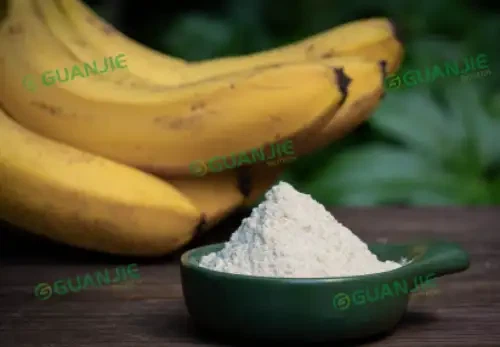
Is Banana Powder a Natural Sweetener?
Strictly speaking, banana powder is a processed ingredient derived from natural fruit. It does not fully fit the traditional definition of a "natural sweetener." These two belong to different categories of food ingredients.
What is a natural sweetener?
Natural sweeteners usually refer to ingredients with strong sweetness that can replace sucrose. Common examples include steviol glycosides, mogrosides, erythritol, and other naturally derived sugar alcohols. The main function of these ingredients is to provide sweetness. Their role is specific and focused.
What Is Banana powder?
Banana powder is different. It is a processed fruit ingredient. Its sweetness comes from naturally occurring sugars found in bananas. These include fructose, glucose, sucrose, maltose, and other soluble sugars. Banana powder also retains other components from the raw fruit. These include dietary fiber, pectin, trace minerals, natural aroma compounds, and polyphenols.
As a result, banana powder does more than provide sweetness. It also contributes banana flavor, color, nutritional value, and functional properties to food products. From a product classification and functional perspective, banana powder is closer to a multifunctional fruit ingredient than a simple sweetener.
Why Is Banana Powder Sweet?
During banana ripening, the carbohydrate composition changes significantly. Unripe green bananas contain high levels of starch. As the fruit ripens, enzymes become active and gradually convert starch into soluble sugars. As a result, the sugar content increases significantly in ripe bananas.
These sugars mainly include the following four types:
• Fructose:
Fructose has high sweetness intensity. Compared with sucrose, which is set at 1, fructose has a relative sweetness of about 1.2 to 1.7. Fructose sweetness becomes more noticeable at lower temperatures. Therefore, banana powder can provide advantages in chilled products such as frozen desserts, smoothies, and solid beverages.
• Glucose:
Glucose is less sweet than sucrose. However, it creates a fast sweetness response. This helps improve the initial taste perception when food enters the mouth.
• Sucrose:
Ripe bananas contain a relatively high amount of sucrose. Sucrose provides balanced and stable sweetness. It contributes much of the primary sweetness in food products.
• Maltose:
Maltose helps improve sweetness persistence and aftertaste. It supports a more complete and balanced flavor profile.
Why Process Is Important for the Banana Powder?
The Decisive Impact of Processing Technology on Sweetness. Not all banana powders have the same sweetness profile. A banana powder supplier's processing methods are important. The production process directly affects the sweetness release and the thermal stability of the powder in the final product.
Spray Drying vs. Freeze Drying

•Spray Drying:
Spray drying is commonly used in industrial banana powder production. During the instant high-temperature process, a Maillard reaction may occur. This can lead to a darker powder color and a slight ripe banana or caramelized flavor. The process creates powder with good flowability and lower production costs. It is suitable for baking fillings and solid beverages.
•Freeze Drying:
Professional suppliers such as Guanjie Biotech use vacuum freeze-drying technology. This process removes moisture under low-temperature and low-pressure conditions. It helps preserve the original fructose sweetness of bananas. It also avoids thermal denaturation. The final powder has a color closer to fresh fruit and offers better solubility. It is commonly used in high-end infant formula and special medical foods.
Technical Tip:
If your products require high-temperature baking, such as cookies, spray-dried powder may provide a richer flavor because of caramelization compounds. For cold beverages or room-temperature dairy products, freeze-dried powder offers a fresher and sweeter taste profile.
Regulatory and Labeling Advantages
From a regulatory perspective, banana powder is generally classified as a fruit powder or food ingredient under US FDA and Chinese GB standards. It is usually not classified as a food additive.
• Clean Labeling:
In the ingredient list, banana powder can be labeled as "banana," "banana powder," or "concentrated banana puree." These labels support consumer demand for kitchen-friendly ingredients. They also help brands build a natural and healthy image.
• Sugar Reduction Strategy:
Banana powder naturally contains fructose. Food manufacturers can use it as a source of basic sweetness when developing reduced-sugar products. For example, in infant formula or energy bars, replacing white sugar with banana powder can add dietary fiber and minerals while maintaining sweetness. This approach also provides additional nutritional value.
How to Use Banana Powder in Formulation?
Choosing banana powder as a sweetener is not only a marketing decision. It is also based on its unique functional properties.
Double-Edged Effect in Baking
The use of banana powder in baked products, such as bread and cakes, requires precise formulation control.
• Function:
Banana powder has strong water absorption properties. Studies show that adding banana powder, especially types with a high resistant starch content, can improve dough water retention. It can delay starch retrogradation and help extend the shelf life of baked products.
• Challenges:
The natural enzymes and sugars in banana powder can speed up the Maillard reaction. If ripe banana powder is used without formula adjustment, the crust may become too dark. In addition, banana powder has a weaker gluten-forming ability than wheat flour. Therefore, the addition level should be carefully controlled. The recommended amount is usually around 3%–5%, depending on the formulation. This helps maintain product volume and internal structure.
Beverage and Dairy Applications
In solid beverages, milkshake powders, and plant-based creamers, banana powder, especially freeze-dried powder, shows good solubility and suspension stability. It can provide stable turbidity and natural fructose sweetness. It also gives products an authentic fruit flavor without adding extra flavoring agents. As a natural sweetener, it fits well with products positioned as low-sugar or no-added-sugar options.
Natural Color and Texture Enhancement
Besides sweetness, banana powder can also act as a natural colorant and texture modifier. Ripe banana powder ranges from light yellow to bright yellow. It can partially replace β-carotene or tartrazine for color adjustment. In addition, its pectin content can increase the viscosity of sauces and jams. This reduces the need for chemical thickeners.
Conclusion:
Strictly speaking, natural banana powder is not a traditional natural sweetener, but rather a fruit ingredient with natural sweetening properties. Its value lies not in providing extremely high sweetness, but in simultaneously achieving sweetness, flavor, nutrition, and clean labeling attributes. For food companies, natural banana powder is more suitable as a comprehensive natural ingredient. With future trends towards low-sugar, natural, and functional ingredients, the application of banana powder in food formulations will continue to expand.
References:
[1] Du Bing, Cheng Yanfeng, Yang Gongming. (2009). Effects of different drying techniques on resistant starch in bananas. Food Science, 30(12), 31-34.
[2] Li Mingjuan, Zhang Yayuan, You Xiangrong, et al. (2015). Processing technology of banana biscuits. Food Industry Technology, (03), 204-208.
[3] Effect of different drying techniques on the nutrient and physiochemical properties of Musa paradisiaca (ripe Nendran banana) powder. (2023). ScienceOpen.
[4] Mohamed, A., Xu, J., & Singh, M. (2010). Yeast-leavened banana bread: Formulation, processing, colour and texture analysis. Food Chemistry, 118(3), 620-626.
[5] Ye Qiongjuan, Xia Yu, Zhang Yanjie, Du Bing. (2013). Development of banana mooncake filling. Agricultural Engineering, 3(4), 70-73.
[6] Daily Farmer. (2025, November 7). A New Definition of Children's Snacks: Nendran Banana Powder, Healthy Riddles and Milkshakes.
[7] Vern, N. Y. (2020). Effect of sweetener and residue of overripe banana incorporation on physicochemical properties, sensory acceptability, and glycaemic index of chocolate cookies [Master's thesis, Universiti Sains Malaysia].
[8] Aqua Connect Exim Private Limited. (2025, September 15). Why Ripe Banana Powder is a Key Ingredient for the Breakfast Cereal Industry.


