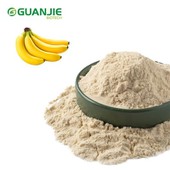
The question of whether 100 coconut milk powder can be dissolved in water involves aspects such as the composition, production process and water-soluble characteristics of coconut milk powder. Coconut milk powder is a powdered raw material widely used in food and beverages. It has a certain water solubility, but it is also affected by many factors. Such as temperature, pH value, degree of stirring, etc. To answer this question in detail, it can be discussed from the following aspects.

Ingredients
Coconut milk powder is a powdered product made from coconut meat through processes such as squeezing, dehydration, and crushing. Its main ingredients include coconut oil, coconut powder, protein, sugars, cellulose, minerals, etc. The solubility of coconut milk powder is closely related to its fat content, the addition of emulsifiers, and the fineness of particles.
•Fat:
100 pure coconut milk powder contains a high-fat content. Especially coconut oil. This fat component affects the solubility of coconut milk powder. Fat molecules are generally insoluble in water. This is more likely to form an oil-water separation phenomenon. Therefore, the solubility of coconut milk powder in water is affected by the fat content. A higher fat content may reduce its solubility.
Emulsifiers: Many coconut milk powders contain emulsifiers to improve their dispersibility and solubility in water. Emulsifiers help oils and water mix, thereby improving the dissolution of coconut milk powder.
•Sugars and minerals:
Sugars and minerals in coconut milk powder can be dissolved or dispersed in water. However, their solubility is relatively good and is not affected by much interference.
Water-soluble characteristics
The solubility of coconut milk powder depends on its physical and chemical properties and the production process used. Usually, coconut milk powder does not completely dissolve in water but forms a suspension or emulsion by dispersion. The following are the main performances of coconut milk powder in water.
•Partial dissolution:
Most 100 coconut milk powder will disperse in water and form a suspension or emulsion. A suspension refers to some particles distributed in water, but not completely dissolved, forming a turbid liquid. An emulsion is an emulsified mixture of fat and water. This can form a relatively stable liquid state.
•Emulsification:
Because the fat particles in coconut milk powder are large, it is not easy to dissolve directly in water. Usually this requires high temperature heating or the addition of emulsifiers to enhance its water solubility. Heating can help coconut milk powder disperse better, mix water and fat to form an emulsion.
•Influencing factors:
The water solubility of coconut milk powder is affected by many factors. Temperature is an important factor affecting the solubility of coconut milk powder. Warm or hot water can help coconut milk powder disperse better and form an emulsion. pH value will also affect its solubility. Generally, coconut milk powder has better solubility under weak acidic or neutral conditions.
Production Process On Water Solubility
The production process of 100 coconut milk powder determines its final solubility. The production process mainly includes the selection of raw materials, dehydration methods, crushing technology, etc. Different production processes will lead to differences in the particle size, fat content and emulsification properties of coconut milk powder, thereby affecting its solubility in water.
•Spray drying technology:
This is the most common coconut milk powder production process at present. Spray drying can quickly convert liquid coconut milk into powder. Smaller particles will be formed in this process, which can usually improve the solubility of coconut milk powder. However, if the spray drying temperature is too high or too low, it may affect the solubility of coconut milk powder.
•Freeze drying technology:
Freeze drying can retain more nutrients in coconut milk powder, but it usually results in larger particles and poor solubility. Therefore, coconut milk powder produced by freeze-drying technology may require more stirring and heating to completely dissolve.
• Low-temperature dehydration:
Low-temperature dehydration can prevent the components in coconut milk from being damaged by high temperatures and retain more nutrients. But it may cause larger particles and poor solubility. Therefore, low-temperature dehydrated coconut milk powder may need to adjust the water temperature and use emulsifiers to improve the dissolution effect.
Guanjie Biotech is a coconut milk powder supplier. We produce coconut milk powder by spray drying and freeze-drying. Reliable quality. Our products have good solubility.

Water Temperature On Coconut Milk Powder Solubility
The solubility of coconut cream powder bulk is closely related to water temperature. Generally, warm or hot water helps the dissolution of coconut milk powder. Cold water may make it difficult for coconut milk powder particles to be fully dispersed.
•Warm water dissolution:
100 coconut milk powder can be dispersed more easily in warm water. At higher temperatures, the interaction between fat and water is stronger, which can effectively break up fat particles and form an emulsion.
•Hot water dissolution:
In hot water, coconut milk powder creamer has the strongest solubility. Especially in hot water between 60°C and 80°C. Coconut milk powder can be completely dissolved to form a uniform emulsion state. Hot water can not only promote emulsification but also improve dissolution efficiency.
•Cold water dissolution:
The solubility of organic traditions coconut milk powder in cold water is poor. Especially in water below 10°C, coconut milk powder is prone to form particle precipitation. Therefore, cold water is not suitable for the apid dissolution of coconut milk powder.
Emulsifiers and stirring on coconut milk powder solubility
To improve the solubility of coconut milk powder, many manufacturers will add emulsifiers to coconut milk powder. The role of emulsifiers is to reduce the surface tension of the oil-water interface so that water and fat can be better mixed. Commonly used emulsifiers include lecithin, monoglycerides, diglycerides, etc.
The impact of solubility on the application
The solubility of coconut milk cream powder directly affects its application effect in various foods and beverages. For example, in beverages, better water solubility can coconut dry milk powder smoother and more uniform, avoiding oil-water separation. In baking, coconut milk powder's solubility may affect the final product's taste and structure.
•Beverages:
When coconut milk powder has good solubility, it can quickly form a uniform coconut milk drink. It is suitable for cold and hot drinks.
•Baking:
When coconut milk in powder has good solubility, it can be evenly distributed in batter or dough to avoid oil deposition. This affects the taste and texture.
•Dairy substitutes:
For plant-based dairy substitutes, the solubility of coconut milk powder is crucial. It directly determines the taste, stability and consumer acceptance of the product.
The water solubility of bulk MCT powder is relatively complex and is affected by many factors. The solubility of coconut milk powder in water is not complete. However, under appropriate conditions, coconut milk powder can be well dispersed and form an emulsion by using hot water, emulsifiers, stirring, etc. Guanjie Biotech's 100 coconut milk powder can be completely dissolved in warm water. If you would like to add our additives to your products, don't hesitate to get in touch with us at info@gybiotech.com.