

Natural Lotus Root Powder | Wholesale Plant-Based Ingredient Supplier
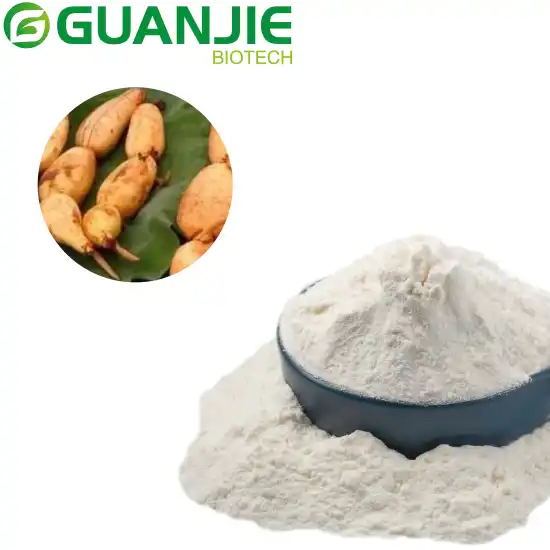
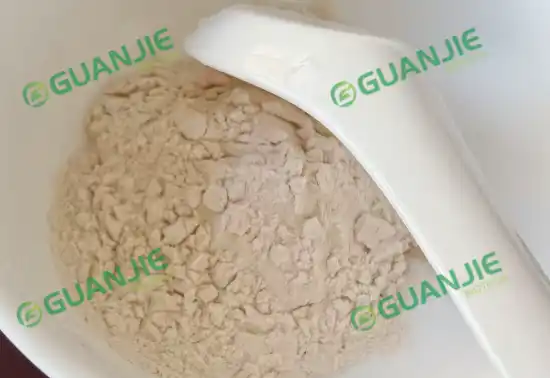
Guanjie Biotech is a professional lotus fruit powder supplier providing natural lotus root starch for food manufacturers and bulk ingredient buyers. Our product is made from carefully selected lotus roots through washing, crushing, filtering, sedimentation, and drying. No artificial colors, flavors, or preservatives are added during processing. The finished lotus root powder is white to slightly yellowish, with a fine texture and a characteristic lotus root aroma. When mixed with water and heated, it forms a smooth, translucent paste. Our natural lotus powder is suitable for various food applications, including beverages, desserts, bakery products, and instant food formulations. Guanjie Biotech supports bulk supply for B2B customers.
Why Choose Guanjie Biotech's Bulk Lotus Powder?
Guanjie Biotech has established a comprehensive quality management system for lotus fruit powder, covering every stage from raw material sourcing to finished product delivery. Our quality control procedures help ensure product safety, batch consistency, and compliance with applicable food safety requirements. As a professional lotus powder supplier, we provide customers with relevant testing reports, COAs, and certificates of conformity to support ingredient evaluation and procurement.
1. Raw Material Control
Lotus raw materials are sourced from qualified cultivation bases. Each batch is inspected and tested for pesticide residues and heavy metals. Materials that do not meet our quality standards are rejected.
2. Production Process Control
We monitor critical production parameters, including raw material washing, filtration, drying temperature, and workshop hygiene. These controls help maintain the quality and consistency of bulk lotus powder throughout manufacturing.
3. Finished Product Inspection
Before delivery, every batch of lotus fruit powder undergoes sensory, physicochemical, and microbiological testing. Key parameters include moisture, ash, particle size, whiteness, total plate count, and coliform bacteria. Only qualified batches are released for shipment.
4. Sample Retention and Traceability
Lotus root powder samples from each production batch are retained throughout the product's shelf life. This practice supports batch traceability, quality verification, and investigation of potential customer concerns.
How Is Lotus Fruit Powder Produced?
1. Raw Material Requirements
The quality of Chinese lotus root powder largely depends on the quality of the fresh lotus roots used as raw materials. Suitable lotus root varieties with high starch content are selected to ensure good processing performance and consistent product quality.
Only fresh, clean, mature, and uncontaminated lotus roots without visible decay or damage are accepted for production. Raw materials must meet applicable agricultural product quality and food safety requirements. Proper raw material selection provides a reliable foundation for producing high-quality natural lotus powder and lotus root starch.
Lotus Powder Production Process
Modern lotus fruit powder manufacturing uses mechanized processing equipment and controlled production procedures. The main processing steps include:
Washing and Crushing
Fresh lotus roots undergo multiple washing stages to remove soil and surface impurities. They are then transferred to crushing equipment, where the plant tissues are broken down to release starch and other soluble components.
Filtration and Residue Removal
The crushed lotus root pulp passes through screening equipment to separate fibrous materials from the liquid slurry. This process helps remove coarse residues and collect the starch-containing liquid.
Desanding and Purification
Cyclone-based desanding equipment separates fine sand and heavy impurities according to density differences. Further purification helps improve the cleanliness and texture of the finished lotus root starch powder.
Concentration and Refining
The starch-containing slurry is concentrated to increase its solid content. Refining removes remaining non-starch components, including proteins and fibers, helping improve the purity of the final ingredient.
Dewatering and Drying
The refined slurry is dewatered to obtain wet starch. The material is then dried under controlled conditions. Proper temperature and drying time help manage moisture content, color, and rehydration properties while supporting product stability during storage.
Milling and Packaging
After drying, the material is milled to achieve the required particle size and powder consistency. The finished bulk lotus fruit powder undergoes quality inspection before packaging. Moisture-resistant packaging materials help prevent humidity absorption, clumping, and quality deterioration during transportation and storage.
Through controlled processing and quality management, manufacturers can produce consistent lotus root powder for food, beverage, and other food ingredient applications.
What Are The Characteristics of Lotus Powder?
High Purity and Natural Composition
Guanjie Biotech's lotus root starch is made from selected lotus roots and processed to maintain a pure, single-ingredient composition. It contains no added potato starch, cassava starch, corn starch, artificial flavors, colors, preservatives, or additional thickening agents. This makes it suitable for food manufacturers looking for natural, clean-label ingredients. Compared with general-purpose starches, pure lotus root starch offers a distinctive raw material option for traditional foods, instant desserts, bakery products, and other food formulations. Buyers searching for natural lotus powder can request product specifications and analytical data to evaluate ingredient purity and quality.
Good Dispersion and Solubility
Our lotus fruit powder undergoes fine grinding and standardized sieving to achieve a uniform particle size. This helps the powder disperse more evenly during preparation. When mixed with water and heated under suitable conditions, it gelatinizes to form a smooth starch paste. Proper stirring and temperature control help reduce lump formation. These properties make lotus root starch suitable for instant food mixes, dessert preparations, and beverage applications. For industrial food manufacturers, consistent particle size and dispersion performance can also help simplify mixing operations and improve production efficiency. Each batch of natural lotus powder can be evaluated according to established quality specifications.
High Transparency After Gelatinization
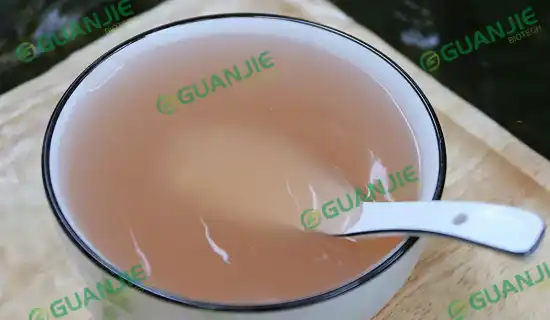
After gelatinization, lotus root starch forms a smooth, translucent paste with a natural surface sheen. Its appearance makes it suitable for food products where visual quality is important, including traditional lotus root starch desserts, instant food mixes, sweet soups, and selected beverage formulations. Compared with starches that produce a more opaque paste, lotus root starch can provide a clearer appearance under appropriate processing conditions. This characteristic gives food developers more flexibility when designing products that require both suitable texture and visual appeal.
Moderate and Stable Viscosity
Lotus root bulk powder develops viscosity during heating and gelatinization. It provides thickening properties that help improve food structure while maintaining a smooth texture. Its viscosity depends on factors such as raw material quality, starch concentration, heating temperature, and processing conditions. Guanjie Biotech focuses on standardized raw material selection and production control to maintain consistent product characteristics. For B2B manufacturers, stable viscosity performance helps reduce formulation adjustments and supports consistent texture in repeated production batches.
Natural Flavor and Versatile Applications
Pure lotus root starch has a mild, characteristic lotus root flavor and aroma. It does not require artificial flavorings to provide its natural sensory profile. Its mild taste allows it to combine with different ingredients, including red dates, osmanthus, nuts, fruits, and dairy ingredients. Lotus fruit powder can be used in traditional lotus root starch drinks, dessert mixes, sweet soups, and other food products. Buyers exploring lotus fruit powder other lotus-based ingredients should select the appropriate product according to the intended application, since lotus fruit powder and lotus root starch have different raw materials and properties.
Good Storage Stability
Proper drying and moisture control help maintain the quality of lotus root starch during storage. When kept in suitable packaging and recommended warehouse conditions, the powder can remain free-flowing and maintain its expected quality. The typical shelf life is 18–24 months, subject to the product specification and packaging label. Store the lotus fruit powder product in a cool, dry, and well-ventilated environment, away from direct sunlight and moisture. Food-grade moisture-resistant packaging helps protect the ingredient during transportation and bulk storage.
Consistent Batch Quality
Guanjie Biotech emphasizes quality control throughout raw material selection, processing, drying, sieving, and packaging. Production records and batch testing help monitor product appearance, moisture, purity, and other relevant quality parameters. Retained samples and analytical records can support batch traceability and customer quality evaluations. For food ingredient distributors, wholesalers, and manufacturers, consistent lotus bulk powder quality helps support long-term procurement and finished-product development.
What Are The Benefits of Lotus Fruit Powder?
Lotus fruit powder is a plant-based ingredient used in food, beverage, and nutritional product formulations. Its nutritional composition includes carbohydrates, small amounts of protein, dietary fiber, and naturally occurring minerals. For food manufacturers looking for versatile plant-based ingredients, lotus powder offers several formulation advantages. The following sections explain the main nutritional characteristics of lotus root starch and its potential applications.
Provides Energy
Lotus root starch consists mainly of carbohydrates, with starch serving as its primary component. Depending on its processing method and moisture content, 100 grams of dry lotus root starch may provide approximately 350–380 kcal. This makes it a concentrated source of dietary energy. For food manufacturers, lotus root powder can be used as a carbohydrate ingredient in meal replacements, convenience foods, and other energy-providing products. Its starch content also makes it suitable for developing porridge, instant food mixes, and other formulated products. Manufacturers can adjust the inclusion level according to the nutritional targets and texture requirements of the final product.
Naturally Low in Fat
Lotus root starch generally contains very little fat, making it a useful ingredient for low-fat food formulations. Its low fat content allows manufacturers to use it as a carbohydrate component when developing products with controlled fat levels. Natural lotus fruit powder can be incorporated into porridge, cereal blends, dessert mixes, and other food products. However, the actual fat content should be confirmed through laboratory testing before making specific nutritional or low-fat labeling claims.
Contains Dietary Fiber
Lotus root naturally contains dietary fiber. However, the amount retained in the finished lotus root powder depends on the raw material and processing method. Products made from whole lotus root may have different fiber levels from highly refined lotus root starch. For food manufacturers, lotus fruit powder and lotus root powder can be considered for plant-based food formulations. Their nutritional profiles should be evaluated using product-specific testing to determine their suitability for fiber-related product positioning.
Provides Naturally Occurring Minerals
Lotus root contains several minerals, including potassium, calcium, iron, and phosphorus. Their concentrations vary depending on the raw material, growing conditions, and processing techniques. These minerals contribute to the nutritional composition of lotus-based ingredients. Lotus fruit powder can be used in cereal products, nutritional food mixes, and other plant-based formulations. For B2B buyers, a nutritional analysis report can help verify mineral content and support accurate product specifications.
Contains Small Amounts of Protein
Lotus root starch is primarily a carbohydrate ingredient and is not considered a major protein source. Its protein content is generally low, although the actual amount depends on the degree of starch purification. When developing nutritional food products, manufacturers can combine lotus root powder with protein-rich ingredients such as soy, peas, or dairy proteins. This allows formulators to adjust the protein and carbohydrate ratios according to the nutritional requirements of the finished product.
Suitable for Smooth Food Formulations
When mixed with water and heated, lotus root starch gelatinizes and forms a smooth, thick paste. This functional property makes it suitable for porridge, dessert mixes, instant beverages, and other semi-solid food products. Lotus fruit powder can also be used as a thickening or texture-modifying ingredient, depending on its specifications and processing characteristics. Its inclusion level can be adjusted to achieve the desired consistency and mouthfeel.
Naturally Gluten-Free
Lotus root is naturally free from gluten, which is found in wheat, barley, and rye. Therefore, pure lotus root powder can be considered for gluten-free food formulations.
Manufacturers can use lotus fruit powder in gluten-free porridge, baking mixes, instant cereals, and other specialty foods. However, cross-contamination during processing and packaging should be controlled, and gluten-free claims should be supported by appropriate testing and production controls.
What Is Lotus Fruit Powder Used For?
Lotus fruit powder is a versatile plant-based ingredient widely used in traditional foods and modern food processing. With its fine texture, mild flavor, and thickening properties after gelatinization, it is suitable for various food formulations. As a natural food ingredient, lotus root powder can be used in instant foods, nutritional products, baked goods, beverages, and convenience foods. Below are eight major application areas for lotus root starch.
1. Instant and Reconstitutable Foods
Lotus fruit powder is traditionally used in instant food products. It can be packaged in individual sachets as plain lotus root starch or blended with red date powder, osmanthus flowers, lotus seeds, goji berries, and crushed nuts to develop flavored instant products.
For manufacturers, instant lotus root starch offers a convenient ingredient option for ready-to-prepare foods. Consumers can prepare these products by adding hot water and stirring according to the product instructions. Its thickening and gelatinization properties help create a smooth texture. Guanjie Biotech can provide ingredient specifications and formulation recommendations, including powder ratios, sugar content, and liquid-to-powder proportions.
2. Nutritional and Nourishing Foods
Natural lotus root powder can be combined with ingredients such as white fungus, lily bulb, Chinese yam, Job's tears, and black sesame to develop traditional-style nutritional foods. These combinations are suitable for instant porridge, grain blends, breakfast powders, and other food formulations.
Its mild flavor and compatibility with different plant-based ingredients make lotus root starch a practical carbohydrate ingredient for manufacturers developing convenient nutritional food products.
3. Infant and Toddler Complementary Foods
Infant and toddler food formulations require careful control of ingredient purity, particle size, microbiological quality, and contaminant levels. Fine lotus root powder can be evaluated as a carbohydrate ingredient in infant cereals, porridges, and other complementary food formulations.
Manufacturers should verify that the ingredient meets applicable food safety standards for the intended age group. Relevant testing may include microbiological analysis, heavy metal testing, and pesticide residue analysis. Product suitability should be established through regulatory review and formulation testing before use in infant food products.
4. Foods for the Elderly
Lotus root starch for food processing can be used in products designed for consumers who prefer soft-textured foods. After gelatinization, it develops a smooth, thick consistency that works well in nutritional porridges, semi-liquid foods, and instant cereal products.
Food manufacturers can combine lotus root starch with protein powders, vitamins, minerals, and dietary fiber to develop different nutritional formulations. Its mild flavor also allows it to work with various sweet and savory ingredients.
5. Baking and Pastry Products
Lotus root powder for baking can be incorporated into selected recipes for pastries, cookies, glutinous rice balls (tangyuan), and mochi. Depending on the formulation, it can influence texture, moisture retention, and the consistency of finished products.
In cookies and pastries, lotus root starch can contribute to a delicate texture. In traditional Chinese desserts, it can be used to adjust the consistency of fillings and other components. Manufacturers should conduct recipe trials to determine suitable addition levels and maintain the desired product structure.
6. Foodservice and Beverage Applications
In Chinese cooking, lotus root starch can function as a thickening ingredient for sauces, soups, and traditional desserts. After heating with liquid, it develops a thick consistency and characteristic glossy appearance.
It can also be incorporated into grain-based drinks, nut beverages, and freshly prepared dessert beverages to adjust viscosity and mouthfeel. For restaurant chains and beverage manufacturers, bulk lotus root starch provides a convenient ingredient for standardized recipes and large-scale preparation.
7. Convenience Foods
The convenience food industry uses ingredients that can meet specific requirements for rehydration, gelatinization, and texture. Bulk lotus root starch can be incorporated into instant porridge, powdered soup mixes, and selected ready-to-prepare meals.
It helps adjust the thickness and consistency of soup bases and porridge formulations. Manufacturers should evaluate hydration time, processing temperature, and ingredient compatibility to achieve the required finished texture.
8. Other Potential Applications
Beyond conventional food products, lotus root starch powder may be evaluated for use in compressed food products, solid beverage mixes, and selected pet food formulations, depending on technical and regulatory requirements. It may also be investigated as a formulation ingredient in certain cosmetic products, subject to appropriate cosmetic-grade specifications and safety assessments.
Guanjie Biotech welcomes inquiries from food manufacturers, ingredient distributors, and product developers seeking a reliable lotus root starch supplier. We can discuss product specifications, application requirements, samples, and customized ingredient solutions for different B2B projects.
FAQs:
Q1:What does natural lotus root powder look like?
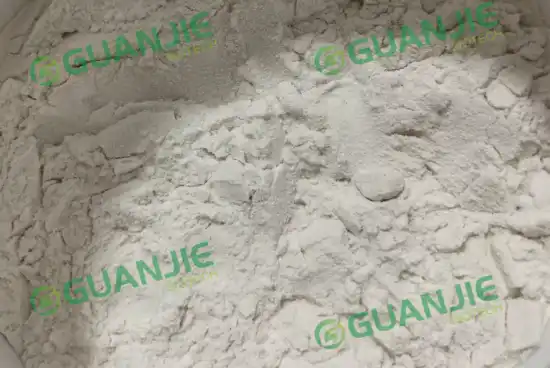
Natural lotus fruit powder is typically white to slightly yellowish. It has a fine, smooth powder texture and a mild, characteristic lotus root aroma. When mixed with water and heated, it gelatinizes and forms a smooth, translucent, slightly glossy paste. The exact appearance and texture depend on raw material quality, starch purification, drying conditions, and particle size.
Q2:Is lotus root powder water-soluble?
Lotus fruit powder is not completely cold-water-soluble because it primarily contains native starch. When mixed with cold water, the starch particles generally disperse rather than dissolve. Heating the mixture with sufficient water causes starch gelatinization, resulting in a thick and smooth paste. For industrial applications, formulators should evaluate heating temperature, mixing speed, water ratio, and processing time to achieve consistent results.
Q3:What are the nutritional components of lotus root powder?
Lotus root starch consists primarily of carbohydrates, particularly starch, which provides dietary energy. Depending on the degree of purification, it may also contain small amounts of protein, dietary fiber, minerals, and other naturally occurring components. Its nutritional composition varies according to raw material quality and manufacturing methods. Highly purified lotus root starch generally contains less fiber and protein than less-refined whole-root powder. Food manufacturers should request nutritional analysis data when developing products with specific nutritional requirements.
Q4:Is lotus root powder gluten-free?
Pure lotus root powder is naturally gluten-free because lotus root does not contain wheat, barley, or rye gluten proteins. Lotus fruit powder can therefore be considered for gluten-free food formulations, including porridge, instant cereals, dessert mixes, and baking products. However, manufacturers should verify cross-contact controls during raw material handling, processing, and packaging. Gluten-free labeling should be supported by appropriate testing and compliance with the regulations of the target market.
Q5:Can lotus root powder be used in instant beverage formulations?
Yes. Lotus root powder can be used in instant beverage and traditional lotus root starch drink formulations. When prepared with hot water, it develops a thick, smooth, and translucent consistency. For commercial instant beverage development, manufacturers should evaluate hydration behavior, gelatinization temperature, viscosity, and preparation time. Lotus fruit powder can also be blended with red date powder, fruit powders, sweeteners, and other functional food ingredients to develop customized instant drink products.
Q6:Can lotus root starch be used as a thickening agent in food processing?
Yes. Lotus fruit powder can function as a plant-based thickening ingredient in soups, sauces, desserts, porridges, and other semi-solid foods. During heating, starch granules absorb water and gelatinize, increasing the viscosity of the formulation. The required addition level depends on the target thickness, water content, heating conditions, and interactions with other ingredients. Food manufacturers should conduct pilot trials to establish the appropriate formulation and processing parameters.
High Quality Control:

Certification

Package:

Delivery Methods

Hot Tags: lotus fruit powder, China lotus fruit powder manufacturers, suppliers, factory


