

Lotus Seed Flour Supplier | Bulk Plant-Based Powder for Food Applications
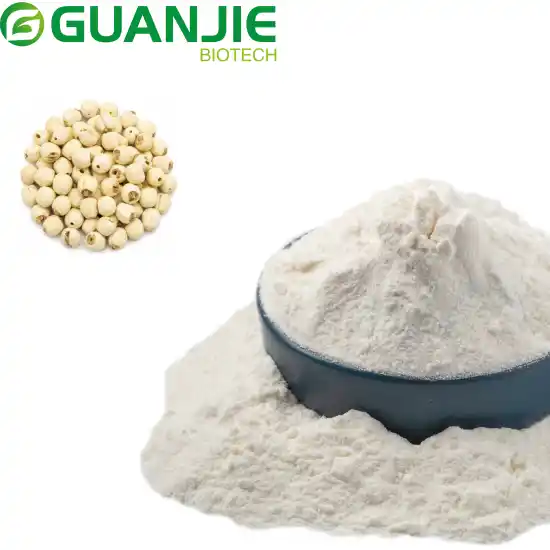
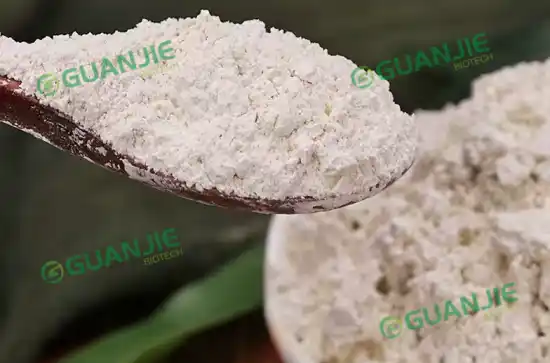
Guanjie Biotech is a professional lotus seed powder supplier serving B2B food manufacturers, ingredient distributors, and private-label brands. Our natural lotus seed powder is produced using low-temperature drying technology to help retain its characteristic color, aroma, and nutritional components. Each batch of raw materials undergoes sensory and physicochemical inspections, including checks for moisture, color, aroma, and impurities. The finished bulk lotus seed powder typically has a white to off-white appearance, uniform texture, and no visible foreign matter. As a versatile plant-based ingredient, it is suitable for solid beverages, instant cereals, bakery products, flour-based foods, and nutritional formulations. Customized specifications and samples are available upon request.
COA:
|
Item |
Specification |
Method |
|
Basic Product Information |
||
|
Genus and Species |
Nelumbo nucifera Gaertn. |
/ |
|
Part of the Plant |
Seed |
/ |
|
Country of Origin |
China |
/ |
|
Organoleptic Data |
||
|
Appearance |
Powder |
GJ-QCS-1008 |
|
Color |
Off-white to pale yellow fine powder |
GB/T 5492-2008 |
|
Odor |
Characteristic |
GB/T 5492-2008 |
|
Taste |
Characteristic |
GB/T 5492-2008 |
|
Physical Characteristics |
||
|
Particle Size (80 mesh) |
95.0% pass 80mesh |
GB/T 5507-2008 |
|
Loss on drying |
<5.0% |
GB/T 14769-1993 |
|
Ash Content |
<5.0% |
AOAC 942.05, 18th |
|
Solvent Residue |
None |
GJ-QCS-1007 |
|
Heavy Metals |
||
|
Total Heavy Metals |
<20ppm |
USP <231>, method II |
|
As |
<5.0ppm |
AOAC 986.15, 18th |
|
Pb |
<3.0ppm |
AOAC 986.15, 18th |
|
Cd |
<1.0ppm |
AOAC 986.15, 18th |
|
Hg |
<1.0ppm |
AOAC 971.21, 18th |
|
Microbiology |
||
|
Total Plate Count |
<10,000/g |
AOAC 990.12, 18th |
|
Total Yeast & Mold |
<1,000/g |
FDA (BAM) Chapter 18, 8th Ed. |
|
E. Coli |
Negative |
AOAC 997.11, 18th |
|
Salmonella |
Negative |
FDA (BAM) Chapter 5, 8th Ed. |
Lotus Seed Powder Components
Lotus seed powder is a plant-based ingredient primarily composed of carbohydrates and protein, with smaller amounts of fat, minerals, and bioactive compounds. Lotus seeds typically contain approximately 61%–62% carbohydrates, 16%–21% protein, and 2.4%–3.0% crude fat. Their mineral profile includes calcium, phosphorus, potassium, and iron. Lotus seeds also contain vitamins C and E, although heat processing may reduce certain heat-sensitive nutrients.
In addition to basic nutrients, natural lotus seed powder contains polyphenols, flavonoids, and alkaloids. Identified compounds include liensinine, isoliensinine, nuciferine, proanthocyanidins, gallic acid, and catechins. Research on lotus seed extracts, including in vitro and animal studies, has reported antioxidant and anti-inflammatory activities, as well as potential effects on glucose and lipid metabolism. These nutritional and functional components make lotus seed powder an ingredient of interest for food, beverage, and health supplement formulations.
Lotus Seed Powder Applications and Formulation Considerations
Lotus seed powder is a plant-based ingredient with applications in food processing, nutritional supplements, bakery products, and animal nutrition. Its mild flavor and starch content make it suitable for various formulations. For B2B manufacturers, understanding the functional properties of lotus seed powder, including water absorption, dispersibility, and texture, is important when developing finished products.
Solid Beverages and Instant Drink Mixes
Lotus seed powder for beverages can be used as a primary or secondary ingredient in instant cereal drinks, plant-based protein beverages, and meal replacement powders. Its mild flavor blends well with oat flour, coix seed powder, yam powder, and other plant-based ingredients without significantly affecting the overall taste.
For better dispersibility, formulators can consider suitable emulsifiers, instantizing techniques, or granulation processes to reduce clumping during reconstitution. For clean-label product development, Guanjie Biotech offers pure lotus seed powder without added anti-caking or flow-enhancing agents, allowing manufacturers to adjust their formulations according to specific product requirements.
Meal Replacement Powders and Nutritional Bars
Lotus seed powder for meal replacement products provides carbohydrates and contributes to the flavor and texture of nutritional formulations. Its starch and dietary fiber content can support product development for cereal bars, energy bars, and meal replacement mixes.
However, lotus seed powder has relatively high water absorption capacity. When used in nutritional bars, manufacturers should evaluate moisture content, water activity, and texture-modifying ingredients to achieve the desired hardness, binding properties, and shelf stability.
Bakery Products and Flour-Based Foods
Lotus seed flour can partially replace wheat flour in bread, cookies, biscuits, and pastries. As lotus seed powder does not contain gluten, excessive substitution may weaken the gluten network and affect dough elasticity and product structure.
A starting substitution level of approximately 5%–15% can be evaluated during formulation trials. Manufacturers may need to adjust water content or add vital wheat gluten to maintain processing performance. Lotus seed powder also provides a distinctive ingredient profile for specialty bakery products.
Health Supplements and Nutritional Formulations
Lotus seed powder for supplements can be evaluated as a botanical food ingredient in selected formulations, including capsules, tablets, and granules. Its suitability depends on ingredient specifications, processing characteristics, applicable regulations, and the intended product category.Guanjie Biotech can provide batch-specific test reports and supplier qualification documents to support B2B ingredient evaluation and quality management.
Pet Food and Animal Nutrition
Lotus seed powder for pet food can be considered as a plant-based carbohydrate ingredient in pet treats, biscuits, and selected dry food formulations. Its starch content and mild flavor make it a potential option for product developers seeking alternative plant ingredients.
Manufacturers should evaluate digestibility, palatability, nutritional balance, and species-specific safety before incorporating lotus seed powder into dog or cat food products.
Physical Properties of Lotus Seed Powder
The physical properties of lotus seed powder directly affect its processing performance, formulation compatibility, and final product quality. For food manufacturers and ingredient buyers, understanding its water absorption, solubility, freeze-thaw stability, and appearance is important when selecting a suitable bulk lotus seed powder grade.
Water Absorption and Swelling
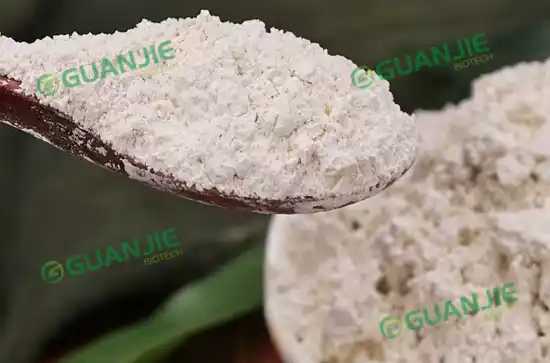
Lotus seed starch has restricted swelling properties. Its swelling power is comparable to that of sweet potato starch, but its solubility is relatively low. At room temperature or under moderate heating, natural lotus seed powder shows limited water absorption and swelling. Smaller particle sizes may improve moisture absorption and hydration. Therefore, particle size and storage humidity should be considered when purchasing lotus seed powder for food processing.
Solubility and Dispersibility
Natural lotus seed powder has limited water solubility and may form lumps when mixed with liquids. Processing methods such as enzymatic hydrolysis, extrusion, and freeze-drying can improve its solubility and dispersibility. For instant beverages and powdered food formulations, dissolution speed and dispersion performance are important quality indicators. Buyers should select the appropriate lotus seed powder grade according to hot-water, cold-water, or room-temperature processing requirements.
Freeze-Thaw Stability
Lotus seed starch paste generally has poor freeze-thaw stability. During frozen storage, it may undergo syneresis and structural shrinkage. For frozen food applications, hydrocolloids or suitable modified starches may be needed to improve product stability.
Appearance
Lotus seed starch paste typically has low transparency and appears milky white to pale grayish-white. Its light transmittance may decrease during storage due to starch retrogradation, generally stabilizing after approximately 72 hours under the reported test conditions.
Guanjie Biotech supplies lotus seed powder for B2B food manufacturers, with customization options for particle size, solubility, gelatinization properties, and flowability. Contact us for product specifications and samples.
FAQs:
Q1: Is lotus seed powder water-soluble?
A: Natural lotus seed powder is not completely water-soluble because it contains a significant proportion of starch. It generally disperses in water rather than dissolving completely, and clumping may occur when the powder is added directly to liquids. For instant beverage applications, formulators can consider finer particle sizes, agglomeration, granulation, or enzymatic processing to improve dispersibility and rehydration performance.
Q2: Can lotus seed powder be used in instant cereal and solid beverage formulations?
A: Yes. Lotus seed powder is suitable for instant cereal products, solid beverages, and nutritional drink mixes. It can be combined with oat powder, yam powder, coix seed powder, and other plant-based ingredients. However, formulators should evaluate its water absorption, dispersibility, and viscosity. Appropriate mixing procedures or granulation technologies can help reduce clumping and improve the reconstitution experience.
Q3: Can lotus seed powder replace wheat flour in bakery products?
A: Yes. Lotus seed powder can partially replace wheat flour in bread, cookies, biscuits, and pastries. A typical initial trial replacement level is 5%–15%, although the optimal ratio depends on the product and processing conditions. Since lotus seed powder does not contain gluten, excessive replacement may weaken dough structure and affect elasticity, volume, and texture. Formulators may need to adjust water content or add gluten-strengthening ingredients.
Q4: Does lotus seed powder contain protein and dietary fiber?
A: Yes. Lotus seeds naturally contain protein and dietary fiber, although their actual concentrations depend on the raw material and processing method. Lotus seed powder also contains substantial starch, which contributes to its carbohydrate content and functional properties. For commercial nutritional labeling, manufacturers should use batch-specific analytical results rather than relying solely on published nutritional averages.
Q5: Is lotus seed powder suitable for meal replacement products and nutritional bars?
A: Yes. Lotus seed powder can be incorporated into meal replacement powders, nutritional bars, and cereal-based nutrition products. Its starch provides carbohydrates, while its protein contributes to the overall nutritional composition. However, its water absorption characteristics may influence the hardness, cohesiveness, and texture of nutritional bars. Formulators should adjust moisture content, binders, and other texturizing ingredients during product development.
Q6: Is lotus seed powder suitable for gluten-free food products?
A: Lotus seed powder is naturally gluten-free because lotus seeds do not contain wheat gluten. It can be used in gluten-free flour blends, biscuits, cookies, and cereal products. However, manufacturers producing certified gluten-free foods should assess cross-contamination risks during raw material handling, processing, and packaging. Supplier documentation and appropriate gluten testing may be required to verify compliance with the target market's standards.
Certificate
• ISO9001 Quality Management System Certificate
• FSSC22000 Food Safety System Certificate
• HACCP System Certificate
• HALAL Certification
• FDA Registration
• Organic Certification

Lead Time:
Standard lotus seed powder products are available from stock and will be dispatched within 3–5 business days of payment. For customized products, the lead time is 7–15 business days following sample approval.
Free Sample:
We support free samples to test the quality.
MOQ:
The minimum order quantity for standard specifications is 1 kg. Tiered pricing is available for bulk lotus seed powder orders (exceeding 500 kg). Specific quotes are determined based on mesh size, packaging, order volume, and delivery terms; please contact us to request a formal quotation.

Packaging and Storage
Lotus seed powder should be sealed using food-grade packaging materials. Standard bulk packaging consists of 25 kg fiber drums (lined with food-grade polyethylene bags); alternatively, smaller quantities-such as 1 kg or 5 kg-can be provided in aluminum foil bags upon customer request. The product should be stored in a cool, well-ventilated, and dry warehouse, away from direct sunlight. It must not be stored alongside toxic, hazardous, odorous, or volatile substances.
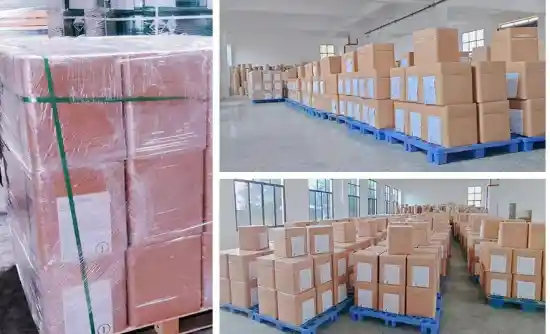
Under these storage conditions, the shelf life of an unopened product is typically 24 months. Once opened, the product should be used as soon as possible; any remaining portion must be resealed and kept in a dry environment to prevent moisture absorption and clumping.

Delivery term
Bulk Lotus seed powder transportation is available by DHL, FEDEX, air freight and sea freight. Protect shipments from rain, direct sunlight, and physical impact. For export orders, additional measures, such as pallet reinforcement and container desiccants, help protect product quality during transit.

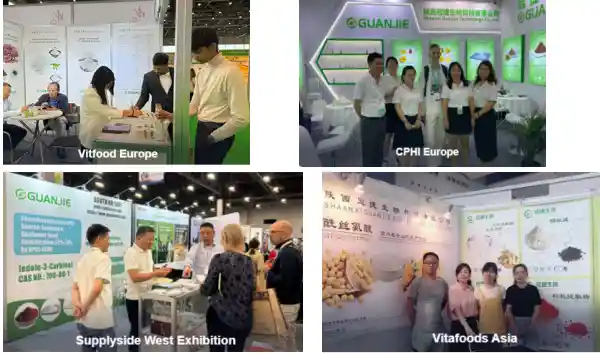
Our Teams & Exhibitions
Hot Tags: lotus seed powder, China lotus seed powder manufacturers, suppliers, factory


